Publicado el

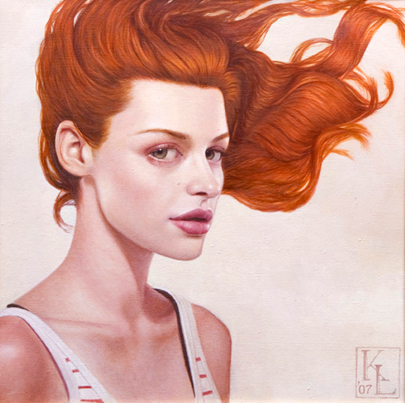
Kris Lewis

Fuente: www.krislewisart.com

Kris Lewis, b. 1978, Ocean County, NJ, is a Los Angeles-based artist whose influences include Alfonse Bougereau, Andrew Wyeth, Hans Holbein, Albrecht Durer, Hieronymus Bosch, Gustav Klimt, and Jules-Bastien LePage. His reverence for masters of old is apparent in his depiction of the human figure, which he uses as a vector for hidden stories, delicate emotion, and finding truth. His affinity for people-watching also informs his paintings, collecting glances, gestures, miens and hints and channeling them through the canvas for the viewer to share in the experience.

Kris studied illustration at The University of the Arts in Philadelphia, Pennsylvania. His paintings have been featured in galleries and museums in cities around the world; including L.A., San Francisco, Seattle, New York, Denver, Miami, London, Rome and Hong Kong. His work has also been seen in the publications Juxtapoz, Hi-Fructose, Modern Painters, and American Art Collector. Kris Lewis has been featured in the books Suggestivism, Copro/Nason: A Catalogue Raisonne and Two Faced: The Changing Face of Portraiture.
Publicado el Deja un comentario

Javier Quintanilla (1945)

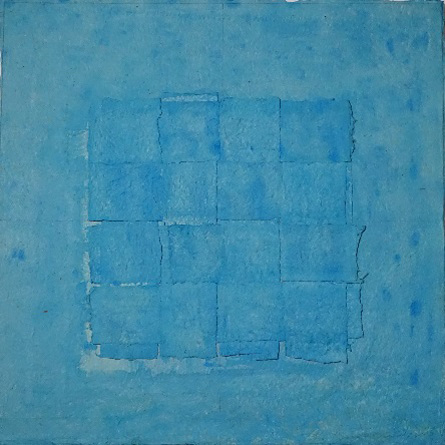
Javier Quintanilla

www.javierquintanilla.net

Entre 1976 y 2014 realiza numerosas exposiciones individuales y colectivas en Museos, Universidades y Galerías de Arte públicas y privadas en:

Alemania: Colonia.
Bélgica: Bruselas.
Brasil: Rio de Janeiro, Porto Alegre, Curitiba y Florianópolis.
España: Barcelona, Madrid, Girona, Ibiza, Cuenca, Mahón, Valladolid, Sevilla y Toledo.
Estados Unidos: Lexington y Minneapolis.
Francia: Paris, Verderonne, Compiegne, Montataire, Poitiers, St.Maló y otras localidades.
Italia: Brescia y San Secondo.
México: DF.
Noruega: Oslo.

Ha participado en Ferias de Arte Internacionales como:

ARCO – Galería May Moré. Madrid.
3ª Feria Internacional del “Libro de Artista”. Galería May Moré, Colonia, Alemania.
Feria del Libro de Artista Contemporáneo. París, Francia.

Expo Universal de Sevilla: Pabellón de la Comunidad de Madrid. Artista invitado. 1992

En la actualidad es miembro activo del CLAC – Centre du Livre d’Artist Contemporain de Verderonne/Oise, Francia, y de la Asociación Cultural del mismo centro.
En los últimos años crea, dirige y coordina, proyectos colectivos de arte, tales como: “Juego de Dados”,“Basura”, “Creart”, (Proyecto de Arte en colaboración con 6 escuelas de enseñanza primaria de Barcelona), “Las Artes y las Letras de la Mano”, “Del barro al 3D”…

Cuenta con obras en colecciones privadas (C.I.L. -Club Internacional del Libro/Madrid, entre otras)y en Museos de Arte Contemporáneo de diferentes países: University of Minnesota/U.S.A.; M.A.S.C. – Museu de Arte de Santa Catarina/Florianopolis/Brasil; M.A.R.G.S. – Museu de Arte do Rio Grande do Sul/Porto Alegre/Brasil; Musée du Livre d’Artiste Contemporain – Verderonne/Francia.

Publicado el

Wilhelm Busch


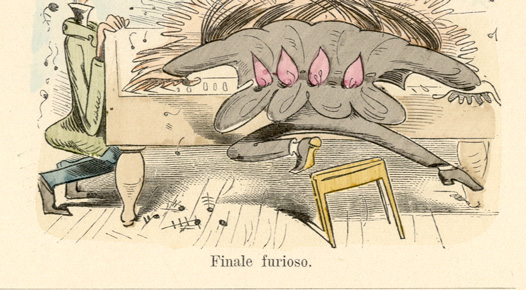
Wilhelm Busch (Wiedensahl, 15 de abril de 1832 – Mechtshausen, 9 de enero de 1908) fue un caricaturista, pintor y poeta alemán, conocido principalmente por sus historietas satíricas, escritas en verso, como Max und Moritz (Max y Moritz). Fue figura decisiva para el desarrollo del cómic estadounidense, aún más que Rodolphe Töpffer.

Max y Moritz, por Wilhelm Busch.
Wilhelm Busch (vilhɛlm bʋʃ) procedía de una familia de comerciantes, era el mayor de 7 hermanos. A partir de 1841 tiene que vivir con su tío Georg Kleine, cura, ya que en su casa no hay lugar para todos. Su tío se dedicaba a su formación.

En 1847 hace la prueba de bachillerato, cuatro años después, en 1851, ingresa a la Academia de las Bellas Artes y en 1852 a la Real Academia de las Bellas Artes en Amberes. Las obras de los pintores flamencos del siglo XVI y XVII tuvieron gran influencia en él. Tras enfermar de tifus en 1853 regresa a su casa, luego de recuperarse de la enfermedad empieza a coleccionar sagas, cuentos y canciones populares para ilustrarlas. Al año siguiente se va a la Academia de Bellas Artes de Múnich.

En 1859, empezó a colaborar con el periódico satítico Fliegende Blätter, y el Münchner Bilderbogen que Kaspar Braun había fundado en 1844.2 Allí publicará Max y Moritz en 1865, a los que le siguen en los años siguientes otras obras. En 1884 publica su última obra Maler Klecksel. En 1878 regresa a su ciudad natal y vive con su hermana Fanny, haciéndose cargo de los 3 hijos de ella y en 1898 se muda con su hermana a la casa de su sobrino Otto Nöldeke, que es cura. Allí se publicaron sus poesías de Sein und Schein y Zu guter Letzt.

Sufrió varios envenenamientos por nicotina durante su vida. Antes de su muerte ordenó la destrucción completa de su correspondencia privada. Wilhelm Busch murió en 1908 de insuficiencia cardíaca. En su autobiografía relata cómo veía la vida. Después de su muerte se publicaron su colección de poesía Sein und Schein (1909) y en 1910 la obra Ut ôler Welt (una colección de canciones, sagas y cuentos) además encontraron más de 1000 óleos pintados por él.

Publicado el

Tom Lovell

From Wikipedia, the free encyclopedia

Tom Lovell

Born February 5, 1909
New York
Died June 29, 1997
New Mexico
Occupation Artist
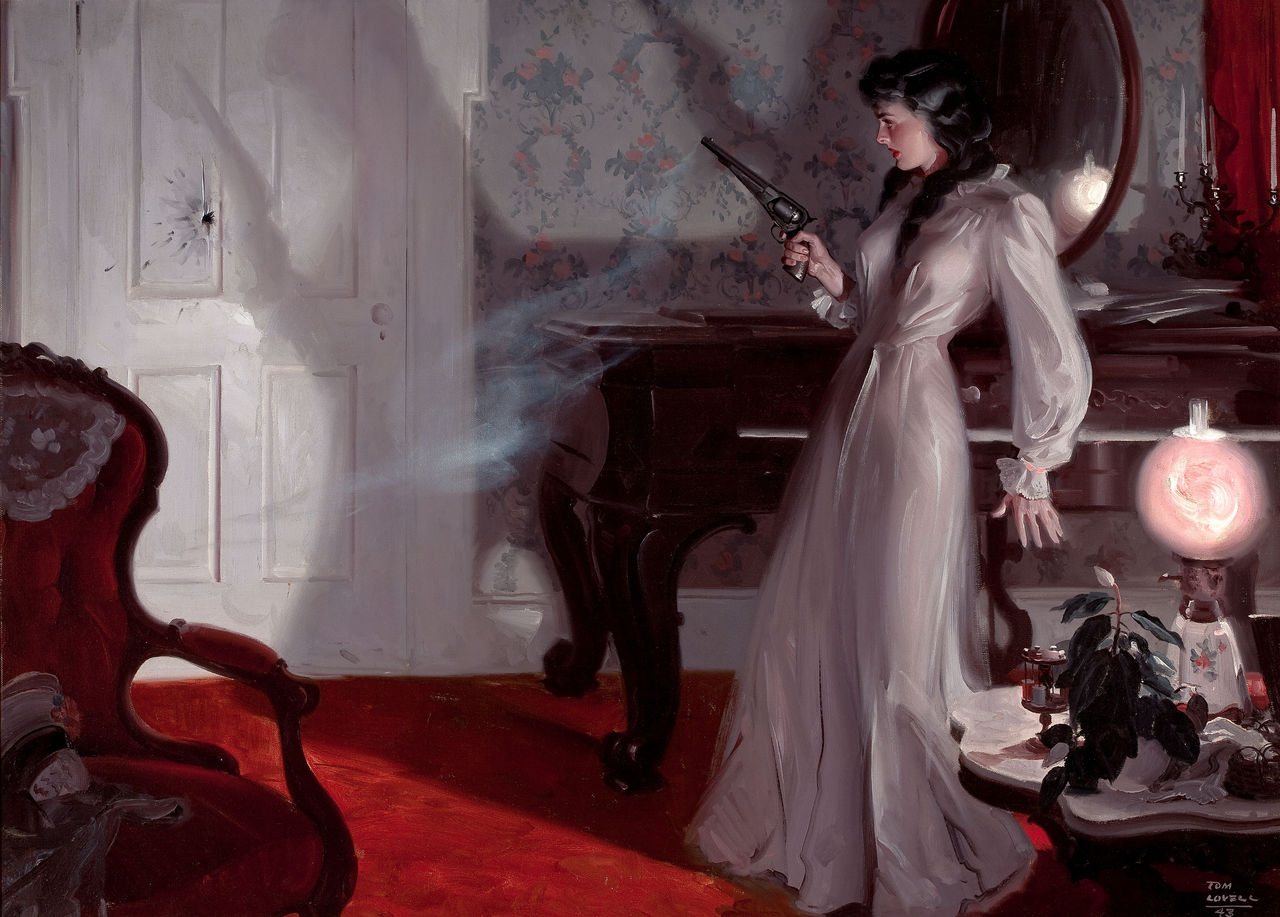
Thomas (Tom) Lovell (5 February 1909 – 29 June 1997) was an American illustrator and painter.[1] He was a prolific creator of pulp fiction magazine covers and illustrations, and of visual art of the American West. He produced illustrations for National Geographic magazine, and many others, and painted many historical Western subjects such as interactions between Indians and white settlers and traders.[2] He was inducted into the Society of Illustrators Hall of Fame in 1974.[3]

Publicado el

Callot, Jacques (Nancy, 1592 – Nancy, 1635)

Fuente: Wikipedia
imagesJacques Callot (Nancy, 1592 – Nancy, 1635) fue un dibujante y grabador barroco del Ducado de Lorena, región entonces independiente y luego anexionada a Francia. Es una de las figuras importantes en la historia del grabado.

Vida y obra

Realizó más de 1.400 planchas que suponen un fresco y una crónica del periodo que vivió. Representó a soldados, payasos, gitanos, mendigos, así como vida de la corte. También grabó al aguafuerte muchas imágenes religiosas y militares, y muchas impresiones incluyen paisajes en su fondo. Han sobrevivido 2.000 dibujos y estudios preparatorios para sus estampaciones, pero no se conoce ninguna pintura de su autoría y probablemente nunca ejerció como pintor.

Su padre era el maestro de ceremonias en la corte del Duque de Lorena. A los quince años entró de aprendiz en el taller de un orfebre. Se trasladó a Roma, donde el francés Philippe Thomassin le enseñó la técnica del grabado. Probablemente aprendió la técnica del aguafuerte con Antonio Tempesta en Florencia, donde vivió de 1612 a 1621. Trabajó para Cosme II de Médicis; cuando éste falleció, regresó a Nancy.

En Nancy, trabajó para la corte local, para editores parisinos e incluso para la corte española. Exceptuando algún viaje, residió el resto de su vida en Nancy y allí produjo sus planchas.

Su aportación al arte del grabado no fue sólo creativa, sino también técnica, pues introdujo el uso de un barniz especial de luthiers para el grabado al aguafuerte. Este barniz, más fiable que la tradicional capa de cera, permitía someter las planchas de cobre a más baños de ácido sin miedo a accidentes que malograsen todo el trabajo. De este modo, el proceso de grabado a aguafuerte pudo abordarse en más pasos intermedios, con mayor riqueza de detalles, igualando a otras técnicas gráficas anteriores (punta secaburil).

Creó dos famosas series sobre Las miserias de la guerra, inspiradas en los sucesos de la Guerra de los Treinta Años. Su publicación en 1633 coincidió con la ocupación de la Lorena por las tropas francesas; se decía que estos hechos las inspiraron, aunque Callot había empezado a grabar las planchas tiempo antes. Influirían en Los desastres de la guerra de Francisco de Goya.

Sus planchas de mendigos fueron recreadas por RembrandtJan van Vliet y Pieter Quast, entre muchos otros grabadores.

Enlaces externos


Publicado el

Norman Rockwell

Norman Rockwell@

Norman Rockwell

Sin pensar demasiado sobre ello en términos específicos, Estaba mostrando el América conocía y observar a los demás que no habrá notado.
Norman Rockwell

Nacido en la ciudad de Nueva York en 1894, Norman Rockwell siempre quiso ser un artista. A la edad 14, Rockwell inscritos en clases de arte en la escuela de arte de Nueva York (anteriormente la Chase School of Art.). Dos años más tarde, en 1910, dejó la escuela para estudiar arte en la Academia Nacional de diseño. Pronto se trasladó a la Art Students League, donde estudió con Thomas Fogarty y George Bridgman. Instrucción de Fogarty en ilustración preparado a Rockwell para sus primeros encargos comerciales. De Bridgman, Rockwell aprendido las habilidades técnicas en la que confió a lo largo de su larga carrera.

Rockwell encontró el éxito temprano. Pintó su primer encargo de cuatro tarjetas de Navidad antes de su decimosexto cumpleaños. Mientras que todavía en su adolescencia, fue contratado como director de arteBoys’ Vida, la publicación oficial de los Boy Scouts of America, y comenzó una exitosa carrera freelance ilustrando una variedad de publicaciones de los jóvenes.

A la edad 21, Familia de Rockwell se mudó a New Rochelle, Nueva York, una comunidad cuyos residentes incluyen esos ilustradores famosos como J.C. y Frank Leyendecker y Howard Chandler Christy. Allí, Rockwell instaló un estudio con el dibujante Clyde Forsythe y producido trabajos para revistas como Vida,Literary Digest, y País Caballero. En 1916, el Rockwell de 22 años pintó su primera portada para Saturday Evening Post, la revista considerada por Rockwell como la “ventana de presentación más grande en América.” En los próximos 47 años, otro 321 Cubiertas de Rockwell aparecería en la portada de la Exponer. También en 1916, Rockwell se casó con Irene O’Connor; se divorciaron en 1930.

La década de 1930 y 1940 se consideran que las décadas más fructíferas de carrera de Rockwell. En 1930 se casó con Mary Barstow, una maestra de escuela, y la pareja tuvo tres hijos, Jarvis, Thomas, y Peter. La familia se trasladó a Arlington, Vermont, en 1939, y trabajo de Rockwell empezó a reflejar la vida americana de pueblo pequeño.

En 1943, inspirado por la dirección del Presidente Franklin Roosevelt al Congreso, Rockwell pintó la Cuatro libertades pinturas. Ellos fueron reproducidos en cuatro ediciones consecutivas deSaturday Evening Post con ensayos de escritores contemporáneos. Interpretaciones de Rockwell Libertad de expresiónLibertad de cultoLibertad de la necesidad, y Libertad del temor demostrado para ser enormemente popular. Las obras una gira por los Estados Unidos en una exposición que fue patrocinado conjuntamente por la Exponer y los Estados Unidos. Departamento del Tesoro y, a través de la venta de bonos de guerra, más elevada $130 millones para la guerra.

Aunque el Cuatro libertades la serie fue un gran éxito, 1943 también trajo a Rockwell una pérdida enorme. Un incendio destruyó su estudio de Arlington, así como numerosas pinturas y su colección de trajes históricos y apoyos.

En 1953, la familia de Rockwell se trasladó de Arlington, Vermont, a Stockbridge, Massachusetts. Seis años más tarde, Mary Barstow Rockwell murió inesperadamente. En colaboración con su hijo Thomas, Rockwell publicó su autobiografía, Mis aventuras como ilustrador, en 1960. Saturday Evening Post llevado a extractos del libro más vendido en ocho ediciones consecutivas, con Rockwell Triple autorretrato en la portada de la primera.

En 1961, Rockwell se casó con Molly Punderson, un maestro jubilado. Dos años más tarde, terminó su asociación de 47 años con Saturday Evening Post y comenzó a trabajar para Mirada revista. Durante su 10 años asociación con Mirada, Rockwell pintó cuadros que ilustran algunas de sus preocupaciones más profundas e intereses, incluyendo los derechos civiles, Guerra de Estados Unidos contra la pobreza, y la exploración del espacio.

En 1973, Rockwell estableció un fideicomiso para preservar su legado artístico colocando sus obras en la custodia de la vieja sociedad histórica esquina casa Stockbridge, más tarde para convertirse en Museo de Norman Rockwell en Stockbridge. La confianza ahora forma parte de colecciones permanentes del Museo. En 1976, en problemas de salud, Rockwell comenzó a preocuparse por el futuro de su estudio. Dispuso que su estudio y su contenido añadido a la confianza. En 1977, Rockwell recibió el más alto honor civil de la nación, la Medalla Presidencial de la libertad.

En 2008, Rockwell fue nombrado a artista oficial del estado de la Commonwealth de Massachusetts, Gracias a un esfuerzo dedicado a los estudiantes en el Condado de Berkshire, vivió de Rockwell para el último 25 años de su vida.

Norman Rockwell  MUSEUM

Norman Rockwell 10Norman Rockwell 5Norman Rockwell 15Norman Rockwell 1  Norman Rockwell 13Norman Rockwell 4Norman Rockwell 7 Norman Rockwell 14Norman Rockwell 8Norman Rockwell 3Norman Rockwell 2Norman Rockwell 9Norman Rockwell 6  Norman Rockwell 11 Norman Rockwell 12

Publicado el

Simon Prades

Simon Prades @

Simon Prades

Simon Prades is a freelancing Illustrator living and working in Saarbrücken, Germany and teaching Illustration at the university of applied sciences in Trier. His works show his diverse interests in movies, books and travelling and we especially enjoy the small hidden details in his illustrations. He mainly works in analog mediums, such as ink, pencil and aquarell without ignoring the computer as a tool to finish his work.

Simon Prades 1 Simon Prades 2 Simon Prades 3 Simon Prades 4 Simon Prades 5 Simon Prades 6 Simon Prades 7 Simon Prades 8Simon Prades 9

Publicado el

Ralph Steadmann

RALPH STEADMAN / BRITISH CARTOONIST

ralph steadman @

www.ralphsteadman.com

Ralph Steadman was born in Wallasey, Cheshire, on 15 May 1936, the son of Lionel Raphael Steadman, a commercial traveller selling women’s clothes. He was educated at Abergele Grammar School, but left in 1952 aged sixteen, unable to bear the strict authority of the headmaster, who gave him «fear and hatred of authority.» «I couldn’t take it any longer,» he recalled, «I just had to get out»: «I went to De Havilland, the aircraft company. I stayed there nine months, but I found factory life unbearable, so then I got a job at Woolworth’s as a trainee manager.» In 1954 the local employment office got him a job in McConnell’s Advertising Agency, Colwyn Bay, where he recalled that «I learned to make trademarks and tea.»

From 1954 to 1956 Steadman spent his National Service in the RAF in Britain, meanwhile continuing to take Percy V. Bradshaw’s correspondence course in cartooning, which his parents had paid for. He had started cartooning while at the advertising agency, and from 1955 sent a drawing to Punch every week, but his first cartoon to appear in print – dealing with Nasser and the Suez crisis – was in the Manchester Evening Chronicle in 1956. «Giles held me in his thrall», he remembered, «and his annuals were in my stocking every Christmas because my Dad liked him too»: «My first published work in the Manchester Evening Chronicle was a Giles in all but name.»

Steadman then joined the Kemsley Newspaper Group, where he worked as a cartoonist from 1959 to 1961, producing editorial cartoons and a weekly panel about a teenage girl named «Teeny.» As he recalled, «I would go in at 10 o’clock in the morning and finish by three»: «I’d do six roughs and show the features editor; he’d say, ‘They’re not very good, but if you must – that one’.» From 1959 Steadman also studied art part-time with Leslie Richardson at East Ham Technical College, noting later that «because I was knocking off at three o’clock in the afternoon, I’d go up to the art school»: «I’d be out five nights a week at art school. And Saturday mornings, Wednesday afternoons, and sometimes Tuesday afternoons, all day Thursday, I’d be at the Victoria and Albert Museum drawing from the antique. For seven years. That’s a lot of time drawing.»

While working for the Kemsley Newspaper Group, Steadman became involved with Gerald Scarfe. The two men first met at an early meeting of the Cartoonists’ Club of Great Britain, which was founded in 1960. “He said, ‘I like your line; I’d like to come see you’”, Steadman recalled: “So he came up one day in his car and he brought his drawings with him and they were awful…commercial art drawings…he showed me these things and said, ‘Can you help?’ I said, ‘I’ll introduce you to my teacher Leslie Richardson.’”

Steadman and Scarfe worked very closely together. As one interviewer noted soon afterwards, Richardson «used to send them to the Victoria and Albert Museum where they would sit sketching statues and suits of armour»: «They spent hours together, pacing the streets long into the night, talking about art and the future, and discussing ways of putting the world right.» Soon, as Steadman later acknowledged, they had developed “an interchangeability about our styles”: “I know where lots of things came from and he knows where lots of things came from…Neither of us liked to accuse the other that we were copying each other, but you can’t help it when your styles are somehow similar.”

Steadman’s job for the Kemsley Newspaper Group finally ended in 1961, after Steadman took some drawings to Leslie Illingworth for his opinion, and was told «The best thing you could do, my boy, is to get the sack.» Steadman then freelanced, providing cartoons for Punch (including covers), the Daily Sketch, and the Daily Telegraph – where he signed himself «STEAD» until his mother asked if he was ashamed of his name, and he «half-heartedly added the ‘man’.» He recalled «flogging cartoons in Fleet Street, and everybody was saying ‘You’ll have to tone this down’.» As he remembered, «I got involved firstly with Punch, but they weren’t really interested in social comment, they wanted jokes.»

Steadman and Scarfe had a tacit agreement that they would submit drawings to publications together, and Steadman recalled that «we went to Punch together with our cartoons”. Then, in 1962, Steadman decided to submit a drawing to the newly-launched Private Eye, although Scarfe didn’t have anything ready. “Gerry sort of got upset”, Steadman recalled, “and said, ‘I don’t see why; we said we weren’t going to do anything unless we did it together.’ So I said, ‘Do something.’ He said, ‘No, I can’t.’” Steadman submitted a drawing to Private Eye entitled «Plastic People», for which Richard Ingrams sent him £5 and a note saying «More power to your elbow.» «I was the first outsider to get in it», Steadman recalled: «they published it with a double page spread in issue number 11.»

“I was thrilled to get into this new weird paper”, Steadman admitted, but the episode caused problems with Scarfe. “I’m really fed up with you”, he reportedly told Steadman, before secretly submitting his own work to Private Eye. It was accepted, and it became clear, as Steadman later acknowledged, that “something had started”. The eventual break came when Steadman’s wife sent Scarfe a letter, accusing him, in Steadman’s words, “of copying and faking everything from me, and now preventing me from submitting my own work”. “I wish she hadn’t sent it”, he remembered: “She asked me, ‘Should I send it?’ I said, ‘I wouldn’t send it, but it’s your letter.’” Scarfe was deply hurt, and the two men “fell out.”

Scarfe’s commercial career took off, whilst Steadman recalled that, in his own career, he “kind of took a side track and started doing my own serious work in a little more esoteric way”. From 1961 to 1965, with Richardson’s encouragement, he studied at the London School of Printing and Graphic Arts. «I don’t make a lot of money», he told an interviewer in 1965: «But I don’t mind, I think I’m doing the right thing.» He left East Ham Technical College in 1966.

In 1966 Scarfe was recruited by the Daily Mail for a large salary and an E-type Jaguar, and he and Steadman were further estranged. Asked to draw his friend for an article later that year, Steadman produced an image that was half saint and half Superman, but with a disconnected heart. «Scarfe owes his success to me and me to him», he explained, but he refused to say more, adding bitterly that «everything I have to say was in my original drawing of Scarfe being crucified»: «Unfortunately that drawing has been censored and replaced with the one you see here.» In 1967 Steadman became Artist-in-residence at Sussex University.

In April 1970, with his marriage breaking up, Steadman made a short visit to the USA. «For me, art had to be about freedom», he later recalled: «England at the end of the 1960s was parochial. I started drawing Nixon and I wanted to work in America.» He worked for Rolling Stone, and then, on returning to the USA in September 1970, the short-lived radical magazine Scanlan’s Monthly teamed him up with Hunter S. Thompson to write about the Kentucky Derby, in what became a memorable and lasting partnership. Steadman subsequently illustrated Thompson’s 1971 book Fear and Loathing in Las Vegas, but contrary to popular belief he was not the unnamed passenger in the car. Thompson had made the trip with another artist, whose work was later rejected and Steadman called in.

In June 1970 Steadman had returned to London to cover the forthcoming General Election for The Times, as only the second political cartoonist the paper had ever employed – the first being Kenneth Mahood. After a couple of weeks of daily cartoons, Steadman was asked if he wanted to work regularly for the paper, and was given a three-month contract. That was afterwards renewed for another three months, but in December 1970 the paper’s features editor, Charles Douglas-Home, called Steadman into his office and told him that the editor, William Rees-Mogg, had begun to «feel your cartoons are a little seditious and I don’t think we need them in the pages of the Times, so I’ll have to ask you to leave.» He left in January 1971.

By 1972 Steadman’s style was changing, and he recalled that “I developed this approach to drawing which became far more visceral”: “It was a kind of anger, really. I mean, it was partly induced by Hunter, but also the screaming lifestyle of America.” From 1976 to 1980 Steadman drew political cartoons for the New Statesman, recalling that despite the routine «I enjoyed it»: «I used to like going in there Thursday, taking the cartoon in; I’d get a nice reception.» In 1977 Steadman also did work for the National Theatre, and also contributed cartoons to numerous publications including Rolling Stone, Radio Times, Black Dwarf, New York Times, Times Higher Education Supplement, New Scientist, Independent, Guardian, Observer, and Sunday Times. In 1978 Sir Charles Forte issued a writ for libel after Steadman caricatured him in the Sunday Times Magazine.

Steadman was now losing his faith in «the honesty of socialism, or at least in the practitioners of socialism», and also his interest in political cartooning. He was dismayed by the success of ITV’s Spitting Image, which seemed to turn political caricature into entertainment. By 1986 Spitting Image had an audience of over 12 million, and Spitting Image Productions had an annual turnover of £2 million, so in 1987 Steadman stopped drawing politicians, «leaving them to their latex lookalikes which rendered their latex antics a cosy entertainment in every living room throughout the land.» «You will never see a politician’s face in my drawings again», he declared angrily, although later admitting that he had in fact «laid off cartoons for a while and invented this whole idea that I only want to lay off it because I want to ignore them». He later relented to the extent of drawing politicians’ legs, particularly in a series of «Election ’97» drawings for New Statesman.

In 1989 Steadman admitted to an interviewer that part of his problem with political cartooning was his dislike of «editorial work in the bloody newspapers», which «works for a while, and then it gets awkward because I get restless and want change»: «I don’t want to stay there; I don’t want to fill the space up like this; there must be another way.» But another significant element was the change in political style. «Political satire is so boring now», Steadman told an interviewer in 2002: «Why the hell would I want to draw Tony Blair? The only politicians I’ve ever liked were Dennis Healey, Michael Foot and Tony Benn. Really nice people, good folk. The rest of them, I mean this whole crowd, this spun crowd of degenerate politicians are just not worth drawing.»

Steadman’s work retained the power to offend, sometimes in ironic ways. In 1992 London Transport banned a poster he had designed for a cartoon exhibition at the Barbican Art Gallery – a photomontage with guns and a headless man spattered with blood. As a spokesman for the Barbican explained, «they said it was a poster which showed blood and that the white areas around it would invite graffiti»: «They also said the guns could incite violence.»

Steadman has won numerous awards for his work including the V&A’s Francis Williams Book Illustration Award in 1973, the Designers’ & Art Directors’ Association Gold Award in 1977, the American Institute of Graphic Arts Illustrator of the Year award in 1979, W. H. Smith Illustration Award in 1987, BBC Design Award in 1987, CAT Advertising Cartoonist of the Year Award in 1995, 1996, and 1998. He also received an Honorary D.Litt. from the University of Kent in 1995. In addition, he has directed a film for TVS in 1992, designed for the stage, written libretti, designed stamps for the GPO in 1986, given lectures, and, from 1987, designed catalogues for the wine merchant Oddbins. As Hunter S. Thompson wrote to Steadman in 1998, «politics was below you, so you stooped to worship grapes.»

Steadman acknowledges the early influence of cartoonists such as Saul Steinberg, Andre Francois, and Ronald Searle. He uses pens, brushes, inks, acrylics, oils, etching, silkscreen and collage, and has also produced sculptures in iron and steel. He works on a large scale, with an often brutal, savage style. «The thing I never did is draw for reproduction», he told an interviewer in 1988: «I was always drawing just for the drawing, and its always been a problem. We always have this thing about my work never looking right in reproduction.»

“Somehow in people’s minds you associate a cartoonist with someone who either does it in his spare time or didn’t get a very good education and therefore scribbles and does a few gags”, Steadman explained in 1989: “I think newspapers…prefer it that way; keep the newspaper cartoonist under wraps. They use them to sell newspapers, but they…don’t give them that kind of dignified importance that they might give to their lead political writers.” «When I began», Steadman once told an interviewer resignedly, «I thought I could change the world»: «It’s much worse now than when I started, so I haven’t done much of a job.»

ralph steadman 1 LizardLounge_WordWEB.jpg ralph steadman 3 ralph steadman 4 ralph steadman 5 ralph steadman 6 ralph steadman 7

Publicado el

The Art of Aubrey Beardsley

Aubrey Beardsley @

The Art of Aubrey Beardsley:
A Fin de Siecle Critique of Victorian Society

by Erin Smith

In the late Victorian period, many English, among other Europeans, were beginning to question the benefits of the rapid change and industrialization which characterized most of the nineteenth century. As a result, the Victorian value system and social order, which fit in so well with industrial capitalism, came under attack. In England by the late 1880’s, although much of the mainstream art and literature still upheld Victorian values and social order, an avant-garde movement of artists and writers began to criticize and satirize Victorian society. Aubrey Beardsley was an illustrator who took part in this movement, and became known in the larger context of Art Nouveau. In criticizing Victorian society, Beardsley focused on the sexual sphere. He was fully aware that challenges to Victorian values came not only from the avant-garde, but from the Women’s Movement, which by the 1880’s, had made some gains in the areas of education and economic rights. Through his bizarre and symbolic style, Beardsley’s drawings blur gender lines and mock male superiority. They also play on Victorian anxieties about sexual expression and men’s fear of female superiority. The phrase Fin de Siecle came from the title of a French play, and became a popular expression which symbolized the mood in England from the 1870’s to the turn of the century. During this time, Britain was a power in decline. Economically, the industrial middle class was feeling strain from the «great depression» of the 1880’s and increasing foreign competition in trade. Victorian notions of authority were also being threatened by extended franchise, and the Irish demand for home rule.   These factors helped to create a mood of pessimism which influenced cultural life.

In the cultural sphere, many intellectuals feared that Victorian society had become static. Matthew Arnold, expressed this fear in Culture and Anarchy (1869), arguing that the point of culture is «not having a resting, but a growing and a becoming.»  In the 1880’s, many avant-garde artists and writers challenged the mainstream Victorian art scene which they considered static and outmoded. This reaction became manifest in the so-called «Decadent» art movement which exhibited an extreme expression of Fin de Siecle pessimism.

During the period of the «Decadence» (1880-1900), artists and writers reacted against high Victorian values.    The Decadents preferred pessimism to optimism, the decayed to the living, the abnormal to the normal, and the artificial to the natural. As avantgarde artists, they were constantly engaged in a search for the new. In society, they looked to the «New Woman» and the «new hedonism,» and culturally, there was «new drama» and Art Nouveau.   They were influenced by the aestheticism of the 1870’s whose slogan was «art for art’s sake,» where art was appreciated solely for its intrinsic pleasure.  This contrasts with the Victorian utilitarian concept of art, where art does not exist merely for pleasure’s sake, but must serve some higher purpose. Victorians also attached a moral dimension in judging artistic merit, and felt that only a good person can create good art. In reaction to this idea, the Decadents attempted to live their lives according to their concept of art. As a result, many of the leading artists of this movement lived decadent lifestyles, and were suspected of drug use and homosexuality.   The reaction of the «Decadence» paralleled social changes that were occurring under the impetus of the women’s movement. While the Decadents criticized Victorian values, the women’s movement threatened to break down the entire Victorian social structure.

During the second half of the nineteenth century, widespread social changes began to alter the status of women in Victorian society. The first of these changes gave women broader legal protection. The Matrimonial Causes Act of 1857 extended the grounds for divorce, and was revised in 1878, to make divorce more affordable for women, and give them more custody rights. The Married Women’s Property Acts of 1870, 1874, and 1882 gave women the right to own and control property before and during marriage. Also, the school system was reformed so that women could have an education equal to that of men.

These legal changes were accompanied by alterations in women’s social and economic standing. Job reform gave women better training, benefits, standards, and working conditions. Teaching and nursing became women’s professions, and women also worked as secretaries, clerks, civil servants, lawyers, editors, journalists, and physicians.   Women who worked helped to break down the Victorian stereotype of women as a weak domestic creature who must submit to her husband’s or her father’s will. By the 1890’s women began to take control over their own lives. Linda Zatlin describes the New Women of the 1890’s:

They married later and bore fewer children. They began to dress without constricting stays. They ate in restaurants without male companions, without fearing attacks on their reputations. They began to travel alone on bicycles, on the underground, on the railroad, for in doing so they were no longer assumed to be prostitutes.

There was much resistance to these changes, as many Victorians preferred to hold on to their traditional notions of a woman’s role. The debate over women’s place in society became especially turbulent in the 1890’s, when many men began to see the New Woman as a personal and a social threat. Victorian society had formed patriarchal institutions which were based on the premise that women were inferior and thus dependent on men. This notion of women also served to define men as the opposite of women. In other words, men were strong, rational, aggressive, and superior. Thus, because male superiority was contingent upon female inferiority in this system, it is easy to see how threatening to men the women’s movement could seem. Not only did men fear losing their superior status, but they were also anxious that the social changes for women could lead to female superiority. A Beardsley biographer Ian Fletcher writes, «The particular anxieties about the age may have been conscious and articulate, but the diffused, subconscious, and inarticulate anxieties could only express themselves through symbols.»   In this case, Beardsley created a highly symbolic and interiorized world through which his art was a perfect vehicle for the illustration of these anxieties.

Throughout Beardsley’s short career, his art can be seen as an insightful criticism of the hypocrisies of Victorian society. Because of this, his drawings were criticized by mainstream artists, guardians of Victorian decency, and even his own colleagues. Most of these criticisms however, did not deal with the thematic content of Beardsley’s illustrations. Rather, they criticized his bizarre and grotesque style. In order to better understand this style we must examine Beardsley in the larger context of Art Nouveau.

Though Art Nouveau was an international movement, Fin de Siecle England played an important role in its development through the Arts and Crafts Movement and the «Decadence.» The Arts and Crafts Movement was founded by William Morris, who set up guild shops to produce handmade crafts of beauty and utility. In this movement, art was given a moral dimension, where the artist creates in order to better himself and his fellow humans. <11>  The moralists of the Arts and Crafts Movement merged with the immoralists of the «Decadence» in a shared desire for artistic unity and new forms of artistic expression. The Arts and Crafts Movement was a reaction against the cheap imitations of craftsmanship that resulted from the mass production of goods, while the Decadents were tired of the imitation of nature and past artistic styles prevalent in mainstream Victorian art. Art Nouveau was also influenced by the Symbolist Movement, which rejected realism in art.    The ultimate formulation of Art Nouveau came with the symbolism of the line, where «line became melodious, agitated, undulating flowing, flaming.»  This aspect of Art Nouveau can be seen in the linear and symbolic qualities of Beardsley’s drawings. Other aspects of Art Nouveau which can be seen in Beardsley’s art include twodimensionality, decorative patterns, and exotic influences.

Beardsley’s first opportunity to make an impression on the art world came through his work with Oscar Wilde. Wilde was a writer, and one of the most influential members of the «Decadence.» Beardsley became associated with him when he agreed to do the illustrations for the English version of Wilde’s play, Salome. The plot, which revolved around sex, vice, and corruption, is similar to Beardsley’s illustrations in that both deal with a highly symbolic and self-created reality. Ian Fletcher claims that the Salome drawings are some of Beardsley’s finest work. He points out that of all of Beardsley’s drawings, they have had the most influence on subsequent artists and on the popular image of Beardsley.    Nevertheless, these drawings were roundly criticized by Beardsley’s contemporaries. Even Wilde was not pleased with the drawings. He said, «I admire, I do not like Aubrey’s illustrations.»  Mainstream artists and art critics ignored Beardsley’s explicit sexual themes, and denounced his aesthetics. The Times described the drawings as «unintelligible for the most part and, so long as they are unintelligible, repulsive.»   From this point on, Beardsley was associated with Oscar Wilde in the public mind. As a result, he was not only criticized individually, but was also charged with Wilde’s offenses.

After his Salome illustrations had made him well known as one of the Decadents, Beardsley became the art editor of two Fin de Siecle literary magazines, first the Yellow Book, and then The Savoy. These periodicals offered him many opportunities for artistic expression and opened up new avenues for his social criticism. Beardsley worked on the first five issues of the Yellow Book, but was fired when his name became involved with the Wilde scandal.

In April of 1895, after withdrawing from a libel suit against the Marquess of Queensbury, Oscar Wilde was arrested on a charge of committing indecent acts, and the newspapers declared he was carrying a Yellow Book under his arm. Those who considered themselves guardians of Victorian decency, went to the Yellow Book Publishers and demanded to see Beardsley’s drawings. They found them upsetting, and pressured the publishers to relieve Beardsley as art editor.    Beardsley was fired, but was then engaged as art editor for the Savoy.

Though he was dying of tuberculosis, Beardsley continued to feverishly turn out illustrations for the Savoy and other projects. Often violent hemorrhages would set him back, but as soon as he could hold a pen in his hand, he would continue his drawings. This creative energy stayed with him until he died in 1898, at the age of twenty-five.

A close analysis of Beardsley’s drawings reveal more than a witty and fantastic style. Because he was so intensely concerned about social issues, and particularly, the inequities and hypocrisies of Victorian society, his drawings not only critique Victorian vices, but support the breakdown of the patriarchal system. Many of Beardsley’s illustrations reveal a world where the «New Woman» is empowered with knowledge, free to expand her gender boundaries, and fully capable of experiencing a sexuality based on equality.

One of Beardsley’s underlying themes in his drawings is the depiction of vice in a male context. For Beardsley, vice was the male struggle for power. His drawings depict men who lust for wealth, men who attempt to corrupt other men intellectually, and men who use sexuality as a weapon in the struggle for dominance.  In defending this aspect of his art, Beardsley said, «People hate to see their darting vices depicted [but] vice is terrible and it should be depicted.»

Aubrey Beradsley 08 Aubrey Beradsley 06 Aubrey Beradsley 05 Aubrey Beradsley 04 Aubrey Beradsley 02Aubrey Beradsley 07Aubrey Beradsley 01Aubrey Beradsley 03

Publicado el

Tomer Hanuka

Tomer Hanuka@

Tomer Hanuka es un ilustrador y dibujante de cómics nacido en Israel que reside actualmente en Nueva York. Sus ilustraciones destacan por la fuerza que imprime en sus líneas y en los colores, muy vivos estos y que se combinan para crear ambientes con algo de erotismo y algo de violencia. Son esas imágenes llenas de texturas, expresiones y provocaciones lo que le han llevado a ser considerado como uno de los ilustradores editoriales más talentosos de los últimos años en Estados Unidos. Sus viñetas tienen un perfil muy cinematográfico y sumamente crítico.

http://thanuka.com/

tomer HAnuka 2 tomer HAnuka 6tomer HAnuka 3tomer HAnuka 5tomer HAnuka 4

Publicado el

Tom Of Finland – Institute of Contemporary Arts, UK

Tom-of-Finland@

Tom of Finland’s sultry bikers and lumberjacks are storming art galleries. A mainstay of gay erotic art for decades, the Finnish artist’s illustrations have been increasingly embraced by the contemporary art world, no doubt admiring their urgent message and titillated in equal measure.

Yet the artist’s work has only been shown in England once, as part of a group show at the Whitechapel Gallery in 2000. This summer, it is finally getting some significant exposure in London with a solo exhibition at Stuart Shave/Modern Art coinciding with a presentation of several Tom of Finland illustrations in “Keep Your Timber Limber” — a show on gender politics curated by Glasgow International´s director Sarah McCrory at the Institute of Contemporary Arts.

These two exhibitions make for a satisfying overview of Tom of Finland’s practice. Stuart Shave/Modern Art focuses on the preparatory drawings — quick sketches of ultra-muscular bodies that filled the artist’s fantasies and fed others’ — while the ICA concentrates on the finished illustrations, from the softer early works dating from the late 1940s to the more explicit pieces realized in the 1970s and 1980s.

When Tom of Finland died in 1991, he had produced over 3,500 illustrations. Most of his life was spent in Helsinki, but he first found fame with, in his words, his “dirty drawings” in the United States. One of his lumberjacks made the cover of the “beefcake” magazine Physique Pictorial in 1957, launching the artist in what was at the time a small circle of connoisseurs.

Tom of Finland was no militant, but his images struck a chord in the homosexual community, who found in them an alternative to the cliché of the effeminate gay male. His characters personify a confident virility, men able to enjoy and push the boundaries of their own sexuality.

“My drawings are primarily meant for guys who may have experienced misunderstanding and oppression and feel that they have somehow failed in their lives,” said the artist. “I want to encourage them. I want to encourage this minority group, to tell them not to give up, to think positively about their act and whole being.”

A hangover from the artist’s time in the Finnish army during WWII, some drawings also controversially feature Nazi, or Nazi-like uniforms. “These have to be taken in context,” says McCrory. “He was intrigued and excited by uniforms in all formats, and definitely not a Nazi supporter.”

“His work, from the very beginning, was a commitment to showing homosexual men not as perverts or deviants, but as happy men engaged in consensual sex,” she continues. “During a period where jail time was commonly given for being caught with other men, I feel he was an activist through his work.”

Tom of Finland’s work entered the MoMA collection in New York via a 2006 gift from the Judith Rothschild Foundation, and he is well represented in public collections in the States, including at The Art Institute of Chicago, the San Francisco Museum of Art, and the Los Angeles County Museum of Art. Of late Scandinavia has also actively supported his work. His hometown of Turku chose to give him a retrospective when the city was European Capital of Culture in 2011, and the artist was shown most recently at the Kulturhuset in Stockholm.

The UK is finally catching up. Stuart Shave/Modern Art’s exhibition is the artist’s first solo show in Britain, and yet another confirmation of the reappraisal Tom of Finland’s work has undergone in the last decade. “I know my little ‘dirty drawings’ are never going to hang in the main salons of the Louvre, but it would be nice if — I would like to say ‘when,’ but I better say ‘if’ — our world learns to accept all the different ways of loving,” he said the year of his death. “Then maybe I could have a place in one of the smaller side rooms.”

Publicado el

Hera Kut – Urban Art

herakut@

El colectivo alemán conocido como “Herakut” lo forman dos artistas: Hera, de Frankfurt y Akut, de Erfurt. Empezaron a pintar juntos después de conocerse en el Festival Urbano de Artes de Sevilla, en 2004; antes de eso, sólo sabían del trabajo de cada uno por publicaciones en revistas de arte urbano y grafiti. A pesar de que trabajan juntos y ambos se especializan en pintar personajes, sus estilos son muy diferentes en cuanto a técnica, motivo por el cuál se complementan tan bien.

El contenido visual y los textos de su obra son una expresión intuitiva del estado mental de su generación; se ven a sí mismos como parte de un movimiento cultural general, sin barreras artísticas. Akut empezó haciendo grafiti a los 14 años, rodeado de otras culturas, como la del hip hop, sin una finalidad artística.

Hera comenzó a pintar paredes en 2001; sintió la necesidad de trabajar dimensiones más grandes desde el inicio. En su obra, se percibe una fuerte influencia de la técnica de años de estricta educación artística, que recibió desde su infancia. Hoy día, Hera le da un sentido intuitivo y espontáneo a sus pinturas a través de la libertad total que se permite.

http://www.herakut.de/

herakut 6 herakut 5 herakut 4 herakut 3

Publicado el Deja un comentario

Gabriel Moreno – Ilustrador

gabrielmoreno@

A lo largo de la historia, las mujeres han sido musas de grandes pintores como Da Vinci, Dalí o Goya. La sensualidad de la mujer es un arma poderosa que puede desatar guerras, pero también servir como motor para producir arte; esto le sucedió a Gabriel Moreno, un artista visual español que ve en las mujeres la motivación para desarrollar sus ilustraciones.

http://gabrielmoreno.com/

gabriel moreno 3 gabriel moreno 2 gabriel moreno 1