Publicado el Deja un comentario

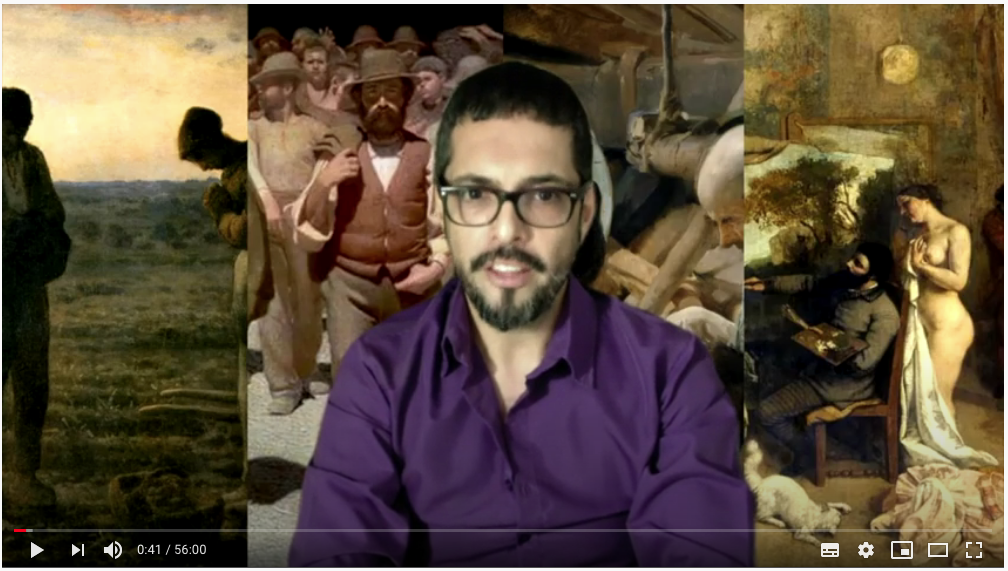
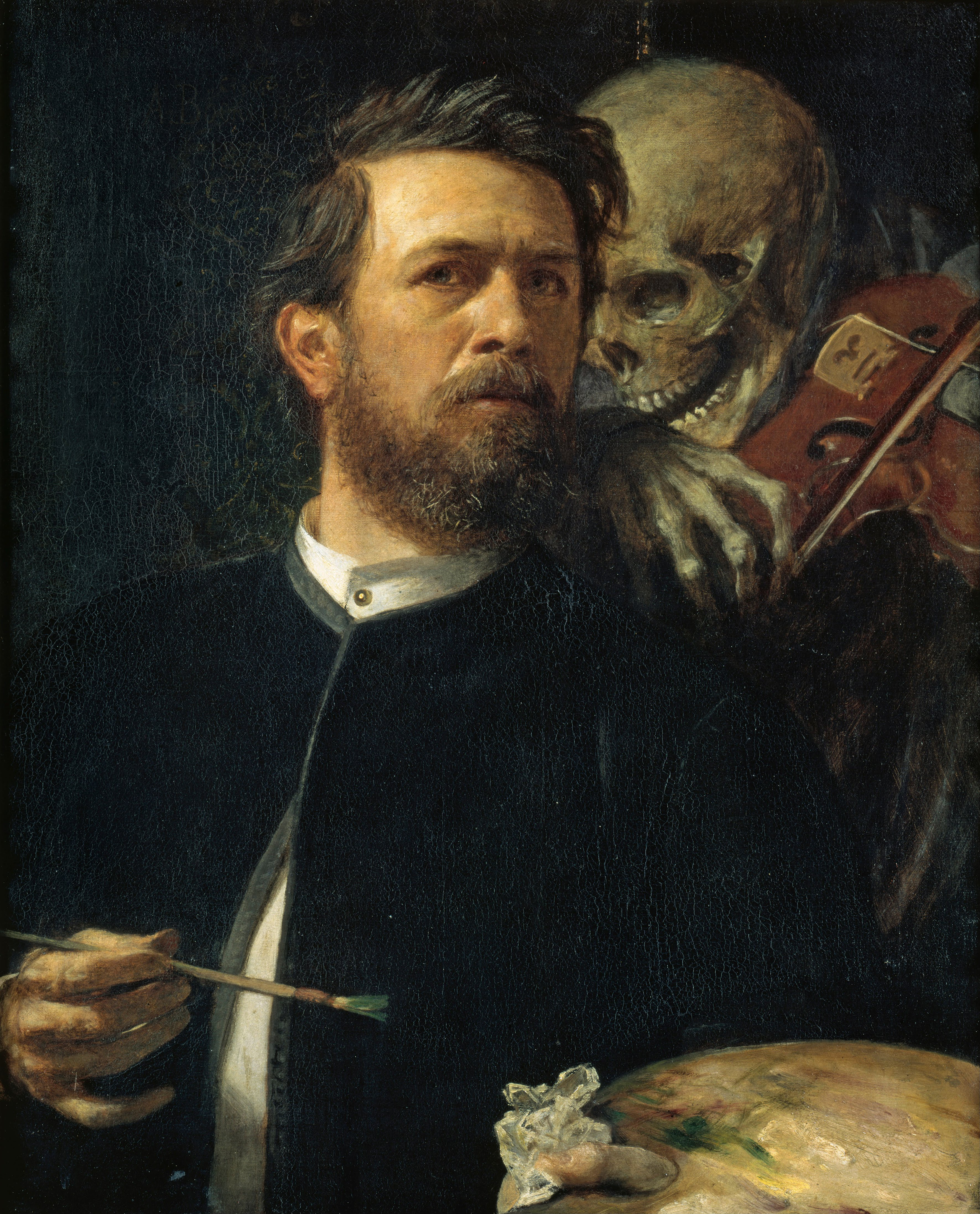
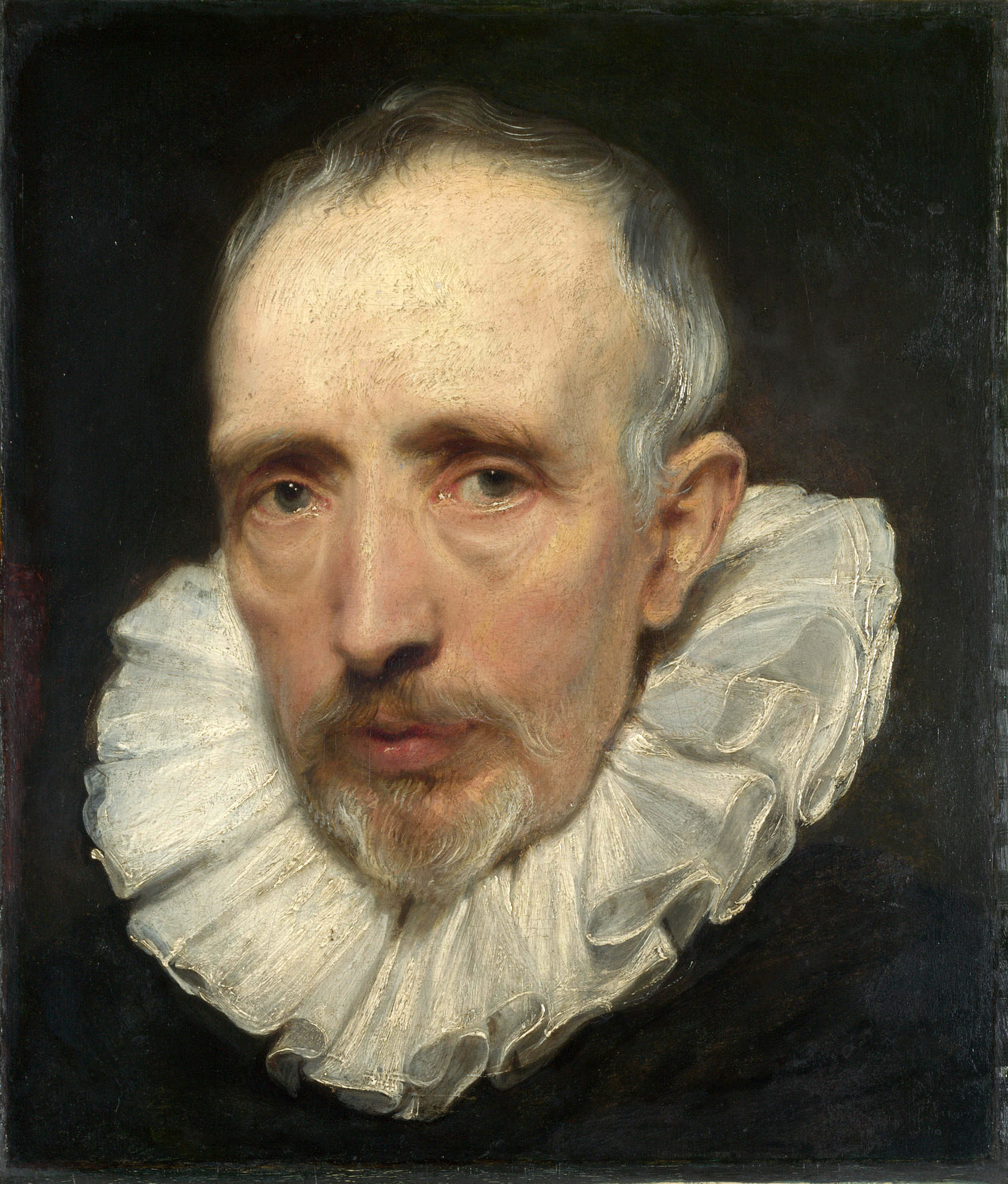
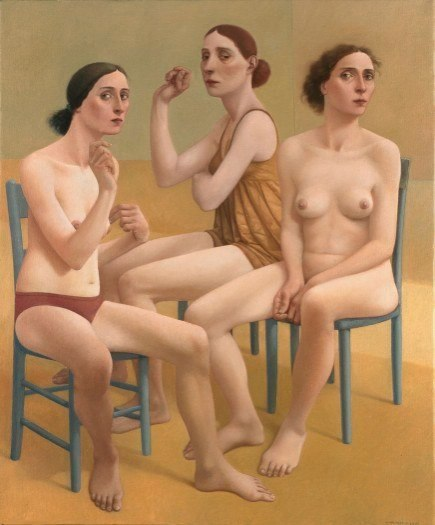
Ciclo de Conferencias DV: 1. EL REALISMO: Orígenes

Comenzamos el nuevo proyecto de conferencias virtuales, donde abordaremos los grandes temas de la historia del arte, de la mano de artistas DV, historiadores del arte, galeristas y artistas amigos.

Aproximación histórica, principales artistas representantes y la teoría realista de Adolfo Couve.

2020 DV PRODUCCIONES
Ciclo de conferencias de historia del arte DV Madrid
“El realismo y su análisis”
Creado y presentado por Oscar Villalón
Madrid, 18 de julio de 2020 18:00

Publicado el Deja un comentario

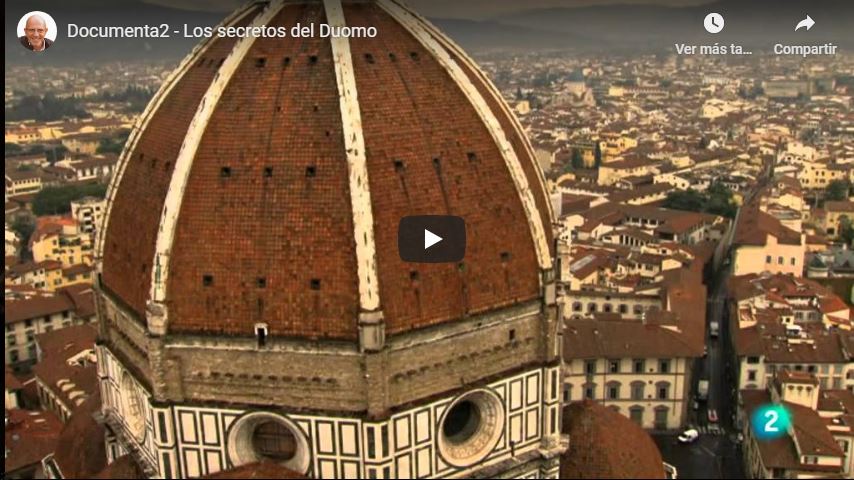
Aula virtual – vídeo recomendado 8: Brunelleschi, el genio de la arquitectura renacentista.

Durante siete semanas hemos estado desarrollando el ciclo de los Pilares del Arte Moderno en donde se ha hecho una descripción detallada del aporte que hicieron a la evolución de la pintura Velázquez, Rembrandt, Rafael y Tiziano, la influencia de Caravaggio en lo dos primeros, el peso de la escuela de Florencia iluminada por Lorenzo el Magnifico y su herencia en la escuela de Venecia y la de Roma que serían las vertientes mas importantes desde el renacimiento al presente en el desarrollo de las artes plásticas.

Durante las próximas semanas seguiremos estudiando a cada autor desde el prisma de una de sus obras mas destacadas con el análisis del maestro, escritor y pintor Adolfo Couve y con Velázquez además el filosofo post-modernista Michel Foucault, por eso es importante un repaso de los videos mencionados para quien los haya visto y por supuesto para quienes no han tenido la oportunidad.

El listado es el siguiente:

Agregamos además:

Brunelleschi, el genio de la arquitectura renacentista.

https://www.youtube.com/watch?v=C83OKYj5GEw&list=PLbADr6ST5j6qyv8xu3AkqO_Eh7bQBNXxc&index=10

Cosimo de Medici lo sabia, quien construyera el Duomo (Cúpula) de la catedral de Florencia sellaría su poder en Italia, gozaría de la inmortalidad y su influencia sería perpetua.

La cúpula de la catedral de Florencia, la obra maestra de la arquitectura del Renacimiento, es uno de los mayores hitos de la ingeniería de todos los tiempos. Construida hace 600 años por Filippo Brunelleschi presenta una técnica de construcción tan ingeniosa e innovadora que hoy día sigue sorprendiendo.

Esperamos que disfruten del panorama cultural!


Publicado el Deja un comentario

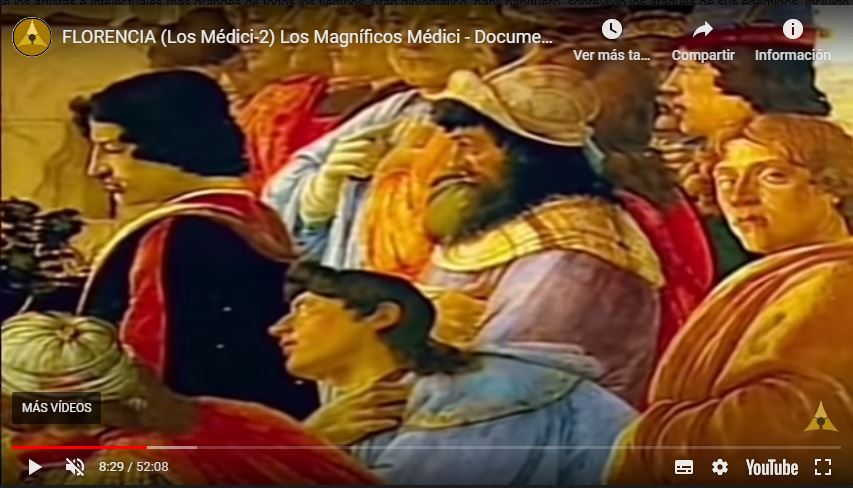
Aula virtual – vídeo recomendado 7: Los Médici, El Magnífico

La dinastía Médici llegaría a su máximo esplendor a través del nieto de Cosimo, Lorenzo, llamado El Magnífico, su aporte a la humanidad lo convertiría en una pieza clave para el Renacimiento, fue el mecenas por excelencia, se rodeó de los artistas e intelectuales más grandes de todos los tiempos, gran diplomático, hábil banquero, sobrevivió los ataques de sus enemigos, incluido el Papa en la Conspiración de los Pazzi, un cobarde intento de asesinato que casi acaba con Lorenzo siendo asesinado su hermano Giuliano, sus partidarios se vengan de forma inmediata de aquellos que están en contra de la familia Médici. Con su refuerzo en el poder, Lorenzo se entrega a la revolución creativa concebida por su abuelo. Algunos de los genios más importantes, que el mundo jamás ha conocido, florecen bajo el poder de Lorenzo: Miguel Ángel, Botticelli, Leonardo Da Vinci entre otros. Florencia se declara capital cultural del mundo. Pero aparece un contragolpe, un joven monje llamado Savonarola carga públicamente contra la decadencia y maldad de la ciudad. Cuando Lorenzo muere en 1492, su familia es conducida fuera de la ciudad y Savonarola lleva a Florencia hacia la furia de la purificación fundamentalista. Obras de arte de incalculable valor como cuadros, libros, esculturas, ciencia, filosofía, etc, fueron destruidas en la ahora infame “hoguera de las vanidades”, la historía le recordará por este abominable acto pero a Lorenzo se le recordará por haber sido, El Magnífico.

Publicado el Deja un comentario

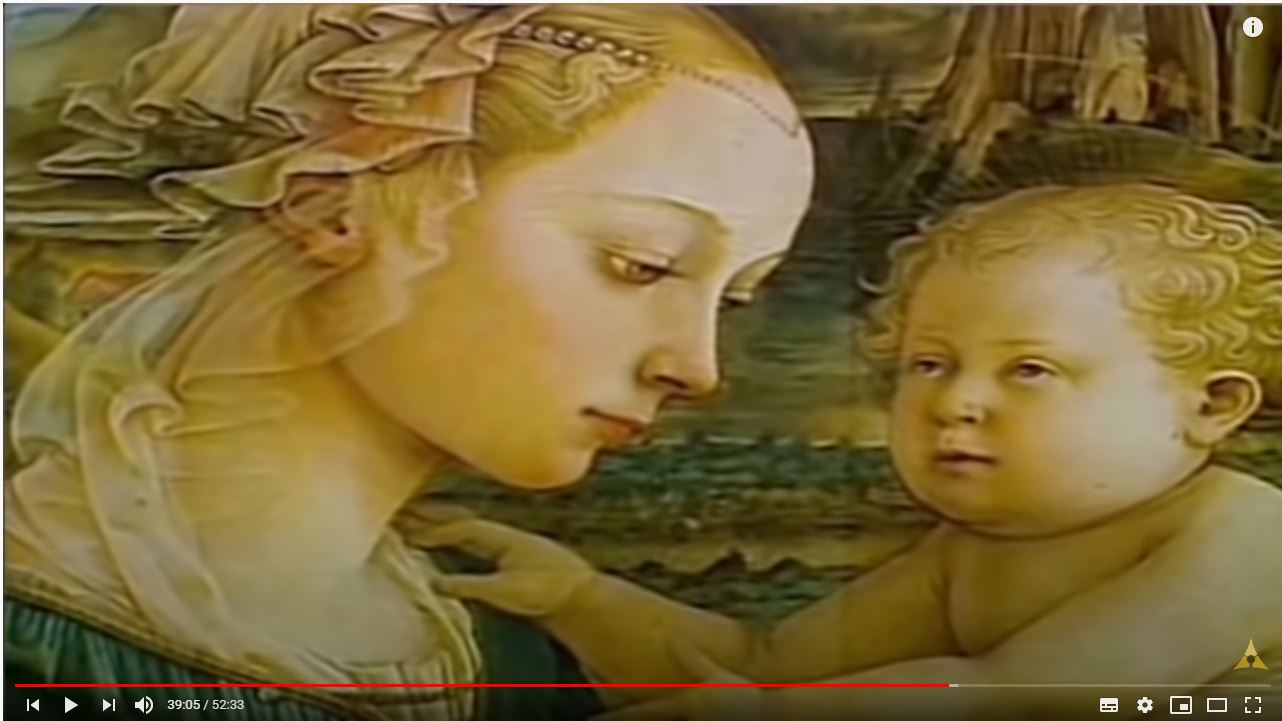
Aula virtual – video recomendado 6: Los Médici, el origen de una dinastía

El ciclo «Los Pilares de Arte Moderno» nos explica a través de la obra de Velazquez, Rembrandt, Rafael y Tiziano el porqué su obra marcaría los cimientos del arte moderno que daría paso mas tarde al arte contemporáneo. En el siguiente ciclo se enfoca en el origen de la influencia de ellos que fue la Escuela Florentina iniciada en la Italia pre-renacentista y llegaría a la cúspide en pleno renacimiento de la mano de la familia más influyente de la historia, Los Médici.

Este documental describe el origen y ascenso del patriarca de esta familia, Cosimo de’ Medici (Cosme en español) y su época. Su padre Giovanni de’ Medici inicia la dinastia creando una fortuma de incalculabe valor a través del negocio bancario llegando a ser el más grande del mundo hasta entonces, reyes, príncipes y papas eran sus clientes estableciendo su imperio económico en el corazón de la República de Florencia llevando a esta ciudad a la cima cultural dejando el mayor legado de la arquitectura occidental desde tiempos remotos, nacería una explosión de aprendizaje clásico y pensamiento creativo. Florencia florece como una nueva Roma.

Publicado el Deja un comentario

Aula virtual – vídeo recomendado 5: Tiziano, maestro de la forma abierta

Queremos compartir nuestra satisfacción con el Aula virtual que ya ha cumplido un mes de vida y con resultados muy buenos tanto en la academia Online como el apoyo teórico audiovisual que están siguiendo y compartiendo alumn@s y amig@s de la escuela, lo marca un hito en lo que se refiere a difusión cultural por parte nuestra y no sería posible gracias a ustedes y a la tecnología.

Hoy presentamos al cuarto y último invitado, Tiziano (1476-1576), maestro de la forma abierta quien cierra el ciclo: Pilares del Arte Moderno.

Conocido por su pincelada decidida, enérgica y muy expresiva, por revolucionar la composición oficial y abrir todos los límites del lienzo. Tiziano, fue quien llevo a la cúspide a la escuela veneciana. Manejaba como nadie las composiciones asimétricas y sin jerarquía. Muchas de las piedras fundadoras de su estilo, fueron labradas desde las ideas del gran maestro Giovanni Bellini, tras su muerte, Tiziano las evolucionó y continuó modernizando durante toda su vida.

Publicado el Deja un comentario

Aula virtual – Video recomendado 4: Pilares del arte moderno: Rafael

Un nuevo episodio del ciclo: Pilares del Arte Moderno, ya conocemos a dos: Rembrandt (claroscuro) y Velázquez (color-valor) como la influencia de el Caravaggio sobre la obra de ambos.

Nuestro tercer invitado es el máximo exponente de la escuela de Roma, Rafael di Sancio (Urbino, Italia 1483-1520 Roma, Italia), este artista llevaría a su máxima expresión la Forma cerrada: Se define así a la composición en que todos los elementos tienen su contorno definido por una línea ininterrumpida en todo su perímetro que la separa perfectamente del fondo.


Su genio apoyado de una técnica perfecta heredera de la Roma clásica más la fuerte influencia de la escuela de Florencia elevó a este artista a lo mas alto del Renacimiento y de la historia del arte aportando e influyendo a generaciones de artistas como en el Barroco a Caravaggio o a Ingres en el Neoclasicismo 250 años después de su muerte.

Publicado el Deja un comentario

Aula virtual – Video recomendado 3: Diego de Velazquez o el realismo salvaje

Este documental sobre Diego Velázquez, se presenta al artista constantemente en busca de una verdad humana, este documental se propone descubrir la singularidad del «pintor de pintores» y revolución artística y estética que Diego Velázquez causó en un viaje de investigación. El narrador es un joven de veinte años, Marco, estudiante de cine. Su voz y sus impresiones de la obra de Velázquez constituyen el eje central, que no se centran en la película camino demasiado lineal a través de la obra del maestro español del siglo XVII

  • Título original    Diego Velazquez ou le réalisme sauvage (TV)
  • Año                    2015
  • Duración            52 min.
  • País                   Francia Francia
  • Dirección           Karim Aïnouz
  • Guion                 Karim Aïnouz, Marcelo Gomes, Yves Nilly
  • Música               Burak Özdemir
  • Fotografía          Ali Olay Gözkaya
  • Reparto              Documentary
  • Productora         Arte France / Les Poissons Volants
  • Género               Documental | Pintura. Mediometraje. Telefilm
Publicado el Deja un comentario

Aula virtual – Video recomendado 2: Rembrandt, maestro del claroscuro

Desde el Aula virtual les invitamos a disfrutar de este video, nuestro siguiente invitado es:

Rembrandt, maestro del claroscuro

Rembrandt Harmenszoon van Rijn (Acerca de este sonido [ˈrɛmbrɑnt ˈɦɑrmə(n)soːn vɑn ˈrɛin] (?·i) Leiden, 15 de julio de 1606-Ámsterdam, 4 de octubre de 1669), más conocido simplemente como Rembrandt, fue un pintor y grabador neerlandés. La historia del arte lo considera uno de los mayores maestros barrocos de la pintura y el grabado, siendo con seguridad el artista más importante de la historia de los Países Bajos.1 Su aportación a la pintura coincide con lo que los historiadores han dado en llamar la edad de oro neerlandesa, el considerado momento cumbre de su cultura, ciencia, comercio, poderío e influencia política.

Habiendo alcanzado el éxito en la juventud, sus últimos años estuvieron marcados por la tragedia personal y la ruina económica. Sus dibujos y pinturas siempre fueron muy populares, gozando también de gran predicamento entre los artistas y durante veinte años se convirtió en el maestro de prácticamente todos los pintores neerlandeses.2 Entre los mayores logros creativos de Rembrandt están los magistrales retratos que realizó para sus contemporáneos, sus autorretratos y sus ilustraciones de escenas bíblicas. En sus autorretratos, especialmente, se observa siempre la mirada humilde y sincera de un artista que trazó en ellos su propia biografía.1

Rembrandt tenía un profundo conocimiento de la iconografía clásica y en sus pinturas y grabados solía interpretarla libremente para ajustarla a su propia experiencia. Así, en la representación de una escena bíblica Rembrandt solía combinar su propio conocimiento del texto con su particular concepto de la composición clásica y algunas observaciones anecdóticas de la población judía de Ámsterdam.3 Por la empatía con que retrató la condición humana, Rembrandt ha sido considerado «uno de los grandes profetas de la civilización».4

Publicado el Deja un comentario

Aula virtual – Video recomendado 1: Caravaggio o el origen del realismo


Caravaggio o el origen del realismo:
Michelangelo Merisi da Caravaggio (Milán, 29 de septiembre de 1571-Porto Ércole, 18 de julio de 1610), conocido como Caravaggio, fue un pintor italiano, activo en Roma, Nápoles, Malta y Sicilia entre 1593 y 1610. Su pintura combina una observación realista de la figura humana, tanto en lo físico como en lo emocional, con un uso dramático de la luz, lo cual ejerció una influencia decisiva en la formación de la pintura del Barroco.
(fuente wikipedia)

Publicado el Deja un comentario

Claudio Bravo Camus, el genio al que el hiperrealismo se le quedaba corto

La Vanguardia, REDACCIÓNBARCELONA

Google homenajea al pintor chileno el día que hubiera cumplido 83 años

Claudio Bravo Camus, el genio al que el hiperrealismo se le quedaba corto
Claudio Bravo en su estudio de Tánger, en Marruecos, junto a su obra en proceso ‘La Última Cena’ (Facebook Claudio Bravo/ Massimo Listri)

“Te morirás de hambre, serás un fracasado, un vagabundo”. Con estas palabras Tomás Bravo intentó desmotivar a su hijo en la juventud para que dejara la pintura y buscara otra forma de ganarse la vida. Por fortuna Claudio Bravo Camus (Chile, 1936 – Marruecos, 2011) ignoró a su progenitor y se convirtió en uno de los pintores que mejor controlaban el hiperrealismo, aunque él prefería decir que era superrealista.

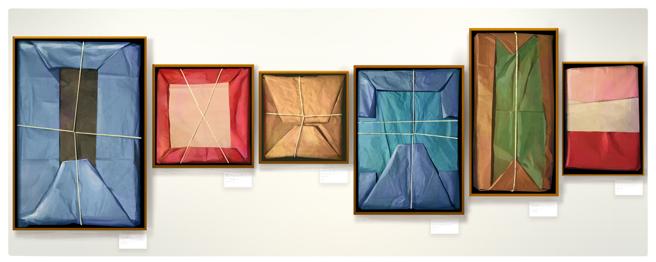
Claudio Bravo Camus nació tal día como hoy de hace 83 años en Valparaíso y con esa excusa el gigante Google ha querido rendirle un homenaje dedicándole un doodle. El famoso buscador ha cambiado sus letras de portada por unas inspiradas en una obra del chileno, los paquetes misteriosos envueltos en papel y atados con un cordel.

Google le ha dedicado un doodle a Claudio Bravo Camus
Google le ha dedicado un doodle a Claudio Bravo Camus (Google)

Este genio de los pinceles empezó a adentrarse en el mundo del arte desde niño imitando obras de Vermeer, Fra Angelico y Baldovinetti, tal y como recoge su biografía. Fue autodidacta y con solo 17 años ya estaba exhibiendo sus pinturas en una famosa galería de Valparaíso.

Bravo Camus fusionó la técnica clásica de los pintores barrocos españoles con un toque de surrealismo al estilo de Salvador Dalí. En ocasiones se le comparaba con los pintores fotorrealistas por su perfeccionismo a la hora de retratar cualquier cosa, desde personas a cajas de cerillas, verduras, cascos de moto o productos de limpieza. Lo que hacía especial al chilero era que no basaba sus lienzos en fotografías, prefería fiarse más de su vista: “El ojo ve mucho más que la cámara: medios tonos, sombras, pequeños cambios en el color o la luz”.

Before the Game, 1983
Oil on Canvas
Ver imagen en Twitter
En la década de los 60 se animó a cruzar el charco y se instaló en España. Primero Barcelona y después en Madrid. Fue ganando fama hasta el punto de que había lista de espera de gente que quería ser retratada por él. Entre sus clientes más destacados había miembros de la familia del dictador Francisco Franco y los líderes filipinos Ferdinand e Imelda Marcos, no tuvo problemas en esa época por ser extranjero y homosexual declarado.


Claudio Bravo Camus podía presumir de haber realizado 50 exposiciones centradas en su persona, además de otras tantas junto a otros artistas. Sus obras están presentes aún en una treintena de museos del mundo y en el año 2000 los reyes Juan Carlos I y Sofía le impusieron la Gran Cruz de la Orden de Alfonso X el Sabio.

Marjana amarillo (detalle)
Óleo sobre lienzo [2008]
Ver imagen en Twitter
Tras aburrirse de tanta fama quiso aislarse en el desierto marroquí y se compró una mansión en Tánger en 1972. Allí amplió su repertorio a retratos y paisajes de animales. En 2008 se mudó a Tarudant donde finalmente falleció tres años después. Murió rodeado de sus sirvientes y sin familia a causa de un ataque de epilepsia que le causó dos infartos.
Claudio Bravo murió a los 74 años en MarruecosClaudio Bravo murió a los 74 años en Marruecos (Facebook/ Claudio Bravo)
Publicado el Deja un comentario

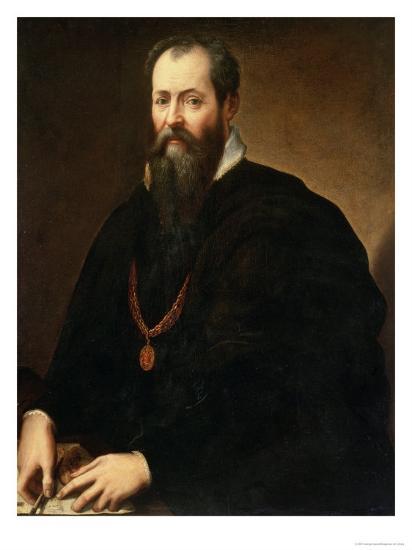
Vida de los más excelentes pintores, escultores y arquitectos por Giorgio Vasari

Giorgio Vasari (Arezzo30 de julio de 1511Florencia27 de junio de 1574) fue un arquitectopintor y escritor italiano.

Considerado uno de los primeros historiadores del arte, es célebre por sus biografías de artistas italianos, colección de datos, anécdotas, leyendas y curiosidades recogidas en su libro Las vidas de los más excelentes pintores, escultores y arquitectos (Le vite de’ più eccellenti pittori, scultori, e architettori italiani, da Cimabue insino a’ tempi nostri 1550; segunda edición ampliada en 1568). Se le atribuye el haber acuñado el término Renacimiento.

Publicado el Deja un comentario

New York Public Library

http://publicdomain.nypl.org/pd-visualization/


This week, the New York Public Library (NYPL) announced the release of over 180,000 public domain images available in high resolution. In conjunction, NYPL Labs launched a data visualization by Brian Foo that enables easy navigation of the Digital Collections objects, allowing users to hover over blocks of images organized by category, color, medium, and other filters. To increase public interaction with the collections, NYPL is also starting new Remix Residencies, where people can apply to work on projects involving gaming, mapping, visualization, and other interactive features.

“I think of libraries as being full of many pieces of culture that are reassembled to create new forms of culture,” Shana Kimball, manager of public programs and outreach for NYPL Labs, told Hyperallergic, noting that the library has long been “a platform for creation” to inspire all forms of written, visual, performing, and now digital art. “I think that’s absolutely a trajectory of the library, we should be a set of resources that people can use for new forms of creation that are contemporary, and ones we haven’t even thought about yet.”

NYPL Labs has a few demonstrations of what these new creations can look like, such as atrip planner based on the Green Book — a travel guide for black travelers from the 1930s to 60s, and Mansion Maniac where you navigate floor plans from early 20th-century New York’s luxury apartments. People have already been experimenting with the NYPL resources, such as OldNYC that maps historic photographs, and this invites closer collaboration with the institution. There are also new crowd-made Twitter bots created since Wednesday’s release, with @NYPLpostcards sharing postcards, and @NYPLphotobotsharing photographs. NYPL is asking visitors to tag creations with #nyplremix to keep the sharing in an evolving dialogue.

“We do these things both because they’re extensions of what the library has always done,” Kimball said. “And we know that the forms of creativity and research in working with the library are changing. We’re extending the library’s mission in the digital context by creating these new residencies.” She added that the projects can encourage different experiences with the objects, and create something new with the historic collections.

Fuente: http://hyperallergic.com/266419/new-york-public-library-releases-180000-images-and-invites-users-to-remix-them/

Publicado el

Teresa Oaxaca (1987)


Artist Statement
«Aut inveniam viam aut faciam»
«I shall either find a way or make one.»

Teresa Oaxaca is an American born artist based currently in Washington D.C. She is a full time painter whose works can be seen in collections and galleries throughout the US and internationally. Her talent has been recognized and rewarded by museums and institutions such as the American Museum of the Cowboy, The former Corcoran Gallery of Art, The Art Renewal Center, The Elisabeth Greenshields Foundation, the Posey Foundation, and The Portrait Society of America and the Museu Europeu D’Art Modern in Barcelona.

Her training includes a four-year diploma at the Angel Academy of Art (Florence Italy, Graduate studies at the Florence Academy, an Apprenticeship with Odd Nerdrum in Norway, and studies at the Art League of Alexandria VA where she trained with Robert Liberace, Paul Lucchesi, and took many other courses. Currently she teaches workshops around the United States and in Europe.

In addition to her studio work she takes a variety of portrait commissions including Family Portraiture, Professional/Business, Custom and Informal arrangements. She exhibits widely and sells her work on a regular basis.

Within Washington D.C. she has participated with local groups such as The Esperanza Education Fund and the National Education Association. In 2014 she became a member of the Young Partners Circle of The National Museum of Women In The Arts. She is also a registered member of the National Art Education Association (NAEA) and an Ambassador for the newly established Da Vinci Initiative, which designs and promotes skill-based learning and lesson plans for US K-12 public school educators.

Since returning to the Washington D.C. area I have been focusing on creating a new and large body of work. My new series have taken me away from academic studies to more elaborate compositions which combine human and still life elements. In addition to this I now take on portrait commissions, and continue my studies in art by observing and copying the painting of the Old Masters in art galleries throughout the world.

My work is about pleasing the eye. I paint light and the way it falls. Simple observation reveals beauty; often it is found in the unconventional. Because of this I have learned to take particular delight in unusual pairings of subject matter. Frequently my compositions are spontaneous. When a person comes to me, they occupy a space my mind. Arrangements form from there until with excitement I see and have the idea. The design is both planned and subconscious. For this reason I surround myself with Victorian and Baroque costume, bones, and other things which I find fascinating- I want subject matter to always be at hand.

My paintings are created with oil paint on canvas. I am conscious of the traditional craftsmanship I have attained in Florence. While my interest in new pigments and tools may cause minor alterations in my materials, these really remain fundamentally the same. All my evolution is taking place on the canvas and in my head; in what I see in nature and interpret in two dimensions on the picture plan. I have the fundamentals of design to work with when planning a painting. I make preparatory studies. I use multiple layers to build an illusion of light and form. When this illusion is convincing and to my taste, the painting is done.

Publicado el Deja un comentario

Elena Abreu Apellániz

Obras 2004 – 2016

Elena Abreu Apellániz ha abordada sus temas con una actitud que evidencia mayores expectativas y una exigencia visual muy evolucionada. En buena medida no ha esquivado las dificultades que imponía el tema y su resultado es convincente. Perspectivas amplias y atmosféricas que logran compensar lo deshabitado de las vistas sin gentes con un colorido y una luz que inyectan vitalidad y naturalidad a los espacios que más que reales son psicológicos. Elena Abreu Apellániz ha elegido, la factura y las técnicas del realismo para expresar su propio mundo, pero no se trata de un verismo virtuosista que quiere emular los pormenores fotográficos, sino algo más hondo y reflexivo en lo que nada es igual a la apariencia. Una apropiación de los colores y la pincelada en servicio de los efectos de la luz y la movilidad de la naturaleza y su reflejo en la propia sensibilidad. Se demuestra claramente cómo los desafíos permiten a un autor hallar en claves distintas, atisbar nuevos efectos, luces, toda la potencialidad de un tema desarrollado y exprimido. Una clara evidencia, una incitación a volver a asumir en cada momento la responsabilidad sobre su producción, sobre su huella. La obra se convierte en una aventura individual y en éste punto comienza tal vez la posibilidad de llegar a otros niveles de desarrollo creativo. Donde las problemáticas, lejos de quedar estancadas en los rudimentos del lenguaje pictórico básico, se proyectan en la problemática esencial del quehacer artístico libre de todo lo verdaderamente prescindible. Quedamos a la espera de conocer la forma que Elena Abreu Apellániz elegirá tomar su camino, asumir su responsabilidad consigo misma. La compresión plena que su obra verdadera está en sus manos y solo en sus manos.

ACADEMIA DECINTI VILLALÓN. Madrid, 2008

Publicado el Deja un comentario

Pieter Lastman (1583 – 1633)

Fuente: Wikipedia
Pieter Lastman (Ámsterdam,1 1583 – 1633) fue un pintor holandés de la época barroca. Se recuerda a Lastman, sobre todo, porque entre sus alumnos estuvieron Rembrandt (hacia 1622-1623) y Jan Lievens.
Pieter Lastman era hijo de un correo, que fue despedido en 1578 porque siguió siendo católico. Su madre apreciaba grandemente la pintura. Su aprendizaje se produjo con Gerrit Sweelinck, hermano de Jan Pieterszoon Sweelinck y que, a su vez, había sido aprendiz de Cornelis van Haarlem; por esta vía llegan a su obra las influencias de la antigua escuela de pintura de Haarlem. Pero tuvo mayor importancia el viaje que hizo, aproximadamente entre 1604 y 1607, a Italia. Allí descubrió la obra de Caravaggio (lo mismo que los pintores de la Escuela de Utrecht unos pocos años más tarde), de los Carracci y de Adam Elsheimer, quien le influyó en el paisaje y el modelado de las figuras. De vuelta a Ámsterdam, se trasladó con su madre a Sint Antoniesbreestraat, viviendo cerca del Geurt van Beuningen. Lastman no se casó nunca, aunque estuvo prometido con la hermana de Gerbrand Adriaensz Bredero. Debido a su salud, Lastman se fue a vivir con su hermano en 1632.

Debido a que Rembrandt nunca visitó Italia, es muy probable que recibiera la influencia del caravagismo (por ejemplo, en el claroscuro) a través, principalmente, de Lastman.

Obra

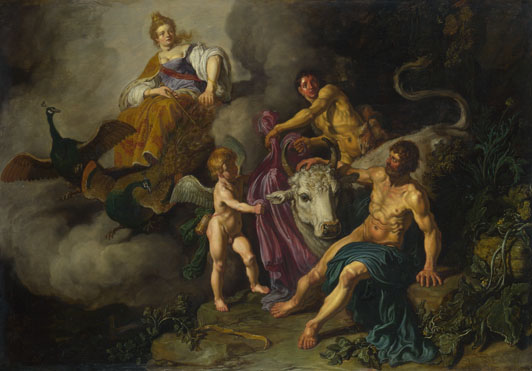
Lastman cultivó el género de la pintura de historia, con temas mitológicos (Juno descubriendo a Júpiter con Ío) y bíblicos. Presenta paisajes inspirados en la Antigüedad clásica. En sus cuadros, Lastman prestó gran atención a las caras, manos y pies.

Publicado el Deja un comentario

Katerina Belkina (1974)

Font: Katerina Belkina & Karsten Meissner


profilepicturebykaterinabelkina-d4moafdBirthplace: Samara (Russia)
Birth year: 1974
Lives in: Berlin
Works in: Berlin
Website: http://www.belkina.ru

Schools:
Photo School Michael Musorin, Samara, 2002
Art Academy Petrov-Vodkin, Samara, 1993
Art School 1, Samara, 1989

Representing galleries:
Galerie Lilja Zakirova (Nederland), Absolute Art Gallery (Belgium), Duncan Miller Gallery (USA), FOTOLOFT GALLERY (Moscow)


Statement

Katerina Belkina was born in Samara, a city in the South-East of the European part of Russia. She grew up in an artistic atmosphere; her mother is a visual artist and, in her place of birth, she got an education in the art of painting at the Art Academy. She continued her education in 2000 at an Academy for Photography also in Samara and exhibitions of her mysterious self-portraits ensued in Moscow and Paris. Katerina Belkina was nominated for the prestigious Kandinsky Prize (comparable to the British Turner prize) in Moscow in 2007. At the moment, Katerina Belkina is living and working in Berlin.

Awards

2014 Moscow International Foto Awards – 1st place in category Fine Art, Moscow
2012 IPA International Photography Awards – 1st place in 3 categories, Los Angeles
2010 Px3 PHOTO COMPETITION, France. – 1st place in portrait’s category, Paris
2008 Art Interview – 14th International Online Artist Competition – 1st place, Berlin
2008 Px3 PHOTO COMPETITION – 2nd place in subcategory for «Not a man’s world» series, Paris
2008 International Photography Awards – 1st place in subcategory, Los Angeles
2007 Nominee of Kandinsky Prize – 2007 (Russian artist of the Year), Moscow
2007 International Photography Awards – 2nd place in subcategory, Los Angeles

Since 2005, exhibited in group and solo shows in: Russia, Netherlands, USA, Germany, Canada, Belgium, Italy, France, Korea, Monaco, Austria, Hungary.

Publications

Het Parool – Kunst & media, Art Actuel, Das Fotoportal, Le Figaro, Photo Art, Twill, Professionele Fotografie, Kunstbeeld.NL, EYEMAZING, Monthly Art Magazine, Expression, Fine Art Photo, il Fotografo, Foto&Video, Digital Photo, Zebra, Hello, National Geographic, Seventeen, Gala, Le Journal des Arts, Le Journal de la Photographie, Tete-a-Tete and other.

Solo Exhibitions

2015 Galerie Lilja Zakirova, Heusden, Netherlands
2014 Empty Spaces, Duncan Miller Gallery, Santa Monica, USA
2011 Empty Spaces, exhibition in the framework of the 4th Moscow Biennale of contemporary art, Fotoloft Galerie, Moscow, Russia Empty Spaces, Galerie Lilja Zakirova, Heusden, Netherlands 2010 Katerina Belkina, Galerie Lilja Zakirova, Heusden, Netherlands
2008 Not a Man‘s World, Galerie Lilja Zakirova, Heusden, Netherlands 25 women I loved, FotoLoft Gallery, Moscow, Russia
2007 A.M. Gorky Literary Memorial Museum, Kazan, Russia
2004 Charity personal exhibition and sale for the fund “Children’s Hearts Foundation”, Moscow, Russia

Group Exhibitions

2015 Cranach 2.0 in the framework of the Lucas-Cranach-Prize, Exerzierhalle Wittenberg, Germany Russian Art Week, The Ballery Berlin, Germany Cranach 2.0 in the framework of the Lucas-Cranach-Prize, Kronach, Germany
2014 brau.ART, Dessau, Germany Continuité Spring Exhibition, Galerie Lilja Zakirova, Heusden, Netherlands
2013 Heusden in Springtime, Galerie Lilja Zakirova, Heusden, Netherlands
2012 Autumn Exhibition, Galerie Lilja Zakirova, Heusden, Netherlands Madre Russia: Group show of Russian contemporary photography, Asolo, Italy Gop-art. Street art Festival, Rostov on Don, Russia 2. PHOTOSPECTRUM INT 2012, Crossover, 3+1, Seoul, Korea 2011 Young Artists Project
2011: Future Lab, Daegu, Korea 5 Ans de Photographie à l’Espace Art 22, Art 22 Gallery, Brussels, Belgium
2010: Life’s Journey… to Heusden, Summer Exhibition, Galerie Lilja Zakirova, Netherlands Festival: Living Perm, GOP-ART, Perm Museum of Contemporary Art, Russia Russian artists, an art superlative, St Andre Abbey, Meymac, France Russian Tales, EXPRMNTL Galerie, Toulouse, France 1. Photobiennale of the Russian Museum, St.-Petersburg
2009: Die Winterreise, Galerie Lilja Zakirova, Heusden, Netherlands Summer Salon, Galerie Lilja Zakirova, Heusden, Netherlands On the trace of Turgenev, Belffroi Gallery, Namur, Belgium Exhibition of 7 artists of the new generation „Russian fairytales“, Fine Arts Museum, Grenoble, France
2008: You’re an artist, ART4.RU contemporary art museum, Moscow, Russia Young gallerist/Young collectors, Popoffart Galerie, Moscow, Russia Russian Fairy tales, RTR Galerie, Paris, France Summer Exhibition, Galerie Lilja Zakirova, Heusden, Netherlands
2007: White Fair, Espace ART22 Galerie, Brussels, Belgium Kandinsky Prize, in the framework of competition, Contemporary Arts Center – Vinzavod, Moscow, Russia
2006: Fotofusion, Shalyapin’s Museum, Moscow und St.-Petersburg
2003: Ann Arbor Galerie, Ann Arbor, USA

Art Fairs

2015: Kunstbox, Dortmund, Germany Realisme 15, Amsterdam, Netherlands
2014: Art The Hague, Niederlande ARTVILNIUS Art Fair, Lithuania KunstRAI, Amsterdam, Netherlands Photo Independent, Hollywood, USA Art PARIS. Art Fair, France Realisme 14, Amsterdam, Niederlande
2013: AIR9 Art in Redlight, Amsterdam, Netherlands FLAT TAKE I, Seoul, Korea Art PARIS. Art Fair, France Realisme 13, Amsterdam, Netherlands
2012: Fotofever Brussels, European art fair for contemporary photography, Belgium Art in Redlight. SPOT ON, Oude Kerk, Amsterdam, Netherlands Realisme 12, Amsterdam, Netherlands BAMA 2012 Busan Alternative Market of Art, Busan, Korea Art Edition 2012, COEX B HALL, Seoul, Korea Realisme 12, Amsterdam, Netherlands
2011: Art Moscow, Russia Budapest Art Fair, Hungary


Other works

Font: Internet

Publicado el

The Arnolfini portrait: the artist’s alterations.

Captura

A composite infrared reflectogram of The Arnolfini Portrait and many details from it showing the artist’s alterations are presented and discussed; some are

The Arnolfini Portrait – THE NATIONAL GALLERY BULLETIN – PDF

National Gallery Technical Bulletin Volume 16, 1995

The Infra-red Reflectograms of Jan van Eyck’s Portrait of Giovanni (?) Arnolfini and his Wife Giovanna Cenami(?)

Rachel Billinge and Lorne Campbell

4  In 1954 Martin Davies published and discussed infra-red photographs of Jan van Eyck’s ‘Portrait of Giovanni (?) Arnolfini and his Wife Giovanna Cenami (?)’ (NG 186) (note 1); these have attracted a considerable amount of comment from subsequent writers (note 2), for they reveal a great deal of underdrawing and a surprising number of alterations. A composition of seemingly immutable perfection has been created to a large extent by trial and error on the panel itself. There can be no real doubt that Jan van Eyck executed the underdrawing and was himself responsible for all the alterations, just as it appears certain that he painted, without the help of assistants, every significant part of the picture. Infra-red reflectograms made in 1994 (Figs. 1–14) reveal a great deal more of the underdrawing and many more changes (note 3). They provide a basis for re-examining the genesis of this composition.

8

The drawing is executed in a liquid medium using a brush (note 4). In some places the fluid nature of the drawing material is particularly clear since pools of paint, which collect at the end of brushstrokes when a loaded brush is lifted from the surface, can be seen (Fig. 2).

7

The figures, the main architectural elements of the room and major pieces of furniture such as the bed are all outlined. Van Eyck has used a complex system of hatched brushstrokes to indicate areas of shadow. In flat areas such as the back wall and the floor between the figures, the strokes are roughly parallel and tend to slant down from right to left (Figs. 3 and 4). In other areas such as the bolster and the bedspread (Fig. 9) the direction of the brushstrokes varies, giving a suggestion of volume, while the intensity of the overlapping lines indicates the depth of the shadow. A similar system is used in the underdrawing for the heads (Figs. 5 and 6) but on a much finer scale.


The drawing in the green drapery is simpler and employs a more formulaic system of fold lines and short hatching strokes (Fig. 7). This drawing seems, in a way, more careful and precise than that of the background drapery. The hatching is delicate and once again subtleties of volume and shadow are indicated by the direction and intensity of the strokes. In contrast the fold lines and the outline of the hem (Fig. 8) are bolder, seemingly coarser lines than those seen elsewhere in the underdrawing.

10

It is not particularly unusual to find that small details such as the oranges, the beads and the two pairs of shoes are not drawn, but more surprisingly, no underdrawing could be found either for the dog or for the chandelier (Figs. 3 and 4). In both these areas brushstrokes typical of the general underdrawn hatching of shadows can be seen crossing the forms, which suggests that the surface paint is being successfully penetrated.

2


Numerous changes occur in both figures. Arnolfini’s hat was drawn a little higher and the shape was changed slightly during painting when the brim was enlarged over the wall and the crown was extended sideways. Rather more important: Arnolfini was first drawn with his eyes higher than they were finally painted, and looking more to his left. The drawing for his nose and mouth is also above the painted features (Fig. 5 and Plate 2). His wife also shows changes in the face (Fig. 6 and Plate 3). Her eyes were drawn lower and slightly to her left, and her gaze has shifted towards her husband. Her nose and mouth are less changed. It is interesting to note that the shift of her eyes must have been a fairly late change. The very fine, delicate hatching which indicates the shadows in her face has been completed with respect to the drawn eyes. The eyelids and sockets for the painted eyes are not drawn. The change to her husband’s head seems to have been made at an earlier stage since the new positions for all the features are drawn and the hatching of the shadowed areas gives form to the second head.

9

The shift in position of Arnolfini’s right hand was clearly visible in the old infra-red photographs but the reflectogram now reveals the re-drawing of the whole arm that resulted from this change (Fig. 10 and Plate 4). Both his shoulders have been moved down. On his left there are two drawn contours above the final position (which is also drawn). The reflectogram in the area of Arnolfini’s feet shows further changes (Fig. 12 and Plate 5). There are three distinct versions of each foot: a drawn outline, a painted foot that was painted out, and the final painted foot. The drawn feet are further apart than the final position of the feet. The length of the skirt was drawn shorter and underdrawn hatching which relates to the floor can be seen beneath the paint of the fur edging. Fewer changes have occurred in the figure of Arnolfini’s wife. The top of her head was drawn slightly lower and the white paint of the veil extends slightly over the red of the bed curtain as a result. Her left hand was originally drawn with the fingers rather awkwardly angled downwards (Fig. 13). The thumb of her right hand was drawn sticking out parallel to Arnolfini’s (Fig. 11), while his fingers curl further around his wife’s hand in the drawing.


In the background the most significant change is the mirror. The drawing shows a larger mirror with only eight segments in the frame, each of which clearly has a roundel (Fig. 14). The bench and chair from which the brush hangs were altered at quite a late stage; red paint from a higher back to the bench lies under the grey wall beneath the mirror, while the tall wooden chair is painted over the wall and is not drawn. A brush, larger than the painted one, was drawn higher and nearer the mirror, apparently hanging from the wall. The carpet was drawn shorter and has been extended forwards across underdrawing for the floor to meet the hem of the green dress. The chest on which the oranges lie has a more ornate scalloped opening at its base in the underdrawing.


Finally, there are changes in the architecture. The cross-bar in the window seems to have been drawn lower. The shutters on both sides were originally drawn to match the lower position of the cross-bar. The dark shadow in the reflectogram near the top of the window is more of a problem to interpret. The underdrawn lines run parallel to the painted ceiling joists and can be read as a continuation of the ceiling. This seems improbable since it would have made the ceiling lower and Arnolfini unusually tall. It is more likely that the lower window required an area of blank wall above it meeting the ceiling joists in the region of the dark line which crosses the painted shutter, and that the horizontal bottom edge of the dark area marks the top of the drawn shutter.


It is perhaps helpful to describe the under-drawing as it was before Jan van Eyck began to paint. An object in an octagonal frame, presumably a mirror, and a large brush hung on the wall above a higher and longer bench. The beads, the chandelier, and the chair, with all its carved ornament, were not present. Arnolfini, who had a very much larger face and looked towards his wife, presented the palm of his right hand and grasped his wife’s hand more firmly with his left. His garment was shorter and he stood with his feet further apart. His wife had a smaller face and looked downwards. The dog and the two pairs of shoes were not present. The painted signature and date cannot have been conceived until the ten-sided mirror-frame and the chandelier had been executed. There are no traces of ruled guide-lines for the signature, which, moreover, is not horizontal but rises from left to right.


The most remarkable changes are perhaps those in the heads and bodies. Though Jan van Eyck’s people look perfectly convincing, he generally manipulated their appearances quite considerably and his techniques of distortion for men were different from those he applied to women. Arnolfini has a very large head and rather large hands, which agree in scale with his face but not with his arms. His shoulders are extremely narrow and the whole upper part of his body is severely diminished. Even if he must have had an extraordinary nose and nostrils, he does not seem to have been strikingly unusual in appearance but has merely undergone the same processes of distortion which Jan applied in all his portraits of men. In his images of women, Jan again enlarges the heads; and the arms and shoulders are still shrunken. The faces, however, tend to be small in relation to the heads. While he diminishes the cranium and forehead of a man, he enlarges the forehead of a woman. Women shaved and plucked their hair to achieve the high foreheads that were considered marks of beauty. ‘Ce front poly’ was the first of her vanished charms regretted by La Belle Heaumière in François Villon’s poem of 1461/2. Her list constitutes an accurate description of van Eyck’s portrait, and indeed of his idealised Virgins (note 5):

6

‘Cheveux blons, ces sourciz voultiz,

Grant entreuil…

Ce beau nez droit, grant ne petiz,

Ces petites joinctes orreilles,

Menton fourchu, cler viz traictiz,

Et ces belles levres vermailles’


Arnolfini’s wife has, like her husband, a small thorax and arms, though her hands are long and elegant. Her thumbs are impossibly long. It would appear that van Eyck has slightly distorted her features to make them conform more closely to contemporary ideals of beauty and that he has manipulated the proportions of both figures in order to stress the heads and hands.


What is very striking is that the first drawing of the heads of Arnolfini and his wife are even more distorted than the painted heads. His eyes and his mouth are higher and larger, his face is much bigger; her eyes are lower and her forehead is impossibly high. It is puzzling that Jan’s drawn portraits should be more distorted than his painted portraits. His one surviving portrait drawing on paper is the silverpoint of Cardinal Albergati (Dresden, Kupferstich-kabinett), which, with its elaborate colour notes, was certainly made from life. There the head is much more distorted than the painted portrait that was based upon it (Vienna, Kunsthistoriches Museum) (note 6). In the drawing, by instinct or by design, Jan has diminished the cranium and enlarged the features, whereas in the painting the distortions are rather less pronounced. The Arnolfini heads have undergone parallel transformations, from very distorted initial underdrawing to less radically distorted painting.

Arnolfini’s head is turned slightly towards his wife but his nose and ear are seen almost frontally, as was the larger, underdrawn nose, possibly in an effort to make the nose, and particularly the nostrils, look less grotesque. The painted features are still rather too large for the face, and the face is still too large for the head and body. His wife, in contrast, has better proportioned features but her eyebrows, drawn and painted, are impossibly high, and her nose, drawn and painted, is turned further into profile than the rest of her head. Such minute adjustments in the heads allowed van Eyck to represent each of his subjects’ features in its most characteristic and recognisable form; by such means, without doubt, likeness is enhanced.

1

In the underdrawing, Arnolfini’s right hand must have looked rather forbidding. Once it had been decided to show in the mirror reflections of the two visitors, it may have seemed imperative to turn the hand so that his gesture was more welcoming. At the same time, perhaps, his glance was turned away from his wife and towards the visitors. The lengthening of his garment and the changes in the positions of his legs would have made him look very much less ungainly (note 7).

It has often been argued that many of the details in the portrait have symbolic significance (note 8). Most of these details – the dog, the discarded shoes, the chandelier, the single lighted candle, the oranges, the beads, the image of Saint Margaret – turn out not to have been underdrawn but to have been put in at rather a late stage. It can no longer be maintained that van Eyck was working to a symbolic programme carefully elaborated in advance. The theory that the painting tells a story, that it is more than a portrait, needs to be reconsidered. The many alterations must also indicate something about the relationship between van Eyck and Arnolfini, who would have been in contact both in Bruges and at the Burgundian court. The two men may have been friends; the fact that van Eyck painted another portrait of Arnolfini (Berlin, Staatliche Museen; Fig. 15) suggests that they were (note 9). The double portrait may not have been commissioned in the usual way; it could even have been a gift from Jan to Arnolfini. If the Arnolfini commissioned and paid for their portrait, they must have been in constant contact with van Eyck, to propose, or to be consulted over, every detail. While much remains to be discovered about the double portrait and about Jan van Eyck’s working procedures, the new evidence of the infra-red reflectograms must be taken into account in any future investigations of the painting.

Acknowledgement

The authors wish to thank David Saunders for his work in combining the infra-red and colour images published in this article. The technique is described in detail on pp. 61–5.

Note

Rachel Billinge is Leverhulme Research Fellow in Infrared Reflectography at the National Gallery. Lorne Campbell, Reader at the Courtauld Institute of Art, holds a British Academy Research Readership in order to work on the new Catalogue of the Early Netherlandish School pictures. The painting was examined during the systematic technical survey of all the pictures undertaken in connection with the preparation of the catalogue.

Publicado el

DeCinti (1973), «La Nave de los Necios»

Fuente: Wikipedia
La nave de los Locos o de los necios (en el original alemán, Das Narrenschiff, en su traducción latina, Stultifera Navis) es una obra satírica y moralista publicada en Basilea en 1494 y escrita por el teólogo, jurista y humanista conservador de origen alsaciano y cultura alemana Sebastian Brant (o Brand). Es una sucesión de 112 cuadros críticos (el número puede variar dependiendo de las ediciones) acompañados cada uno con un grabado, en los que Sebastian Brant critica los vicios de su época a partir de la denuncia de distintos tipos de necedad o estupidez.
http://www.decinti.com/obra/ciclo-nave-de-necios/


DeCinti (1973)

Pintor chileno-italiano, Licenciado en Bellas Artes Universidad de Chile, radicado en España desde 2002. Distinguido con la Beca Excelencia Académica proceso de admisión 1991 a las universidades chilenas. Primer premio concurso Arte en Vivo en 1994 y la beca de posgrado Fundación Arte y Autores Contemporáneos en 2002. Fundador en Madrid del proyecto artístico Decinti&Villalón en 2004, junto al artista chileno-español Oscar Villalón. Desde 2006 es colaborador y promotor del proyecto Ramírez Máro Institute junto al artista alemán Rafael Ramírez Máro. Desde 2011 colabora Eduardo Basterrechea en El Molino de Ideas, Madrid y co-fundador del proyecto artístico DeArtibus Barcelona.

Publicado el Deja un comentario

Joseph Solomon (1860-1927)

Joseph Solomon RA (16 September 1860 – 27 July 1927) was a British painter, a founding member of the New English Art Club and member of the Royal Academy.

Solomon’s family was Jewish, and his sister, Lily Delissa Joseph (née Solomon), was also a painter. He made an important contribution to the development of camouflage in the First World War, working in particular on tree observation posts and arguing tirelessly for camouflage netting.

Born in London in 1860, Solomon studied at various art schools, sequentially, Heatherley School of Fine Art, the Royal Academy Schools, the Munich Academy, and École des Beaux-Arts (under Alexandre Cabanel). Solomon also studied separately under Rev. S. Singer.[3][4] He exhibited his first works as early as 1881, and showed at the Royal Academy, the New Gallery, and the Society of British Artists.[3] In 1886, he became one of the founding members of the New English Art Club. In 1896, he became an associate of the Royal Academy, with full membership following in 1906, one of the few Jewish painters to do so.[3][5] He joined, and became president of, the Royal Society of British Artists in 1919.

Art

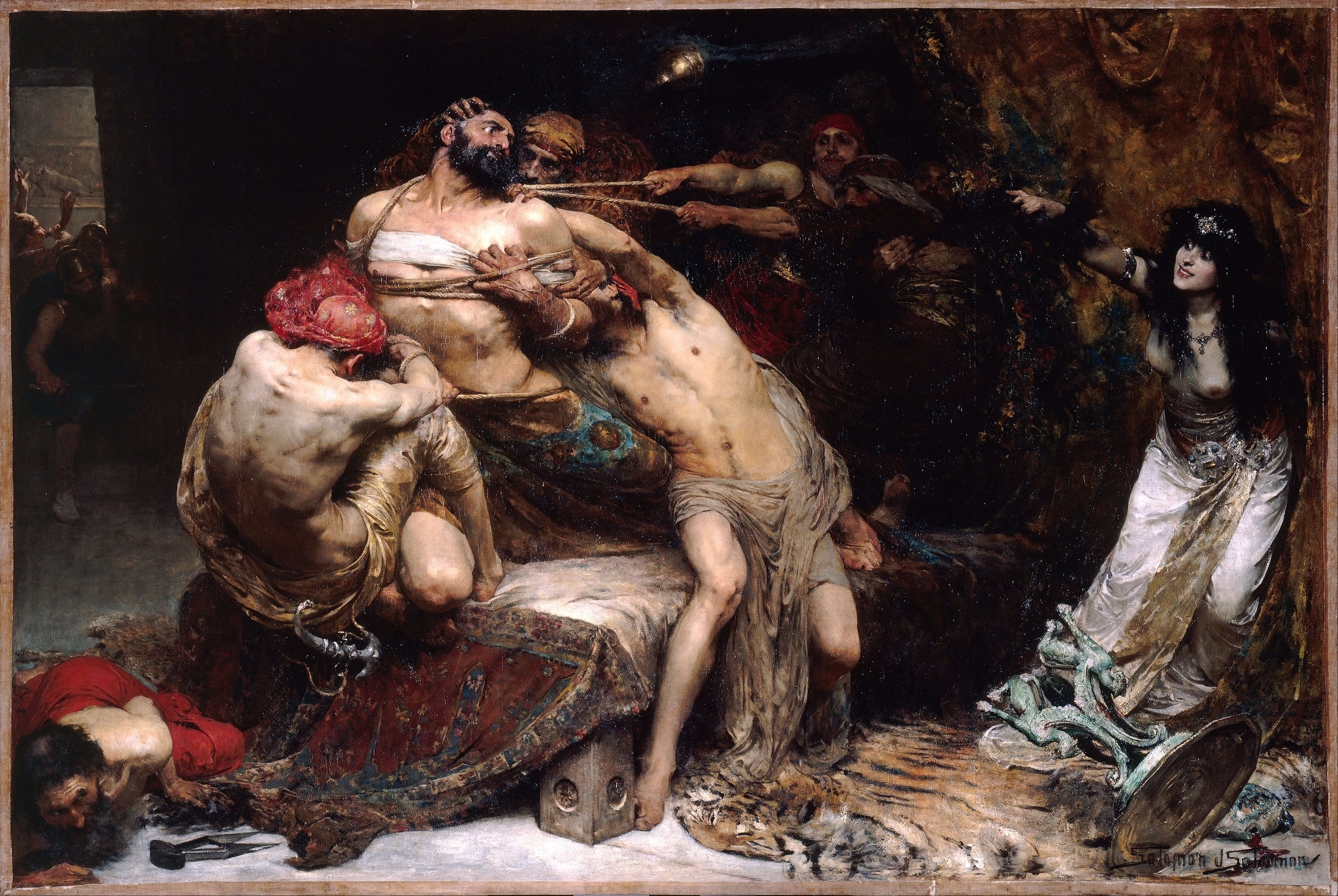
Samson (1887)
Solomon’s painting was grounded in his influence from his teacher Alexandre Cabanel, but was also influenced by Frederic Leighton and Lawrence Alma-Tadema. Solomon painted mainly portraits to earn a living, but also painted dramatic, theatrical scenes from mythology and the bible on large canvasses. These scenes include some of his more popular paintings. One of Solomon’s most popular works was Samson (1887), depicting a scene from the biblical story of Samson and Delilah. This painting was praised for its use of multiple male nudes in active poses. Samson is one of few Solomon paintings on regular display, at the Walker Art Gallery in Liverpool. Some other Solomon paintings that have received significant attention include Ajax and Cassandra (1886, illustration, right) and The Birth of Love (1896).

Solomon became well known as an innovative portrait artist by the time he painted Mrs Patrick Campbell as ‘Paula Tanqueray’ (1894), her role in Arthur Wing Pinero’s The Second Mrs Tanqueray, and went on to paint a number of portraits of well-known people, including the architect Sir Aston Webb, and later in life, the royals King George V, Queen Mary, and Prince Edward (later King Edward VIII). Solomon was also in demand as a book illustrator, particularly adventure books. In 1914, Solomon authored The Practice of Oil Painting and Drawing.

Camouflage

A British Mark I tank with the Solomon camouflage scheme
During World War I, Solomon was a pioneer of camouflage techniques. Having originally signed-up at the start of the war as a private in the United Art Rifles, a home defence corps, he promoted his ideas on camouflage, initially in the press and then directly to senior army officers.

In December 1915, General Herbert Plumer arranged for Solomon to visit the front lines and investigate techniques in use by the French. His ideas were accepted, and he was asked to set up a team to start the production of camouflage materials in France. On 31 December 1915, General Haig, Commander-in-chief of the British forces in France, instructed that Solomon be given the temporary rank of Lieutenant-Colonel to enable him to carry out his new duties.

The new unit’s first task was the design of armoured observation posts disguised as trees, following the pioneering work of the French Section de Camouflage led by Lucien-Victor Guirand de Scévola. The first British tree observation post was put up on 22 March 1916. Solomon was effective at the artistic and technical tasks of designing trees and nets, but not as a commander. He was replaced in March 1916, instead becoming a technical advisor, a role that suited him better. In May 1916, he was sent to England to help develop tank camouflage. Solomon doubted that tanks could be effectively camouflaged since they cast a large shadow. Instead, he argued for the use of camouflage netting, with which he gradually became obsessed, claiming that the Germans were hiding huge armies under immense nets. Camouflage netting was at first considered unimportant by the army; it was not manufactured in large quantities until 1917. Eventually, in 1920, he published a book, Strategic Camouflage, arguing this case, to critical derision in England but with some support from German newspapers.

In December 1916, Solomon established a camouflage school in Hyde Park[13] which was eventually taken over by the army.

Family life

Solomon’s daughter, Iris, was married to Ewen Montagu, one of the «brains» behind Operation Mincemeat in World War Two.

Solomon was an uncle of the American playwright Moss Hart.

Publicado el Deja un comentario

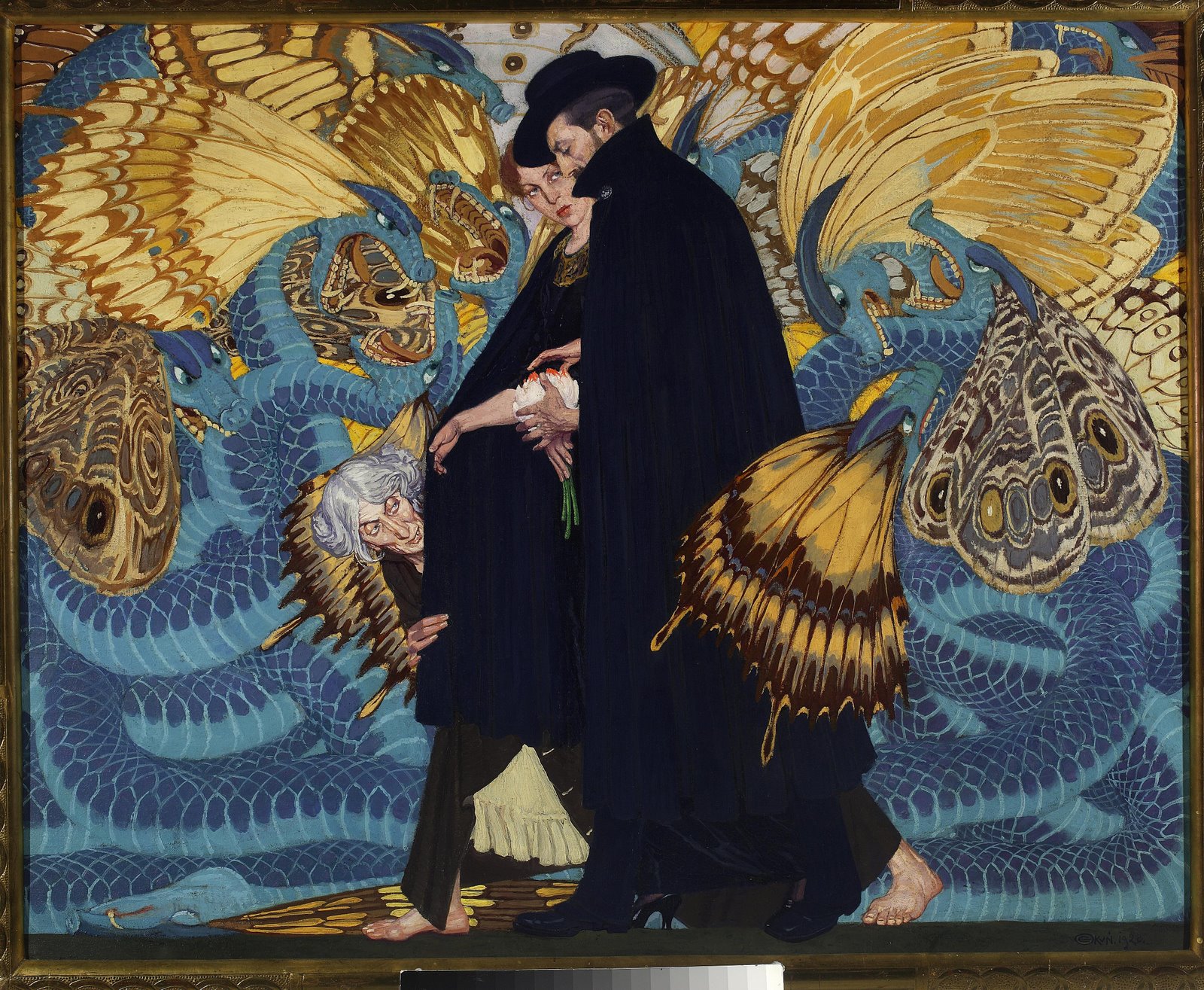
Edward Okuń (1872–1945)

From Wikipedia, the free encyclopedia

Edward Okuń (1872–1945) was a Polish freemason and Art Nouveau painter. He painted landscapes, portraits, designed covers and llustrated magazines, including the German magazine «Jugend».

Biography

Okuń was born in 1872 to a noble family and was orphaned by his father and mother. He grew up with his grandparents on the maternal side. After inheriting a large fortune, he soon began drawing lessons with great painters. In 1891 he studied at the Warsaw School of Drawing. From 1891-1893 he studied under the direction of Isidore Jablonski and Jan Matejko at the Jan Matejko Academy of Fine Arts. He continued his studies in Munich and Paris. In 1897 Okuń went to study with Simon Hollósy who founded the artists’ colony in Nagybánya, Hungary. For the next 20 years he lived in Rome and also traveled to Sorrento, Amalfi, Capri, Venice, Padua, Ravenna, Florence and Siena. He participated in the life of the Polish art colony in Rome, and was co-founder of the Masonic lodge «Polonia».

Okuń returned to Poland in 1921 and settled in Warsaw. From 1925 he was a professor in the School of Fine Arts. He was a member of the Society of Polish Artists. Together with his friends founded a Masonic lodge called «Copernicus». He was vice-president of the Society for the Encouragement of Fine Arts. During the annual opening of the Salon Incentives he witnessed the assassination of the first president of Poland, Gabriel Narutowicz, by Eligiusz Niewiadomski and with one of the president’s aides, caught Niewiadomski.

During World War II he lived in Warsaw. After the Warsaw Uprising Okuń moved to Skierniewice, where he died in January 1945.

Art

In his paintings there are themes of a women with long, wavy hair in Renaissance dresses which his wife posed for. He made the front wall murals of his own house at the Old Town Square.

Publicado el

Peter Lippmann (1956)

Fuente: peterlippmann.com

Peter Lippmann is an American-born photographer who has worked in Paris for the past twenty-five years. Lippmann specializes in still life, advertising, magazine work, food, and trompe l’oeil. His clients include Marie Claire, Cartier Art Magazine, NY Times Magazine, The Sunday Times, Le Figaro, Cartier, Audemars Piguet, Fürterer, SFR, SNCF, Christian Louboutin and many more. For several years he worked for Christian Louboutin’s annual look book, and it is wonderful to look at. Satire, delicately humor, ingenuity and great implementing force are characteristic of his work. (https://adlmagazin.wordpress.com/2014/01/30/peter-lippmann/)

Publicado el Deja un comentario

Alan Feltus (1943)

Fuente: ttp://www.alanfeltus.com/


BORN

• 1943 Washington, D.C.

EDUCATION

• 1968 MFA, Yale University, New Haven CT

• 1966 BFA, Cooper Union, New York, NY

• 7961-62 Tyler School of Fine Arts, Temple University, Philadelphia, PA

AWARDS

• 2005 Pollock-Krasner Foundation Grant in Painting

• 2001 Raymond P. R. Neilson Prize, National Academy of Design, New York

• 1999 Augustus Saint-Gaudens Award, Cooper Union, Yew York

• 1992 Pollick-Krasner Foundation Grant in Painting

• 1990 Benjamin Altman Prize, National Academy of Design

• 1984 Thomas B. Clarke Prize, National Academy of Design

• 1981 National Endowment of the Arts Individual Fellowship

• 1980 Louis Comfort Tiffany Foundation Grant in Painting

• 1970-72 Rome Prize Fellowship

TEACHING

• 2009-2010 Maryland Institute College of Art, Baltimore, MD

• 2006 Maryland Institute College of Art, Baltimore, Artist-in-Residence, fall semester

• 1972-84 Associate Professor, American University, Washington, D.C.

• 1968-70 Instructor, The Dayton Institute, Dayton, OH

COMMISSIONS

• 1986 Commission for painting: installed in the lobby of the Montana Building, Broadway and 87th Street, New York, NY

• 1985 Commission for painting by the American Medical Association: installed in the lobby of 999 E Street NW, Washington, D.C.

ONE PERSON EXHIBITIONS

• 2010 Forum Gallery, New York, NY

• 2009-2010 Alan Feltus and Lani Irwin, traveling exhibition:

University of Tulsa, Tulsa, OK

American University Museum, Washington, DC

George Mason University, Fairfax, VA

Space 301, Mobile, AL

SoFA Gallery, Indiana University, Bloomington, IN

• 2007 Boulder Museum of Contemporary Art, Boulder, CO

• Gallery Camino Real, Boca Raton, FL

• 2005 Silent Dreams, Forum Gallery, New York, NY

• 2005 Forum Gallery, New York, NY

• 2003 Ann Nathan Gallery, Chicago, IL

• 2002 Forum Gallery, New York, NY

• 2002 Forum Gallery, Los Angeles, CA

• 2001 Hemphill Fine Arts, Washington, D.C.

• 2000 Ann Nathan Gallery, Chicago, IL

Huntington Art Museum, Huntington, WV

• 1998 Ann Nathan Gallery, Chicago, IL

Forum Gallery, New York, NY

• 1996 Galerie Timothy Tew, Atlanta, GA

Contemporary Realist Gallery, San Francisco, CA

Forum Gallery, New York, NY

• 1994 Ann Nathan Gallery, Chicago, IL

Forum Gallery, New York, NY

• 1992 Kendell Gallery, Willfeet, MA

Louis Newman Galleries, Los Angeles, CA

• 1991 Forum Gallery, New York, NY

• 1988 Simms Fine Art, New Orleans, LA

• 1987 Forum Gallery, New York, NY

Wachita Art Museum, Wachita, KS (Retrospective)

• 1985 Forum Gallery, New York, NY

• 1983 Forum Gallery, New York, NY

• 1980 Forum Gallery, New York, NY

• 1976 Forum Gallery, New York, NY

Northern Virginia Community College, Annandale, VA (Retrospective)

• 1973 Jacobs’s Ladder Gallery, Washington, D.C.

• 1972 American Academy in Rome, Italy

GROUP EXHIBITIONS

• 2010 Contemporary Figurative Art in USA, A Selection, Casa Dell’ Arte, Istanbul, Turkey

• 2009 The Platonic Ideal, Forum Gallery, New York, NY

A Figural Presence, Chapel Art Center, Saint Anselm College, Manchester, NH

Rifrazioni, Galleria Don Chisciotte, Rome, Italy

• 2009 40 X 40 Autoritratti Come Pretesto, Spazio Espositivo, Bastia Umbra, Italy

• 2009 184th Annual Exhibition of Contemporary American Art, National Academy Museum, NYC

• 2008 FeltusFeltus Irwin Feltus, Barocco Americano, Cinema Teatro Comunale Esperia, Bastia Umbra, Italy

• 2007 Figure it! The Human Factor in Contemporary Art, Clay Center for the Arts and Sciences, Charleston, W VA

About Face: Portraiture Now, Long Beach Museum of Art, CA

Art Across Arkansas, Clinton Collection of the William J. Clinton Foundation

• 2006 Why the Nude, Art Students League of New York, NY

Galerie Utrecht, Utrecht, Netherlands

The Figure in American Painting and Drawing, 1985 – 2005, the Ogunquit Museum of American Art, Ogunquit, ME

• 2005 Enduring Roles and Realism; Building on the Murray Collection, Everlast Museum, Scranton, PA

Collctors’ Show, Arkansas Art Center, Little Rock, AK

Janus, American Academy in Rome and Fendi Stores, New York, NY

Between Perception and Invention: Three Generations of Figurative Artists, Sharon Arts center, Peterborough, NH

Disegno; 128th Annual Exhibition, National Academy Museum, NY

Art in the Family, Arts Club of Washington, Washington, DC

• 2001 176th Annual Exhibition, National Academy of
Design, New York, NY
(awarded the Raymond P. R. Neilson prize)

Between Heaven and Earth: New Classical Movements in the Art of Today,
Museum voor Moderne Kunst, Oostende, Belgium

Artist Couples, Katharina Rich Perlow Gallery, New York, NY

• 2000 Interiors, The Gallery on the Hudson, Irvington, New York

Looking at Contemporary Art from a Figurative Perspective, Gallery of Contemporary Art, 
Sacred Heart University, Fairfield, CT

• 1999 Contemporary Realism, Lisa Kurts Gallery, Memphis, TN

174th Annual Exhibition, National Academy of Design, New York, NY

• 1998-99 Modern American Realism: The Sara Roby Foundation Collection from the National Museum of American Art: Cornell Fine Arts Museum, Rollins College, Winter Park, FL

Madison Art Center, Madison, WI

Columbus Museum of Art, Columbus, Ga

Heckscher Museum of Art, Huntington, NY

Everson Museum of Art, Syracuse, NY

• 1998 1998 Collector’s Show, Arkansas Arts Center,
Little Rock, AK

It’s Still Life, Forum Gallery, New York, NY

Realism Knows No Bounds, Van de Griff Gallery,
Santa Fe, NM

The Figure, Marcia Wood Gallery, Atlanta, GA

The Figurative Impulse, Miami Dade Community College, Kendall Campus Art Gallery, Miami, FL

Embodied Fictions, Dwight Frederick Boyden Gallery of 
Saint Mary’s College of Maryland, St. MAry’s City, MD

Self-Portraits, Kragsdale Corporation at Lehman College Art Gallery, Bronx, NY

• 1997 172nd Annual Exhibition, National Academy of Design,
New York, NY

Artisti Stranieri in Mostra, Comune di Bastia Umbra, Italy

Realism in the 20th Century American Painting, Ogunquit Museum of Art, Ogunquit, ME

Dramatic Realism: The New Baroque, Southern Alleghenies Museum of Art, Loretto, PA

• 1996 Classicism in the Twentieth Century, Lizan-Tops Gallery, East Hampton, NY

Derrier Guard Festival, The Kitchen, New York, NY

• 1995 U.S. Artists ’95, 33rd Street Armory, Philadelphia, PA

Collection Update 1994, National Academy of Design, 
New York, NY

The 170th Annual Exhibition, National Academy of Design, New York, NY (Awarded the Joseph S. Isidor Memorial Medal)

Nine Fellows of the American Academy in Rome, Pensel Gallery, Washington, D.C.

• 1994 Aspects of Realism, Laura Craig Galleries, Scranton, PA

Invitational Exhibition of Painting and Sculpture, American Academy of Arts and Letters, New York, NY

• 1993 Self-Portraits from the James Goode Collection, National Portrait Gallery, Washington, D.C.

Interior Outlook, The Gallery at Hastings-on-Hudson, Hastings, NY

• 1992 62-92, The Cooper Union, New York, NY

• 1990 165th Annual Exhibition, National Academy of Design,
New York, NY (Awarded the Benjamin Altman Figure Prize)

• 1988 163rd Annual Exhibition, National Academy of Design,
New York, NY

• 1987 Modern American Realism; The Sara Roby Foundation Collection, National Museum of American Art, 
Washington, D.C.

Mainstream America; The Collection of Phil Desind, 
The Butler Institute of American Art, Youngstown, OH

• 1986 Selections from the Joseph H. Hirshhorn Request, Hirshhorn Museum and Sculpture Garden, Washington, D.C.

A Decade of American Realism, Wichita Art Museum, Wichita, KS

161st Annual Exhibition, National Academy of Design,
New York, NY

Nine Painters, Circle Gallery, Washington, D.C.

• 1985 Southern Maryland Artists, St. Mary’s College of Maryland

American Painters; Figuration, Jane Haslem Gallery,
Washington, D.C.

• 1984 159th Annual Exhibition, National Academy of Design,
New York, NY (Awarded the Thomas B. Clarke Prize)

Artist’s Self-Portraits from the Collection of Dr. and Mrs. Jacob J. Weinstein, Randolph Macon College, Ashland, VA

1 Plus 1 Equals 2, Bernice Steinbaum Gallery, New York, NY

• 1983 Bodies and Souls, Artist’s Choice Museum, New York, NY

• 1982 Faculty Exhibition, American University, Washington, D.C.

10+10+10, Washington Painting, The Corcoran Gallery of Art, Washington, D.C.

157th Annual Exhibition, National Academy of Design,
New York, NY

Drawings and Paintings of the Figure by Washington Artists, Jane Haslem, Washington, D.C.

• 1981 Oklahoma Art Center, Oklahoma City, OK

Candidates for Art Awards, American Academy of Arts and Letters, New York, NY

• 1980 Couples in Art, Fendrick Gallery, Washington, D.C.

Art for Collectors, Federal Reserve Board, Washington, D.C.

New York Realists, Thorpe Intermedia Gallery, New York, NY

• 1979 Painters and Sculptures by Candidates for Art Awards, American Academy and Institute of Art and Letters, New York, NY

Faculty Exhibition, American University, Washington, D.C.

• 1978 Works on Paper, Tyler School of Fine Arts, Philadelphia, Pa

Invitational Painting Exhibition, Southern Alleghenies Museum of Art, Loretto, PA

42nd Annual Mid-Year Show, Butler Institute of American Art, Youngstouwn, OH

153rd Annual Exhibition, National Academy of Design,
New York, NY

• 1977 Ranger Purchase Fund Show, National Academy of Design, New York, NY

Alexander Calder Memorial and Hassam Fund Purchase Exhibition, American Academy and Institute of Art and Letters, New York, NY

Pyramid Galleries, Washington, D.C.

• 1976 Summer of 1976, A Group Show, Pyramid Galleries, Washington, D.C.

• 1975 National Invitational Drawing Exhibition, Southern Illinois University, Carbondale, IL

Drawing from the Studio of Washington Artists, Washington Project for the Arts, Washington, D.C.

• 1974 Living American Artists and the Figure, Penn State University, University Park, PA

Washington Figurative Painters, exhibited:
The Corcoran Gallery of Art, Washington, D.C.

Washington County Museum of Fine Arts,
Hagerstown, MD

• 1973 New Talent Festival, Forum Gallery, New York, NY

• 1971 American Academy in Rome, Italy

Ente Premi Roma, Palazzo Barbarini, Rome, Italy

• 1970 Faculty Show, Dayton Art Institute, Dayton, OH

Region Show, Dayton Art Institute, Dayton, OH

• 1969 Region Show, Dayton Art Institute, Dayton, OH

A.T. Gallery, New Haven, CT

• 1968 The Ivy League Art Exhibition, Princeton University, Princeton, NJ

A.T. Gallery, New Haven, CT

IMPORTANT COLLECTIONS

American Academy in Rome, New York and Rome

American Medical Association, Washington, D.C.

American University, Washington, D.C.

Arkansas Art Center, Little Rock, AK

Bayly Museum, Charlottesville, VA

California Palace of the Legion of Honor, San Francisco, CA

Charles County Comunity College, LaPlata, MD

The Cooper Union, New York, NY

Cornell Fine Arts Museum, Rollins College, Winter Park, FL

Dayton Art Institute, Dayton OH

Hirshhorn Museum and Sculpture Garden, Washington, D.C.

Montana Building, New York, NY

National Academy Museum, New York, NY

National Museum of American Art, Washington, D.C.

New Jersey State Museum, Trenton, NJ

Oklahoma City Art Museum, Oklahoma City, OK

The Peace Museum, Chicago, IL

Springfield Museum, Springfield, MA

Wichita Art Museum, Wichita, KS

PUBLICATIONS (not including newspaper reviews)

Alan feltus, Forum Gallery: catalogues: 2005, 2002, 1998, 1996, 1994, 1991,

Alan feltus, Ann Nathan Gallery, Chicago: catalogue: 2000

Alan Feltus, Recent Works, The Wichita Art Museum, Wichita, KS : catalogue: 1987

Between Earth and Heaven, New Classical Movements in the Art of Today, (catalogue) Museum voor Moderne Kunst, Oostende, Belgium

Newsletter of the American Academy in Rome, Summer 1992, (cover reproduction of Feltus painting).

Brewster, Todd, “The Lonely Look of American Realism”, LIFE magazine, October, 1980

Brodey, Jim, “Alan Feltus”, Arts Magazine, April 1977

Carr, Jeff, “Embodied Fictions”, American Artist Magazine, September 1998

Cooper, Jim. American Arts Quarterly: Fall 1998

Feltus, Alan, “The Composition of Paintings, an Artist’s Perspective”, American Arts
Quarterly, Fall 2005

Feltus, Alan, «Inside the Painter’s Mind», The Artist’s Magazine, January, 1992

Feltus, Alan, «Letter from Umbria», At Cooper Union, Spring 1994

Feltus, Alan, «Living and Working in Italy», American Artist, August 1992

Gravagnuolo, Emma, “Alan Feltus e Lani Irwin, Insieme Nel Segno Del’ Arte, ARTE,
April 2004

Holman, Tom, «Figurative Expression», Florida International. No. 7, Summer 1999

Jencks, Charles, «The Post-Avant-Garde, Art and Design», Academy Group: London, 1987

Jencks, Charles, “Post Modernism: The New Classicism in Art and Architecture”, Rizzoli,
New York, 1987

Lavin, Marilyn Aronberg, “Piero della Francesca” Phaidon, London and New York, 2002

Katharine Rook Lieber, “Alan Feltus, New Work”, ArtScope.net 2003

Leggio, Gail, “Alan Feltus”, American Arts Quarterly, Fall 2005

Leggio, Gail, “Alan Feltus”, American Arts Quarterly, Summer 2002

Lucie-Smith, Edward, «American Art Now”, William Morrow & Co., New York, 1985

Lucie-Smith, Edward, “ArToday”, Phaidon: London, 1995

Lucie-Smith, Edward, “Art Tomorrow”, Editions Pierre Terrail, Paris, 2002

Polanski, G.Jurek “Alan Feltus, Silent Gestures”, ArtScope.com, 2000

Riva, Alessandro, “Classico Contemporaneo, Feltus a New York”, ARTE, 2003

Spencer, Howard DaLee, “Alan Feltus in Italy”, American Arts Quarterly: Winter 1992

Wechsler, Jill, “Alan Feltus, The Mystery in Painting”, American Artist, April 1980

Publicado el

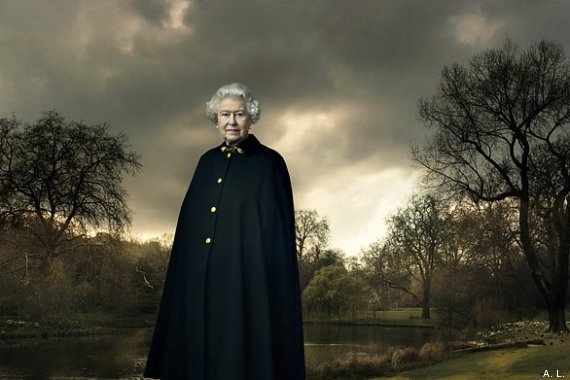
Annie Leibovitz (1949)

La fotógrafa estadounidense Annie Leibovitz (Connecticut, 1949), quien consiguió que John Lennon apareciera desnudo, en posición fetal junto a Yoko Ono, horas antes de ser asesinado, ha ganado hoy el premio Príncipe de Asturias de Comunicación y Humanidades. Considerada como la fotógrafa viva más importante del momento y la mejor pagada, a lo largo de su carrera ha retratado a mitos como Mick Jagger, Michael Jackson, Bob Dylan o Bruce Springsteen, para los que realizó algunas de sus portadas más emblemáticas.

La tercera hija del matrimonio judío compuesto por Samuel Leibovitz, un teniente coronel de las Fuerzas Armadas, y Marilyn Heit Leibovitz, una instructora de danza contemporánea fue la primera estadounidense que retrata a la reina Isabel II en 2007. Fotógrafa oficial de las revistasVanity Fair, Rolling Stone y Vogue, su primer gran encargo llegó en 1975 cuando se le consignó documentar la gira musical Rolling Stones Tour of the Americas ’75 que el grupo británico The Rolling Stones realizó en Estados Unidos y Canadá, para la revista de nombre homónimo.

El jurado, presidido por el director del Instituto Cervantes, Víctor García de la Concha ha destacado que la estadounidense ha sido «una de las dinamizadoras del fotoperiodismo mundial y es una de las fotógrafas más respetadas en Europa y América».

También convenció a Demi Moore para que posara desnuda y embarazada de siete meses. Metió a Whoopi Goldberg en una bañera llena de leche, dejando ver sólo su rostro y sus extremidades. Al artista búlgaro Christo le envolvió en tela en un homenaje a sus grandilocuentes instalaciones artísticas. Captó al político ruso Mijaíl Gorbachov sentado dentro de un automóvil con los restos del Muro de Berlín. El cantante Sting se dejó cubrir de barro en el desierto, mimetizándose con el paisaje.

Además de su trabajo con personajes conocidos, Leibovitz ha practicado la fotografía documental y de paisajes, contratada por la editorial Condé Nast Publications desde 1993, como dan cuenta la serie que realizó en Sarajevo en 1990, la campaña para la elección como senadora de Hillary Clinton o cuando inmortalizó el gabinete de George W. Bush, poco después del 11-S. «Tras una etapa como reportera que finalizó en la Guerra del Líbano, ha firmado decenas de portadas de las revistas más prestigiosas y se ha consagrado con instantáneas y retratos que reflejan una época de la política, la literatura, el cine, la música y el deporte a través de sus protagonistas», ha señalado el jurado.

Madre de tres tres hijas, la primera fue fruto de un donante de esperma, y las gemelas, concebidas por una madre de alquiler, Leibovitz mantuvo una relación romántica durante más de una década con la prestigiosa escritora y ensayista Susan Sontag, a quien conoció en 1988. La fotógrafa acompañó a la intelectual hasta los últimos momentos de su vida y atestiguó la grave enfermedad que le acusó la muerte en diciembre de 2004. El posterior fallecimiento de su padre ejerció de acicate para que Leibovitz rebuscara en viejas cajas su colección privada que mostraría después en la exposición que recorrió el mundo,Vida de una fotógrafa: 1990-2005.

En 2009, tras un año de lucha, Annie Leibovitz llegó a un acuerdo con la empresa Arts Capital Group (ACG) con la que tenía una deuda de 16,76 millones de euros, mediante el cual recuperó el control de su obra. La fotógrafa pidió esta cantidad a la entidad financiera para cubrir otras deudas usando como aval sus dos casas y los derechos de autor de su extensa y célebre obra fotográfica. ACG retiró las acciones legales que había emprendido para recuperar el dinero.

Publicado el Deja un comentario

Van Gogh por Gustavo Rico Navarro (1973)

11287013_10206797017266143_767132831_oQuizá sea de su interés saber lo que contiene esta pintura de mi autoría.
Vincent Van Gogh tenía un tío homónimo, quien era socio de Goupil, el propietario de la mayor galería de arte del siglo XIX con sedes en importantes ciudades europeas y donde se vendían obras de importantes artistas como Bouguereau, Alma Tadema y Mariano Fortuny.
A la vez, las galerías Goupil & cie. fueron las primeras que abrieron espacios para la difusión comercial de los impresionistas.
El tío Van Gogh era propietario de la sede de la galería Goupil en Amsterdam y contaba con buena participación económica en las sedes de Londres y París.
Van Gogh, el pintor, trabajó en su juventud en la ya mencionada galería pero fue cesado a los 7 años debido a que hacía negocios malísimos. Dentro de esos negocios a pérdida logró, con ayuda de Gerome – otro socio de Goupil & Cie-, la elaboración y publicación de la que hasta hoy es la cartilla de dibujo de mayor uso entre los pintores academicistas y realistas. Hablo de la cartilla de Dibujo de Jean Leon Gerome y Charles Bargue. La inversión era demasiado alta y el retorno era lentísimo pero muchos aun aprendemos de ese utilísimo texto.
Las orejas que acompañan al cuadro hacen parte de la lámina #44 de la cartilla de Bargue.
Nada de ello permitió al pintor continuar dentro del ejercicio de regir los negocios de la familia, lo cual si sucedió, hasta cierto punto, con su hermano Theo.
Dado que la enfermedad mental del pintor lo hacía excesivamente dadivoso con cualquiera, empezó a considerarse la opción de evitar darle libre acceso al dinero de la familia, de manera que Vincent artista quedó bajo la tutela de su hermano Theo quien, a partir de ese momento, controlaría el «flujo de caja» hacia su extraño hermano.
Es conocido que Theo Van Gogh pagó las deudas de Gauguin y, simultáneamente, consiguió para Vincent una casa grande en una de las zonas costosas del sur de Francia y le procuró, durante 10 años, una cantidad importante de materiales de arte; de esa manera, fue posible producir más de 900 obras. Dado el costo de los lienzos y la cantidad de óleo que gastaba por cuadro más la calidad de óleos usados por Vincent puede suponerse que no es una cantidad despreciable de dinero.
El doctor Gachet era el médico personal de Vincent y los espacios hospitalarios en los que estuvo durante los periodos agudos de su convalecencia no eran de fácil acceso para personas sin mucho dinero.
El continuo rechazo social hacia Vincent se debía, enteramente, a que era una persona insufrible, de aspecto descuidado y de mal olor como testimonian cartas de sus vecinos y comentarios de los impresionistas y si a ello se suma la enfermedad mental y su carácter insufrible vemos que algo de razón tendrían las personas que intentaron expulsarle de la última comunidad en que habitó.
A la muerte de Vincent, sus obras y leyenda fueron difundidas a partir de los canales comerciales de la casa Goupil, y así fue relativamente sencillo aupar una obra plena de virtudes plásticas.
Finalmente, hay un detalle importante y es el debate que alejaba a los pintores impresionistas de la persona de Vincent. Dicho debate nace porque en los cuadros impresionistas los colores estaban seriamente apagados, («Torturados» como dicen los manuales actuales de técnica pictórica; los impresionistas padecían esa característica en sus colores debido a que combinaban por complementarios atendiendo a la teoría de Chevreull (Estoy convencido de que esa teoría es un invento de Satanás para que la gente pinte mal).
Ya por la influencia de los puntillistas, o por la profunda admiración de Vincent hacia los pintores tardoflamencos, su conclusión era que la combinación debe reducirse al mínimo. Y tenía bastante razón pues las obras de van Gogh aun tienen un color bastante intenso que sólo se ha afectado debido a la incuria química de las industrias de su tiempo.
En conclusión, ese humilde cuadro trata de acercarse a un Van Gogh diferente a su leyenda comercial de rebelde, pobre y antiacadémico.
Esta obra es un divertimento que hice para deleitar cultos, por lo cual espero halla sido de su agrado.
GR

Publicado el Deja un comentario

Breve resumen del Postimpresionismo

Fuente: tom-historiadelarte.blogspot.com.es

EL POSTIMPRESIONISMO

van gogh
La noche estrellada. Van Gogh.

El impresionismo, con su afán por captar la luz del natural, había ido disolviendo las formas en su ambiente y todos los elementos del cuadro habían ido perdiendo volumen, dibujo y sentido del espacio. En los últimos años del XIX y principios del XX nos encontramos con unos pintores que partiendo del impresionismo, derivan hacia una pintura personal que anuncian algunos de los movimientos pictóricos más importantes del siglo XX. El postimpresionismo supone entre otras cosas una recuperación de la importancia del dibujo y de la preocupación por captar no sólo la luz sino también la expresividad de las cosas y de las personas iluminadas. su trascendencia para la evolución del arte es, si cabe, mayor que la de los pintores impresionistas.

Algunas características generales, con inclusión del pintor que mejor las representa:
– Interés por la construcción de la forma, el dibujo y la expresividad de los objetos y figuras humanas.
– Conciliación entre efecto volumétrico (conculcado por el fulgor luminoso impresionista que casi había desmaterializado las formas) y el gusto puramente estético (Cézanne).
– Concepción del cuadro a base de cuerpos rigurosamente geométricos (Cézanne)).
– Empleo de colores contrastantes para distendir y definir los planos y formas.
– Efectos pictóricos basados en búsquedas estructurales, espaciales y cromáticas.
– Utilización de colores puros con gran carga emotiva ( Van Gogh) y modulados (Gauguin)).
– Creaciones imaginativas a base de pinceladas cursivas que intentan expresar la angustia y el desconsuelo interior (V. Gogh).
– Interés por lo exótico (Gauguin) y los bajos fondos (Toulouse-Lautrec).
– Creación de composiciones simplificadas y estáticas, buscando la armonía de las masas cromáticas encerradas en perfiles bien ceñidos (Gauguin).

INFLUENCIAS
– De los impresionistas, el gusto por los contrastes de colores en Cézanne.- De Rubens, de los neoimpresionistas y de la estampa japonesa, el rico cromatismo, los colores puros y la cursividad fluyente de las formas en V. Gogh- De las culturas exóticas de Oceanía, el primitivismo en Gauguin.

Los pintores postimpresionistas
Paul Gauguin. Se inicia en el impresionismo con Pissarro; deja una vida confortable, familia, mujer e hijos y se instala pobremente en París y Bretaña y después se traslada a Tahití, donde pinta sus series de mujeres tahitianas. Destaca por el uso tan expresivo que hace del color con tonos fuertes, vivos y muchas veces arbitrarios que dispone en grandes planos delimitados por ritmos lineales curvos. Tiene dos temas preferentes: el mundo exótico de Tahití y el «primitivismo» de Bretaña. Su obra es preferente del simbolismo y su sentido del color influirá en los fauvistas y expresionistas. Renuncia a la perspectiva, suprime el modelado y las sombras e identifica la sensación de plano igual que en las pinturas japonesas.
Paul Cézanne. En su pintura se recupera el volumen gracias a la geometría, el dibujo y la definición de las formas mediante pinceladas que han sido llamadas constructivas; todo esto sin renunciar al color de gran intensidad mediante los contrastes y las sombras coloreadas. En sus cuadros se potencia el primer plano y realiza pequeñas distorsiones fruto de la utilización de más de un punto de vista (bodegones). Su pintura es el punto de arranque del cubismo y ha influido en coloristas como Matisse. Los jugadores de cartas, la montaña de Santa Vitoria..
Van Gogh. Se establece en Arlés entusiasmado por la luz de la Provenza pinta figuras y paisajes de formas serpenteantes y flamígeras que traducen su fuego interior. Es un apasionado del color como vehículo para expresar las frecuentes depresiones y angustias que padeció. Su pincelada es muy característica, sinuosa, cursiva y espesa; los colores son a veces agresivos con contrastes no frecuentes- amarillo sobre naranja-. Abre las puertas al expresionismo del XX. Autorretrato, Noche estrellada, La siembra,…
Toulouse-Lautrec. Nos refleja el ambiente de los salones nocturnos: bailarinas, cantantes y prostitutas son sus modelos. En su técnica el dibujo, la captación del movimiento y la carga irónica y caricaturesca es esencial. Fue el impulsor del cartel. En sus obras, destaca: Moulin Rouge.

Publicado el

Arnold Böcklin (1827-1901)

Fuente: Wikipedia

Arnold Böcklin (16 de octubre de 1827, Basilea – 16 de enero de 1901, Fiesole) fue un pintor suizo encuadrado en el movimiento artístico del simbolismo de gran influencia en el posterior movimiento surrealista.

Vida y arte

Estudió en Düsseldorf, donde conoció a Ludwig Andreas Feuerbach. Aunque comenzó como un pintor de paisajes, sus viajes a Bruselas, Zúrich, Génova y Roma le expusieron al arte renacentista y a la atmósfera del Mediterráneo, lo cual condujo a una inclusión de figuras mitológicas y alegóricas en su obra.

En 1866 residió en Basilea, en 1871 en Múnich, en 1885 en Hottingen (Suiza) y al final de su vida en Fiesole, cerca de Florencia.

Influido por el romanticismo, manteniendo muchos nexos con la obra de Caspar David Friedrich y así netamente simbolista, pero dentro del estilo del art nouveau, sus obras bosquejan figuras fantásticas, mitológicas, bajo construcciones provenientes de la arquitectura clásica (que revelan a menudo una obsesión con la muerte), creando un mundo extraño, de fantasía.

Böcklin es conocido sobre todo por sus cinco versiones de La isla de los muertos, que en parte evoca al Cementerio inglés de Florencia, cerca de su estudio y donde había enterrado a su hija pequeña María.

Legado

El juego de las olas (detalle),1883, óleo sobre lienzo, 180,3 x 237,5 cm,Neue Pinakothek de Múnich

Böcklin ejerció su influencia sobre los pintores surrealistas como Max Ernst, Salvador Dalí y Giorgio de Chirico.

Otto Weisert diseñó un tipo de letra art nouveau en 1904 y lo llamó “Arnold Böcklin” en su honor. El diseño usa rizomas que cuelgan de muchas de las letras mayúsculas y a lo largo de la parte superior de las minúsculas v hasta y.

El tipo de letra Böcklin fue más tarde objeto de apropiación por el movimiento hippy y su influencia puede verse también en la obra de ilustradores de los años 1970 como Roger Dean. El artistastuckista Paul Harvey también usa este tipo de letra en su obra.

Las pinturas de Böcklin, en especial La isla de los muertos, inspiró a varios compositores tardo-románticos. Rachmaninov y Heinrich Schülz-Beuthen compusieron poemas sinfónicos inspirados por ella, y en 1913 Max Reger compuso un conjunto de Cuatro poemas tonales según Böcklin de los cuales el tercer movimiento es La isla de los muertos (Los otros son El ermitaño tocando el violín, El juego de las olas y Bacanal).