Publicado el

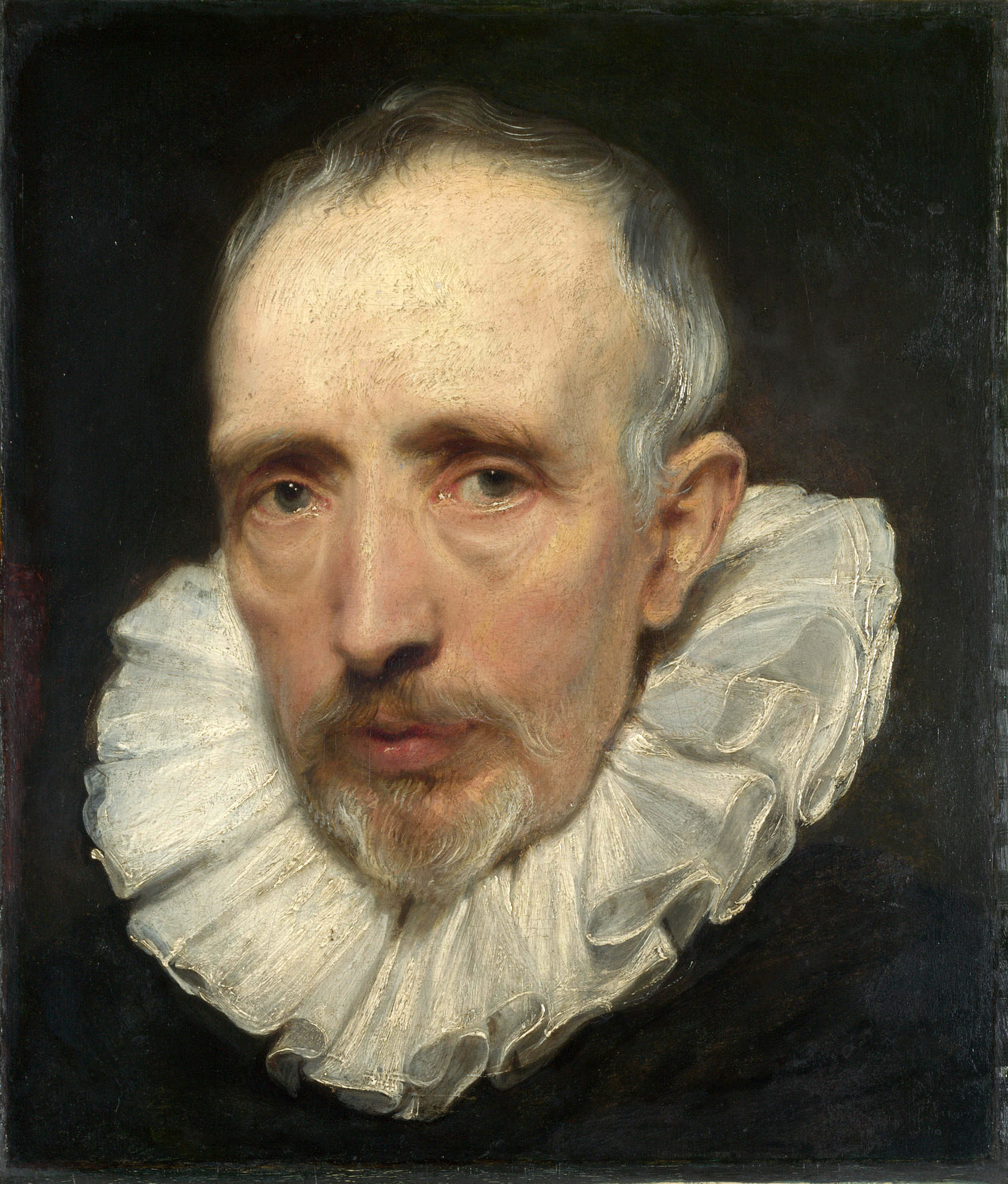
Raimundo de Madrazo – Museo del Prado

Raimundo de Madrazo@

Madrazo y Garreta, Raimundo de (Roma, 1841-Versalles, 1920).

Pintor español. Hijo de Federico de Madrazo, recibió enseñanzas de su padre y de su abuelo, José de Madrazo y Agudo, y fue alumno de la Escuela Superior de Pintura y Escultura de Madrid. En 1862 se estableció en París, donde acudió al estudio de Léon Cogniet, a la Escuela de Bellas Artes y a la Escuela Imperial de Dibujo. Realizó, como decoración del palacio parisino de la reina María Cristina, el lienzo Las Cortes de 1834, terminado en 1865. Pronto se convirtió en uno de los pintores predilectos de los círculos del gran mundo en París, sobre todo debido a su facilidad para el retrato, de aristocrática elegancia, modelado muy suave y fondos abocetados, de ejecución suelta, según muestran obras como el retrato de Doña Josefa Manzanedo e Intentas de Mitjans, marquesa de Manzanedo (1875) y Retrato de Ramón de Errazu (1879), ambos en el Prado. También cultivó el cuadro de costumbres, en una pintura de refinadas calidades decorativas, próximo algunas veces a su cuñado Mariano Fortuny, con quien pintó en 1868 y en 1872, este último año en Granada. En la Exposición Universal de 1889 obtuvo primera medalla y el nombramiento de oficial de la Legión de Honor. Artista cosmopolita, viajó a Roma y a Londres y, a partir de la última década del siglo, a Estados Unidos y a Argentina, países en los que su pintura alcanzó un gran reconocimiento.

En 1904 entró en el Museo del Prado un importante conjunto de obras del artista, legadas por su amigo, el coleccionista Ramón de Errazu. El propio artista donó al Museo en 1894 dos obras de Francisco de Goya.

Raimundo de Madrazo 1 Raimundo de Madrazo 2 Raimundo de Madrazo 3 A 1094  Raimundo de Madrazo 6Raimundo de Madrazo 7

Publicado el

Robert Motherwell : Elegías a la República Española


Robert Motherwell:  Elegías por la República Española

Posiblemente el expresionismo abstracto no habría pasado de ser un grupo de chiflados que manchan telas en Nueva York, si no hubiera existido Robert Motherwell.

Robert Motherwell estudió Filosofía en la Universidad de Stanford para poco antes de doctorarse, comenzar estudios de arte. Todo fue repentino, pero sin darse cuenta paso del surrealismo de sus primeros pasos como pintor, a pertenecer al rompedor grupo expresionista abstracto de la escuela de NY… Y en parte a liderarlo.

Todo tiene una sencilla explicación. Gracias a sus conocimientos del ámbito universitario y sus cualidades filosóficas, Motherweel fue el teórico de tan ilustre grupo. Se dedicó, en parte, en dar a conocer a sus compañeros, explicar lo que hacían y plasmar teóricamente las ideas que cambiaron para siempre la historia del arte. Viajó a través de todo el mundo, acercando el golpe de efecto que había dado la estética contemporánea en NY. Si no hubiera sido así, es posible que Rothko, por ejemplo, jamás se hubiera dado a conocer, pues jamás salía de su estudio a causa de su timidez.


Pero no solo hay que reconocer a Motherwell su labor didáctica . Motherwell es un verdadero genio de la pintura por méritos propios. Todas sus obras parten de una composición perfectamente estudiada. A un primer vistazo, parece como si únicamente la fuerza expresiva hubiera sembrado el resultado del cuadro, pero simplemente parándose un segundo a analizarlo, descubrimos como el cuadro está dominado por una estructura geométrica que nos acentúa las sensaciones propuestas por el autor… Y como muestra un botón:

ELEGIAS POR LA REPUBLICA ESPAÑOLA

En 1948, Motherwell ilustra con un dibujo a tinta un poema del critico Harold Rosenberg y lo reutiliza para ilustrar LLANTO POR LA MUERTE DE IGNACIO SANCHEZ MEJIA. Esta misma “Ilustración”, es la matriz de la primera de las Elegías por la República española. Una serie a través de la cual el artista analiza la misma composición de formas, una y otra vez, cambiándolas de color y peso, aunque predominando siempre el blanco y el negro. En todas ellas, una composición de manchas circulares y rectángulos rectilíneos, toman el espacio produciendo el lleno absoluto. Un agobio de falta de espacio que dirige el resto de la composición. Son formas abstractas, no perfectas, que sin embargo se reparten la tela creando una estabilidad neutra dentro del agobio.

Aunque cada nueva “elegía”, bebe de la anterior, todas son diferentes. El reparto del peso a través de los mismos elementos y la frescura de la pincelada, que transforma las formas matemáticas en gestos pictóricos, crean una serie compacta pero no repetitiva.

Aunque lo cierto, es que para comprender la grandeza de Motherwell hay que adentrarse en su obra posterior, cuando todavía se acerca más a la geometría y los planos de color. Cuando realmente adquiere un valor pictórico prácticamente inigualable y que tan solo Rothko puede compartir.

Robert Motherwell 2 Robert Motherwell 3 Robert Motherwell 4Robert Motherwell 5

Publicado el

Helmut Newton – espíritu Erótico del S. XX

Helmut Newton – Espíritu erótico del Siglo XX

Hay quien considera a Helmut Newton el mejor fotógrafo de la historia, y el escritor J.G. Ballard le llamó “el mayor artista visual del mundo”. Frases tan contundentes están abiertas a debate, pero lo que es indudable es que fue el fotógrafo que mejor supo cristalizar las fantasías eróticas del siglo XX. Su trabajo ha aparecido en publicaciones como Vogue, Elle, Paris Match, Vanity Fair, Stern, der Spiegel… Y Playboy (de forma poco sorprendente, fue amigo personal de Hugh Hefner). Se han realizado centenares de exposiciones de sus fotos en las mejores galerías del mundo, y en 2004 se abrió un museo en Berlín dedicado íntegramente a su obra.

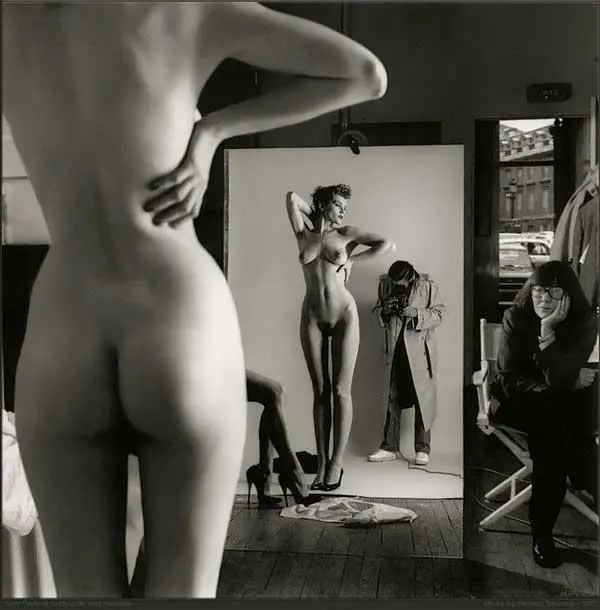
Newton fue el gran retratista de la sofisticación erótica, el lujo, el glamour, la ropa de marca y los tacones de aguja, no tanto por el fetichismo en sí de los zapatos (aunque ha fotografiado maravillas de Louboutin oManolo Blahnik) como por la forma en que realzan el cuerpo femenino. Sus modelos habituales fueron mujeres altas y elegantes, de cuerpo perfecto y actitud altiva y dominante. Sus fotografías, casi siempre en elegante blanco y negro, tienen una sensibilidad extraña e inconfundible, algo onírica (el deseo imponiéndose a la realidad), perversa e ingeniosamente cruel, de un humor cínico y materialista. Sus mejores imágenes son auténticos cuadros de una composición cuidadísima y meditada: su famoso autorretrato frente al espejo en que también aparece su esposa June es puro Velázquez hecho fotografía.

Un fotógrafo de este calibre no podía faltar en Jot Down y desde la admitida parcialidad que me da ser fan fatal de Newton, espero hacerle justicia en este artículo.

”En su cabeza solo hay chicas y fotos”

Si viviera como la gente de mis fotos, hubiera muerto hace años”. Helmut Newton

El recuerdo más antiguo de Helmut Newton es ver una mujer semidesnuda mirándose en un espejo. Era su niñera, a la que recuerda cambiándose para salir de fiesta cuando el pequeño Newton (nacido Neustaedter) tenía tres o cuatro años: su primera fotografía mental y ya incluye una mujer en ropa interior.

Si tenemos que creer lo que Newton cuenta irónicamente de sí mismo, fue un niño llorón y malcriado. Nació en 1920 en el seno de una familia judía berlinesa, rica gracias a una próspera fábrica de botones. Vivió una infancia tranquila, peleándose con su hermanastro y dejándose cuidar por una madre sobreprotectora que le peinaba a lo paje y le vestía con ropa de niña (casi me parece oír a los lectores freudianos frotándose las manos).

En un intento de masculinizar a su hijo, el padre de Newton intentó apuntarle a varios deportes, pero lo único que funcionó fue la natación: el pequeño Helmut se convirtió en un nadador consumado. El principal entretenimiento que encontraba en la piscina era contemplar a las chicas (“los cuerpos de las nadadoras siempre tienen una maravillosa redondez, una gran belleza”): Helmut dedica unas cuantas líneas de su autobiografía a los pezones erectos que se adivinaban a través de sus bañadores mojados.

La primera vez que Helmut Newton cogió una cámara fue en 1932, con doce años, cuando compró con sus ahorros una Agfa Tengor Box. Con más ilusión que conocimiento gastó un carrete casi entero en el metro de Berlín y se guardó la última fotografía para lo primero que vio al volver a la superficie: la torre Funkturm. Esa foto fue la única que salió de ese carrete, está bastante bien encuadrada (“al estilo de Moholy-Nagy”, escribe) y Helmut la tiene en suficiente estima como para incluirla en sus recopilatorios.

Su ingenuo sueño de adolescente era ser un intrépido reportero, un fotógrafo de guerra o un investigador privado: probablemente una mezcla de los tres. En 1936 fue expulsado de la escuela por su pésimo rendimiento (“en su cabeza sólo hay chicas y fotos”, repetía a menudo su padre), y poco después entró como aprendiz en el estudio de la fotógrafa berlinesa Yva.

Newton recuerda a Yva con cariño y admiración. De ella aprendió a ser minucioso y detallista en la composición de las imágenes: Yva tenía una cuadrilla de ayudantes que preparaban según sus indicaciones todos los detalles de la escenografía de una foto. Helmut aprendió también las técnicas de revelado, retoque de negativos y positivado: en esa época había que fabricar el líquido revelador mezclando sacos de productos químicos, tarea pesada pero a la que Newton se aplicó con ganas.

Helmut intentaba impresionar a una de las ayudantes de Yva, una joven de 21 años ex alumna de la Bauhaus por la que se sentía muy atraído sexualmente. Esta chica llevaba siempre monóculo, que a partir de entonces pasó a ser un complemento erótico del imaginario newtoniano. Décadas más tarde, el Helmut adulto llevará siempre un monóculo en su bolsa para pedirle de vez en cuando a alguna de sus modelos que se lo ponga, quizá asaltado por la nostalgia. La famosa foto de Paloma Picasso con monóculo sería un buen ejemplo: a Newton le gustaba tanto como para querer que fuera portada de su revista Helmut Newton’s Illustrated, y si renunció a ello fue por petición expresa de Paloma, que detestaba esa imagen.

Pero volvamos a finales de la década de los treinta en Berlín, donde se fraguaba una tormenta de sangre mientras Newton desarrollaba sus dotes de ligón. Las leyes raciales de Nuremberg habían perjudicado ya a la familia Newton: el padre tuvo que renunciar a dirigir su fábrica de botones en favor de un administrador nazi, y el joven Helmut estuvo a punto de causar la ruina a toda su familia al coquetear con muchachas arias. Tras la Kristallnacht de 1938 se hizo evidente que la huida no podía aplazarse más, y la familia Newton gastó sus últimos ahorros en el impuesto-soborno que los judíos debían pagar para salir del país. Helmut fue embarcado en un vapor rumbo a China, con poco más que una Rolleicord con la que esperaba ganarse la vida.

Lya moriría en Auschwitz años después: no quiso salir de Berlín hasta que fue demasiado tarde. La familia de Newton conseguiría huir a Sudamérica, pero Helmut no volvería a verlos nunca más.

Newton desembarcó en Singapur la Nochebuena de 1938, contratado como fotógrafo del Singapore Straits Times. Allí duró bien poco: cuando le enviaban a cubrir cenas y eventos de sociedad tardaba tanto en encontrar la escena perfecta y montar su cámara que a menudo la fiesta terminaba antes de que hubiera disparado una sola foto. Permaneció un par de años en Singapur como mantenido (él usa la palabra “gigoló”) de una divorciada llamada Josette, y luego siguió su camino hacia Australia.

Allí pasó unos años tranquilos gracias a su fugaz paso por el ejército. En 1946 el Gobierno australiano le concedió la nacionalidad: aprovechando la circunstancia y para favorecer su ambición de convertirse en un fotógrafo famoso, se cambió el nombre de Neustaedter a Newton. Abrió un pequeño estudio de fotografía en Melbourne, y allí conoció a una guapísima actriz que le hizo de modelo y con la que se entendió desde el primer día: se llamaba June Browne, y en 1948 se convertiría en June Newton. El suyo sería un matrimonio feliz y sensato, y a pesar de sus altibajos duró hasta la muerte de Helmut. A la larga June dejó su trabajo de actriz y se reinventó como fotógrafa de éxito bajo el pseudónimo de Alice Springs: a quien tenga curiosidad le recomiendo no sólo curiosear sus fotografías sino también su extrañamente magnético documental Helmut by June.

Vestida/Desnuda

El romanticismo es muy bonito… Pero no lo quiero en mis fotografías”. Helmut Newton

En 1957 Newton firmó un contrato para trabajar en el Vogue de Londres: Helmut recuerda esa etapa como una época estéril, fracasada y económicamente ruinosa. Dos años más tarde entró a trabajar para Jardin des Modes, en París, y quedó totalmente fascinado por la ciudad. Durante días se dedicó a observar a las prostitutas de la Rue Saint-Denis, en las que reconocía “un talento innato para la moda que se reflejaba en las elegantes ropas que se ponían para atraer clientes”: años más tarde sacaría algunas fotos inspiradas en ellas.

En 1959, al ver estancada su carrera, volvió a Melbourne a trabajar para el Vogue australiano. Hubiera tenido allí el futuro asegurado, pero sabía que no era en Australia donde un fotógrafo de moda podía hacerse realmente famoso… Así que en 1961 volvió con June a París con los bolsillos vacíos, viviendo precariamente pero feliz. Su apuesta le salió bien: consiguió un empleo en el Vogue parisino y empezó la etapa más fructífera y creativa de su carrera. Su vida se convirtió en un continuo ir y venir entre Nueva York, Milán, Berlín y París.

En 1971 sufre un ataque cardíaco en Nueva York que está a punto de costarle la vida. En el hospital le pide a June una cámara compacta ligera (lo único que puede sostener) y pasa su convalecencia sacando instantáneas de médicos, pacientes y de su propio proceso curativo. A partir de ese ataque Newton empieza a preocuparse más por su legado y a sacar fotografías para sí mismo, no ya puramente por encargo, un proceso que le llevaría a publicar sus propios libros de imágenes a partir del fundacional White Women de 1976, un éxito inmediato.

A principios de los ochenta empieza a fotografiar desnudos integrales. Big Nudes es una serie de fotografías de cuerpo entero a gran formato inspiradas por los carteles de búsqueda y captura de la banda armada Baader-Meinhof: es uno de los raros ejemplos de fotos de estudio de Newton y una serie fascinante que ha sido expuesta en múltiples ocasiones. The naked and the undressed fue otra serie de fotografías que no llegó a culminarse por su extrema complejidad técnica, pero que ha dejado alguna de las imágenes más famosas de su carrera: son parejas de fotografías en que las modelos aparecen vestidas con ropa de lujo y completamente desnudas en exactamente la misma postura. El díptico Sie Kommen representado más arriba muestra a cuatro modelos llevando (y no llevando) ropa de Karl Lagerfeld, y alcanzó el récord de precio de una fotografía en subasta al venderse el 2009 por 662.000 dólares.

En 1981 Newton y June se mudaron de París a Montecarlo, con el objetivo declarado de pagar menos impuestos. Más o menos en ese punto detiene Newton su autobiografía: “hablar de los éxitos propios, grandes o pequeños, carece de interés para el lector: de lo que trata este libro es de cómo llegar allí”. Lo cierto es que en Montecarlo comenzó su etapa más plácida y a la vez más activa artísticamente: allí vivió durante el resto de su vida, aunque pasó largas temporadas en Los Ángeles, en busca tanto del clima como de su ambiente decadente (“adoro L.A., adoro Hollywood, pero odio San Francisco: pretende ser una ciudad europea y culta y la verdad es que a mí no me importa una mierda la cultura”).

Newton siempre sintió una gran pasión por los coches caros: en 1946 se gastó hasta el último dólar ganado en el ejército en un Ford V8; en 1964 dilapidó los beneficios de un largo trabajo fotográfico en un Bentley; en 1987 sacó alguna de sus fotos más sensuales en el garaje de un Cadillac… Es apropiado en cierta manera que muriera al volante de un Cadillac, estampándose contra un muro (al más puro estilo Crash) del Sunset Boulevard de Los Ángeles, al salir del Chateau Marmont en que tantas fotografías realizó.

 Moda, erótica y portraits mondains

Nada ha sido retocado, nada se ha alterado digitalmente. Fotografié lo que vi”. Helmut Newton

Newton fue uno de los últimos grandes fotógrafos analógicos y, hasta cierto punto, artesanales. Estuvo rodeado de un equipo impresionante de estilistas, peluqueros, maquilladores y modelos, pero para la fotografía en sí misma sólo contaba con un ayudante, un par de buenas cámaras (su favorita, una Hasselblad) y un flash adaptable. Trabajar en analógico implica recurrir a alguno de los mejores positivadores del mundo, un trabajo excéntrico del que muy poca gente es capaz. Con ellos Newton mantuvo una relación de amor-odio-necesidad que obligó más de una vez al altivo Helmut a tragarse algún sapo y mostrarse humilde.

Newton planificaba cuidadosamente la escena durante dos o tres días, sacando polaroids para visualizar el resultado, y luego gastaba apenas un par de carretes en las fotos definitivas. Cuenta una modelo en el documental Frames from the Edge que la sensación durante una sesión es la de una ola a punto de romper: durante las primeras fotos va subiendo la energía, y justo antes del clímax toma la imagen definitiva y congela ese instante en el tiempo.

Newton se diferencia así de otros grandes fotógrafos como Nobuyoshi Araki: lo que en Araki es actividad maníaca e improvisación, en Newton es ensayo pausado y preparación meticulosa. Incluso las imágenes aparentemente más espontáneas llevan detrás un duro trabajo de horas en que hasta la más mínima posición del cuerpo de la modelo ha sido planificada. “La gente en mis fotos ha sido “colocada” como sobre un escenario; sin embargo mis fotografías no son falsificaciones, sino que reflejan lo que veo de la vida con mis propios ojos”, escribe Newton.

Por ese motivo Helmut siempre tuvo problemas al fotografiar actrices: quien viene del mundo del cine tiene tendencia a improvisar, mientras que Newton es el micromanager definitivo. Por ejemplo las fotos con Sigourney Weaver representaron en principio un choque de trenes (o de egos, más bien), hasta que la actriz se dejó llevar por Newton con el razonamiento de que al fin y al cabo a un cirujano no le diría cómo hacer las incisiones.

Cada fotografía de Newton contiene una historia concentrada, como el fotograma de una película cuya narrativa se despliega en unos pocos segundos de observación (los que pueda dedicar un distraído lector que tope con sus fotos en una revista). Los maniquís, cadenas, esposas, prótesis o demás adminículos no son más que elementos externos que añade para sumar riqueza narrativa a la escena, proporcionando a la imagen diferentes niveles de lectura.

El escenario hace hablar al sujeto fotografiado y es casi siempre un ingrediente clave de la imagen. Salvo unas pocas excepciones notables, Newton huye de los fondos blancos de estudio (“las mujeres no suelen vivir ante una sábana blanca”). Tampoco le gustan los escenarios exóticos: prefiere localizaciones que estén como mucho a quince minutos de su casa o su hotel (es conocida la historia del canciller Kohl, al que en lugar de retratar en su despacho como estaba previsto hizo salir al parque cercano hasta encontrar un árbol que le sirviera de fondo). Este ánimo de buscar “el misterio en lo cotidiano”, por usar sus propias palabras, llegaría a su extremo en la serie Domestic Nudes, en que los escenarios en que fotografió a sus modelos fueron apartamentos vulgares y corrientes.

En su estudio de la rue Abriot Newton tenía sus fotos clasificadas en tres archivadores, con los rótulos Moda,Erotica y Portraits mondains. Y es que el grueso de su trabajo fue de fotografía erótica, de modas o publicitaria, pero también fue un gran retratista, capaz de capturar la esencia del retratado: Catherine Deneuve, Monica Bellucci, Salvador Dalí, David Lynch, Isabella Rossellini, Anthony Burgess… Newton se quedaba desconcertado cuando le decían que sabía captar el alma de sus modelos. “Sólo fotografío un cuerpo, una cara, unas piernas”, contestaba el materialista definitivo. Pero ah, la cara es el espejo del alma, y es posible leer el carácter de alguien en la expresión de su rostro…

Cuando le preguntaron a qué personalidades prefería retratar, Newton contestó “a aquellos que amo, a quienes admiro y a quienes odio”. Esta filosofía ha permitido que un judío perseguido por los nazis haya fotografiado aLeni Riefenstahl o al mismísimo Le Pen posando con sus perros…

Porno chic: los ricos también follan

Las fotografías de Newton son fotogramas de una elegante película erótica, tal vez titulada Medianoche en la Mansión o Tardes en Super-Cannes, una película virtual que nunca se ha proyectado en ningún cine sino en el interior de nuestras mentes durante los últimos cuarenta años”. J.G. Ballard

Durante la sexualmente despreocupada primera mitad de los setenta el cine porno vivió una breve edad de oro, bautizada por columnista del New York Times Ralph Blumenthal como la época del “porno chic”. En esos años se puso de moda e incluso resultó socialmente aceptable comentar cual crítico sesudo películas softcore comoGarganta Profunda, Historia de O, Emmanuelle o Tras la puerta verde. Con un guión relativamente elaborado y una producción más cuidada de lo habitual, estas películas no sólo abrieron brevemente la puerta de la (relativa) respetabilidad al porno, sino que llenaron unos cuantos bolsillos: Garganta Profunda costó apenas 25.000 dólares y ha recaudado más de cien millones.

Varios astutos comerciantes tomaron nota de que el sexo no solamente era un buen negocio, sino que no tenía por qué ser sórdido, minoritario o low brow: el erotismo burgués (y en ocasiones algo kitsch) se vende bien, o por decirlo de modo más abrupto, los ricos también follan. Un clima perfecto para que a fotógrafos como Guy Bourdin o Helmut Newton se les permitiera introducir desnudos cada vez más explícitos en sus obras, una tendencia que se ha mantenido hasta nuestros días con Tom Ford, el hipersexual (y adorable) Terry Richardson o tantos otros.

Lo cierto es que la etiqueta de “porno chic” se ajusta a las fotografías de Newton como anillo al dedo (aunque sólo retratase sexo explícito en cierta ocasión con una pareja swinger de San Francisco). Newton siempre se sintió cómodo retratando de forma sensual y nostálgica los símbolos de la vieja Europa: muchas de sus imágenes eróticas y escenarios recuerdan al Berlín burgués, claroscuro y decadente de los años 30. Calles de barrios señoriales iluminadas por farolas, apartamentos de Hollywood, piscinas de la Riviera, mansiones aristocráticas, viejos hoteles de lujo cargados de historia (como el Nord Pinus II, que sirvió de fondo para la famosísima sesión de fotos de Newton conCharlotte Rampling)…

En alguna ocasión Newton comentó que los diseños de Yves Saint Laurent representan lo que le gusta en las mujeres: “elegante, deseable, sensual, con mucha clase y acostumbrada al lujo”. Sin embargo, es inevitable ver en alguna de sus fotos (por ejemplo la que muestra a una modelo totalmente vestida con ropa de marca y tacones en una playa llena de domingueros) una burla autoirónica, un ramalazo de humor negro dirigido a la vanidad de la moda.

Newton nunca se molestó en ocultar su gusto por el lujo ni se avergonzó de su fortuna: en cierto sentido fue el fotógrafo capitalista por excelencia. No le atrajeron nunca los museos ni se preocupó por si sus fotografías podían considerarse artísticas o no: es famosa su sentencia “en mi diccionario la palabra ‘arte’ es una palabrota”. Tampoco se interesó por el mundo de la alta cultura o la crítica fotográfica (“un fotógrafo debería ser como un niño bien educado: se le ve pero no se le escucha. Una fotografía no necesita explicación”). Consecuentemente, siempre prefirió que le pagasen revistas de moda o publicistas que recibir dinero de becas o subvenciones. Además, trabajar para este tipo de clientes durante casi toda su vida le permitió acceder a modelos guapísimas para sus propias fotografías (es inolvidable la escena del casting fotográfico que puede verse en Frames from the Edge).

En sus últimos años dejó de lado el mundo de la moda, cada vez más pacato (especialmente en Estados Unidos) y menos proclive a permitirle aventurerismos. “Hoy en día las revistas de moda no tienen sentido del humor”, dijo. No le faltaba razón.

Belleza, peligro, seducción… y feminismo

Una mujer que sea una débil florecilla, que no sea inteligente, fuerte y asertiva… Me parece poco interesante, por decirlo suavemente. Me gustan las mujeres fuertes”. Helmut Newton

En un incendiario artículo en la revista Emma, la feminista alemana Alice Schwarzer acusó a Newton de misoginia, racismo, explotación de las mujeres y fascismo. “¡Gilipolleces! Amo a las chicas”, contestó Newton tajante. No siento demasiada simpatía por Schwarzer, abanderada del movimiento antiporno y de una cierta cruzada moral contra el desnudo: siempre me he sentido más cercano al feminismo sex-positive de Camille Paglia o Annie Sprinkle. En cualquier caso, lo que me disgusta de las críticas a Newton de gente como Schwarzer es la incapacidad para percibir una obra de arte más allá de los propios prejuicios.

Para empezar: a Newton, como a casi todos los grandes artistas, siempre le gustó ser un tocapelotas. O dicho de otra forma, buscaba conscientemente presentar sus imágenes como actos de provocación social que rompieran los límites de la fotografía de moda tradicional. Muchas de sus fotos tienen un componente violento, cruel, voluntariamente chocante, en ocasiones surreal y barroco, como si hubieran sido tomadas durante un sueño lúcido en que nada es real del todo ni debe tomarse demasiado literalmente (según J.G.Ballard, Newton está más cerca de Magritte que de Cartier-Bresson).

Quizá lo más molesto de algunas críticas a Newton es su falta de sentido de la ironía, que se convierte en incapacidad de entender chistes visuales como la famosa fotografía de la modelo calzada con una silla de montar de Hermès. Se equivocan quienes ven ahí un planteamiento filosófico machista o una venganza misógina, y ni siquiera es necesario defender la fotografía haciendo referencia al fetichismo o a los juegos eróticos consensuados (esa foto fue homenajeada en Secretary). La imagen es más sencilla: es un chiste, una subversión erótico-festiva con un punto surreal similar al de la famosa foto newtoniana de la mujer devorada por un cocodrilo (escena de un ballet de Pina Bausch, por cierto).

Ya hemos comentado que las imágenes de Newton son fotogramas de una película cuya presentación y desenlace aporta el cerebro del espectador: la fotografía no incluye ningún juicio de valor aparte del que proyecte sobre ella quien la mira. La potente fotografía de una modelo poniéndose una pistola en la boca (inspirada en una amiga de Newton que se apuntó con un revólver-mechero haciendo el tonto) no es una incitación al suicidio: somos los espectadores quienes interpretamos la imagen, le damos una historia a la chica y nos preguntamos qué la habrá puesto en esa situación.

Hay quien ha visto en las mujeres de Newton, orgullosas de su cuerpo perfecto y su belleza, un retrato de la cambiante femineidad post-feminista segura de sí misma. Estén vestidas o desnudas, se muestran a menudo fuertes, dominantes, en control de sí mismas y del entorno que las rodea. Los modelos masculinos que las acompañan son retratados casi siempre como figuras secundarias, débiles, impotentes o al menos a la merced de la hembra alfa con quien comparten encuadre: si las mujeres newtonianas son “objetos sexuales”, no lo son al servicio del hombre. Poder, belleza, peligro, seducción: emociones fuertes para mujeres fuertes, femmes fatales dueñas de su propia sexualidad.

A menudo se menciona también el papel de Newton y June como pioneros de una cierta fotografía erótica de calidad, abriendo a muchas mujeres fotógrafas un camino antes vedado. Ellen Von Unwerth fue modelo de Newton hasta convertirse en autora de turbadoras y tórridas fotografías, y es fácil reconocer en las muy sensuales imágenes en blanco y negro de Bettina Rheims la (reconocida) influencia del maestro.

En realidad el feminismo sex-positive tiene un buen motivo para estar agradecido a Newton: liberó el desnudo femenino del más bien sórdido reino del pornógrafo, probando que el erotismo puede tener glamour, clase y elegancia.

El libro más caro del siglo XX

Si considerase lo que le gusta al público nunca sacaría una sola foto. Lo que hago es para complacerme a mí mismo”. Helmut Newton

En 1997 Benedikt Taschen convoca a Newton a la oficina de su editorial en Los Ángeles para proponerle un faraónico proyecto. Al entrar allí, Helmut se queda con la boca abierta al toparse con la maqueta de un libro gigantesco, de casi un metro de altura, que debería contener casi quinientas de sus mejores fotografías reproducidas a la máxima calidad posible. Newton se siente halagado y un tanto desconcertado; June se enamora de la idea y adivina sus posibilidades; Benedikt está convencido (y con razón) de que un macrolibro así se convertirá en el bombazo que aseguraría el futuro de su editorial. Un par de brindis más tarde se firman los contratos necesarios.

Dos años de ingente trabajo más tarde, el inmenso libraco se presentó con el título de SUMO en la feria Art Basel, culminando el que probablemente haya sido el proyecto más faraónico de toda la historia editorial. Finalmente el monstruo tuvo 464 páginas, midió 50×70 cm y pesó 35.4 kg de peso: cada ejemplar venía acompañado de un enorme atril metálico (diseñado, cómo no, por Philippe Starck) para poder sostener el libro abierto. Helmut Newton firmó a mano cada uno de los diez mil ejemplares, un proceso que le ocupó todas las mañanas de unos cuantos meses y que recuerda como bastante pesadillesco… Aunque no fue nada en comparación con los quebraderos de cabeza que le trajo supervisar la positivación de las imágenes a ese elefantiásico tamaño.

El esfuerzo mereció la pena: el libro se agotó enseguida a pesar de sus precios desorbitados, y puede encontrarse hoy en día en gabinetes de arte, galerías y museos como el mismísimo MoMA de Nueva York. Un ejemplar de SUMO firmado por cien de las celebridades retratadas en sus páginas se convirtió en el libro más caro del siglo XX al ser vendido por 430.000 dólares durante una subasta benéfica berlinesa en el año 2000. En el momento de escribir este artículo puede encargarse un ejemplar por apenas 9.900 dólares en Amazon: ¡daos prisa en comprarlo, millonarios lectores, y luego patrocinadme, que no me vendría mal un mecenas!

Diez años más tarde, ya con Helmut muerto, June autorizó y supervisó una reimpresión con las mismas fotografías pero a menor tamaño (26.7 x 37.4 cm) y a un precio más democráticamente asequible, alrededor de los cien dólares. Regalé un ejemplar de ese mini-SUMO a mi pareja por su cumpleaños, y actualmente tiene un rincón privilegiado en el comedor de nuestra casa. Cada vez que pasamos por delante abrimos al azar una de sus páginas y pasamos un buen rato en la agradable compañía de David Bowie, Nastassja Kinski, Grace Joneso centenares de modelos guapísimas cuya elegante belleza servirá perfectamente para despedirme de los lectores hasta el siguiente artículo…

Fuente: Josep Lapidario

Helmut Newton 01
Helmut Newton 02
Helmut Newton 03
Helmut Newton 04
Helmut Newton 06
Helmut Newton 05

Publicado el

Jean Leon Gerome

Jeann Leon Gerome @

Gérôme fue uno de los pintores más célebres de su época, aunque eso no le libró de ser objeto de críticas y polémicas durante toda su carrera. Su popularidad trascendió las fronteras de Francia gracias a la forma en la que aprovechó la fotografía, además de para componer algunos de sus cuadros, para «vender» su obra, lo que lo convirtió a partir de la década de 1870 en uno de los artistas más admirados en Estados Unidos.

Así, desde 1859 y a petición de su marchante y editor, Adolphe Goupil -que más tarde se convertiría en su suegro-, usó reproducciones fotográficas y estampas para divulgar su obra.

Un trabajo de documentalista

El artista, que se formó en el taller de Paul Delaroche, donde ingresó a los 16 años, poseía una absoluta precisión en el dibujo y una gran maestría en el uso de los pigmentos, pero no se limitó sólo a plasmar los temas de la Antigüedad clásica y de Oriente o de la historia de Francia, que le fascinaban, como el resto de los románticos.

Detrás de la forma en la que se enfrentaba a sus composiciones había una amplia labor de documentación a lo largo de sus viajes a Italia, Turquía o Egipto. En sus obras se imponía su impulso racionalista de dar una información veraz y utilizaba la fotografía para elaborar figuras, escenas o paisajes y se basaba rigurosamente en las investigaciones científicas y arqueológicas de la época.

Además, impuso una novedosa concepción de la esceneografía, adelantándose en el tiempo e inspirando escenas de las grandes producciones cinematográficas de temática histórica de realizadores como Cecil B. DeMille o Mervyn LeRoy, sobre todo las basadas en la Roma clásica. En esta influencia en los realizadores de las primeras superproducciones tuvo que ver la gran difusión de su obra en Estados Unidos.

En suma, Jean-Léon Gérôme supo combinar en su obra una identidad científica con otra popular, basándose en temas anecdóticos que le garantizaban el éxito entre el público, y esto lo que hoy en día también hace tan valiosa su obra para los historiadores del arte y el público en general.

Jefe de filas de los neogriegos

Cuando ingresó en el taller de Delaroche y donde quedaría bajo la influencia directa de Jean-Dominque Ingres, junto con el primero los grandes defensores de la tradición academicista en la que se enmarca la primera parte de la obra de Gérôme.

En estos inicios, el pintor francés cultivó tanto el género de la pintura histórica como el del retrato, y con el cuadro Pelea de gallos (1846), que se presentó en el Salón de 1847 y que le hizo ganar una medalla de tercera clase, se convirtió en el jefe de filas de la nueva escuela de los neogriegos. A partir de entonces comenzó a recibir sus primeros encargos oficiales.

Su interés por la Antigüedad clásica, unido a su deseo de plasmar la veracidad arqueológica, le sirvió de pretexto para hacer representaciones costumbristas y sentimentales que ponen en escena una Antigüedad humanizada, intimista y casi trivial.

Ese interés por lo verídico, el realismo de la anécdota y el afán por el detalle propios de su arte, le acompañarán a lo largo de toda su producción, tanto en los temas históricos y mitológicos como en los de temática oriental. Así, el Oriente que plasma no es el imaginado por la generación anterior, sino el documentado mediante los bocetos realizados por sus viajes por Oriente Próximo y por las fotografías tomadas por sus compañeros de viaje.

Gérôme y la historia

La pintura de historia y los tres grandes temas que abordó: la Roma antigua, las escenas napoleónicas y las del reinado de Luis XIV. Pero a ellos les imprime un carácter especial; en lugar de centrarse en el hecho culminante del momento histórico, el artista francés prefiere representar en sus cuadros la anécdota, la escena inmediatamente anterior o posterior.

Esto le da a sus cuadros un carácter marcadamente narrativo enfatizado por el sentido teatral de la composición y por una concepción de la escena prácticamente cinematográfica. De hecho, sus representaciones de la civilización romana y el culto al detalle arqueológico exacto sirvieron de referencia a grandes películas y ejemplo de ello es que cintas como Quo Vadis (1951), de Mervyn LeRoy, o Ben-Hur, de William Wyler, muestran escenas con un paralelismo evidente con óleos como La muerte de César (1867) o Pollice Verso (1972).

El afán por el detalle y por la verdad arqueológica que presidió toda su vida alcanza en su obra escultórica y pictórica de esos años el ilusionismo y el trampantojo llevados casi hasta la obsesión y se convirtió en el centro de los debates de la época.

Jean Leon Gerome 5Jean Leon Gerome 9Jean Leon Gerome 6 Jean Leon Gerome 8Jean Leon Gerome 10Jean Leon Gerome 7Jean Leon Gerome 1Jean Leon Gerome 3Jean Leon Gerome 4

Publicado el

David Hockney – CAMARA WORKS

David Hockney  /  CAMARA WORKS

David Hockney @

David Hockney is a great painter,but he has also known fame through photography, although he does not mince his words when he says ‘Photography will never equal painting!’  

Perhaps this is the wrong argument as they are different media and needn’t be compared.

However he does make judgemental comments about photography such as ‘Photography is only good for mechanical reproduction’. ‘Photography can’t show time’   and more…I’ve seen professional photographers shoot hundreds of pictures but they are all basically the same. They are hoping that in one fraction of a second something will make that face look as if there were a longer moment…If you take a hundred, surely one will be good. It could be anybody doing it… There are few good photographs, and those good ones that do exist are almost accidental. Photography has failed…How many truly memorable pictures are there? Considering the milllions of photographs taken, there are few memorable images in this medium, which should tell us something. Photography can’t lead us to a new way of seeing. It may have other possibilities but only painting can extend the way of seeing.

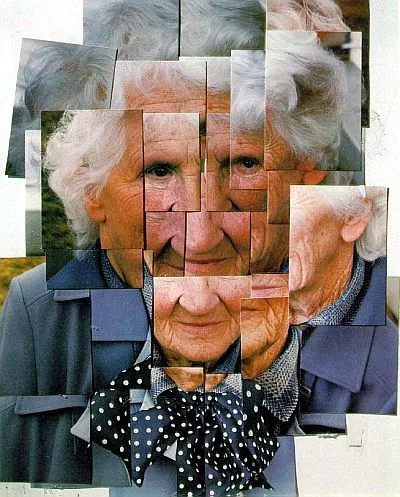
Perhaps Hockney has not succeeded with one image but his photo collages and photo montages –  ’Joiners’  = certainly caught the eye of the public in the 1980′s.

Mother – Hockney

Hockney’s creation of the “joiners” occurred accidentally. He noticed in the late sixties that photographers were using cameras with wide-angle lenses to take pictures. He did not like such photographs because they always came out somewhat distorted. He was working on a painting of a living room and terrace in Los Angeles. He took Polaroid shots of the living room and glued them together, not intending for them to be a composition on their own. Upon looking at the final composition, he realized it created a narrative, as if the viewer was moving through the room. He began to work more and more with photography after this discovery and even stopped painting for a period of time to exclusively pursue this new style of photography.  From 1982 Hockney explored the use of the camera, making composite images of Polaroid photographs arranged in a rectangular grid. Later he used regular 35-millimetre prints to create photo collages, compiling a ‘complete’ picture from a series of individually photographed details.

My mother

The main obstacle Hockney thinks he has overcome is the limited perspective of a stationary camera. A single photograph can only show one point of view, usually for a small period of time. “All photographs share the same flaw,” he says. “Lack of time.” He then goes on to trace photography’s misguided view back hundreds of years to the Renaissance and invention of the Camera Obscura.

Don and Christopher

Cubism helped to topple the single perspective in the hand-arts, but with photography it still exists. The idea behind Hockney’s grids was to inject multiple reference points into photography, in short to make it cubist.

Noya and Bill Brandt

And the very well known ‘Pearl Bllossom Highway”

Pearl blossom highway

Kasmin

Merced river 1982

Telephone pole 1982


Pre historic museum 1982

Photographing Annie Leibovitz While She Is Photographing Me

Walking in the zen garden


Nicolas-wilder-studying-picasso

Celia’s Children Albert & George Clark

Sun on the pool

Patrick Procter


Publicado el

Michael Borremans – Whistling a happy Tune

Michaël Borremans

 Michael Borremans @

WHISTLING A HAPPY TUNE (2008) es el título de una publicación que recoge la última obra dibujada de Michaël Borremans (1963, Geraardsbergen). Como podemos comprobar por el título no vamos a sacar una información clara sobre los contenidos temáticos o sobre las técnicas empleadas por el autor. Sin embargo, es fiel a las tácticas  de aproximación a lo real de Borremans, es tan ambiguo como lo que nos espera en cada una de sus dibujos, sólo al final del recorrido, comprobamos que efectivamente este título se corresponde con la ironía que subyace a ese “mundo feliz” representado por las realidades ilusorias  de su obra.
Como primera aproximación podemos afirmar que los  dibujos de Borremans reflejan la cultura de masas contemporánea. Parece que sus pequeños dibujos tratan de enfrentar al espectador cara-a-cara con las «ilusiones históricas» que subyacen en la sociedad actual, aludiendo al engaño y la indiferencia del mundo que nos rodea. 
Su trabajo se relaciona por tanto, con las ilusiones que percibe a su alrededor, las ilusiones acerca de las opciones políticas, la libertad personal y la capacidad del individuo para actuar en este mundo complejo. Para ello, imprime a sus dibujos de una estética seductora y un cierto grado de provocación con el fin de comunicar mejor esta sensación de ilusión al espectador y con la mayor claridad posible, si es que “claridad” es un término lo suficientemente claro, pues en la obra de Borremans hasta lo más evidente deja de serlo. 

Las referencias explícitas a la historia del arte y las tradiciones culturales juegan un papel muy importante en esto. Sus dibujos incluyen una variedad de géneros como el retrato, el busto escultórico, la máscara de la muerte y el monumento, refiriéndose también, a aquellos lugares donde se muestran las obras de arte, como el estudio, el museo o el espacio público., Reflexiona también sobre las diferentes formas de “puesta en escena” que fueron desarrollados en el curso de la historia del arte reciente: el diorama en el siglo XIX, la fotografía antes de la era digital, y las proyecciones de vídeo de gran tamaño que uno encuentra en la actualidad.
Michael borremans-9
La cuestión de la realidad y la ilusión subyace en las temáticas empleadas por Borremans, como ya hemos indicado, manifestando su carácter más ambiguo e inconsistente a través de sus dibujos. Una y otra vez se preocupa de la distancia entre lo que llamamos la realidad -lo que está ahí afuera- y la ficción o la narración imaginaria de la que se ocupa el arte. 
Esta relación entre lo real y lo imaginario se expresa también en la propia percepción que Borremans tiene de sus dibujos, tratándolos como una especie de propuesta de intervenciones o de instalaciones en el espacio público.
Sin embargo, la ejecución de estos elaborados estudios preliminares, nunca alcanzarán la fase de inserción en la realidad. Dado que invariablemente las intervenciones públicas las ve como «actos de agresión» y prefiere ajustarse al «límite» que impone la ejecución de un modelo dibujado. El trabajo con esta táctica de realizar dibujos como proyectos latentes, permite a Borremans, proteger la muy delgada línea entre la realidad y la ficción tan característica de su obra y para conseguirlo el tiempo y la historia desempeñan un papel crucial.
Borremans hace un uso regular de las primeras fuentes de las imágenes en la que basar sus dibujos. En la mayoría de los casos son fotografías del siglo XIX, revistas y libros ilustrados de los años treinta a los años cincuenta, y las fuentes más recientes, tales como películas, telenovelas y series de televisión, que encuentra ya sea en su forma original o en Internet. Otra fuente fértil es su fascinación por el kitsch, caracterizado por las figuras de porcelana que adornan las ventanas de muchas casas de Flandes. Borremans utiliza imágenes que están disponibles en cantidades masivas, en busca de sus propios temas, -puede por ejemplo mostrar la ropa y la peluquería de moda de otra época, lo que hace que el trabajo aparezca de una manera retrospectiva- y trata de cerrar la brecha entre la conciencia de un pasado histórico, una tradición cultural y los problemas de la actualidad.
En cuanto a la forma y el estilo, los dibujos de Borremans evolucionan muy lentamente, mostrando la influencia de su formación en el grabado, técnica que exige desarrollos largos en el tiempo de ejecución. Cada dibujo es meticulosamente compuesto, y el artista vuelve una y otra vez sobre el papel, a fin de continuar la corrección y profundización capa por capa. Este trabajo cauteloso, revela la afinidad de Borremans con la tradición del norte de Europa, de la pintura en miniatura y los dibujos de los viejos maestros. En cuanto al contenido subyacente de estas opciones formales, también muestra raíces en la tradición de la pintura belga. Al igual que el trabajo de sus compatriotas, James Ensor, Félicien Rops, René Magritte y Thierry de Cordier, la mano de Borremans revela la tendencia surrealista para evitar asociaciones lógicas. 

El uso de los materiales confiere a sus dibujos un aspecto intuitivo, semiacabado y proyectual, que los hace muy sugerentes. Se utiliza casi cualquier tipo de material como apoyo para su trabajo, sobres abiertos desgarrados (con sellos de correos aún adherida), tapas arrancadas de libros, viejas fotos, páginas de calendarios, restos de imágenes, etc. Cada soporte tiene su propia historia que es revelada por las huellas externas del mismo y que el artista al incorporarlas al dibujo las pone en evidencia y son magnificadas. La elección de este tipo de materiales hace hincapié en el hecho de que las obras no han crecido de la nada, y que no pueden ser plenamente comprendidas únicamente sobre la base de lo que en ellas hay dibujado. 
La edad y la estética de las fuentes de imágenes también parecen ser transferidos a sus dibujos por medio de los colores. Sus matices típicos «antiguos» de tonos marrón y gris son adecuados para dotar de una pátina que siempre es inherente al material utilizado para el soporte. Con la excepción de gouache y pintura de aceite (a la que siempre añade una pátina), Borremans generalmente dibuja con lápiz, acuarela y tinta blanca, siendo un número muy pequeño los dibujos realizados sólo con lápiz.

Termino con un reflexión final que me parece que a todos nosotros como artistas nos conviene tener presente en nuestro trabajo diario.  A primera vista los pequeños dibujos de Borremans parecen simples, convincentes y realistas. Nada podría ser menos cierto. Debajo de estas imágenes aparentemente claras, se encuentra contenido un mundo que se manifiesta impresionante, confuso y extraño, provocando una sensación de perplejidad y ambigüedad en el espectador, que paradójicamente hace aumentar su confusión cuanto más detenidamente observa estos dibujos.

Fuente: Antonio Rabazas

Publicado el

Ralph Steadmann

RALPH STEADMAN / BRITISH CARTOONIST

ralph steadman @

www.ralphsteadman.com

Ralph Steadman was born in Wallasey, Cheshire, on 15 May 1936, the son of Lionel Raphael Steadman, a commercial traveller selling women’s clothes. He was educated at Abergele Grammar School, but left in 1952 aged sixteen, unable to bear the strict authority of the headmaster, who gave him «fear and hatred of authority.» «I couldn’t take it any longer,» he recalled, «I just had to get out»: «I went to De Havilland, the aircraft company. I stayed there nine months, but I found factory life unbearable, so then I got a job at Woolworth’s as a trainee manager.» In 1954 the local employment office got him a job in McConnell’s Advertising Agency, Colwyn Bay, where he recalled that «I learned to make trademarks and tea.»

From 1954 to 1956 Steadman spent his National Service in the RAF in Britain, meanwhile continuing to take Percy V. Bradshaw’s correspondence course in cartooning, which his parents had paid for. He had started cartooning while at the advertising agency, and from 1955 sent a drawing to Punch every week, but his first cartoon to appear in print – dealing with Nasser and the Suez crisis – was in the Manchester Evening Chronicle in 1956. «Giles held me in his thrall», he remembered, «and his annuals were in my stocking every Christmas because my Dad liked him too»: «My first published work in the Manchester Evening Chronicle was a Giles in all but name.»

Steadman then joined the Kemsley Newspaper Group, where he worked as a cartoonist from 1959 to 1961, producing editorial cartoons and a weekly panel about a teenage girl named «Teeny.» As he recalled, «I would go in at 10 o’clock in the morning and finish by three»: «I’d do six roughs and show the features editor; he’d say, ‘They’re not very good, but if you must – that one’.» From 1959 Steadman also studied art part-time with Leslie Richardson at East Ham Technical College, noting later that «because I was knocking off at three o’clock in the afternoon, I’d go up to the art school»: «I’d be out five nights a week at art school. And Saturday mornings, Wednesday afternoons, and sometimes Tuesday afternoons, all day Thursday, I’d be at the Victoria and Albert Museum drawing from the antique. For seven years. That’s a lot of time drawing.»

While working for the Kemsley Newspaper Group, Steadman became involved with Gerald Scarfe. The two men first met at an early meeting of the Cartoonists’ Club of Great Britain, which was founded in 1960. “He said, ‘I like your line; I’d like to come see you’”, Steadman recalled: “So he came up one day in his car and he brought his drawings with him and they were awful…commercial art drawings…he showed me these things and said, ‘Can you help?’ I said, ‘I’ll introduce you to my teacher Leslie Richardson.’”

Steadman and Scarfe worked very closely together. As one interviewer noted soon afterwards, Richardson «used to send them to the Victoria and Albert Museum where they would sit sketching statues and suits of armour»: «They spent hours together, pacing the streets long into the night, talking about art and the future, and discussing ways of putting the world right.» Soon, as Steadman later acknowledged, they had developed “an interchangeability about our styles”: “I know where lots of things came from and he knows where lots of things came from…Neither of us liked to accuse the other that we were copying each other, but you can’t help it when your styles are somehow similar.”

Steadman’s job for the Kemsley Newspaper Group finally ended in 1961, after Steadman took some drawings to Leslie Illingworth for his opinion, and was told «The best thing you could do, my boy, is to get the sack.» Steadman then freelanced, providing cartoons for Punch (including covers), the Daily Sketch, and the Daily Telegraph – where he signed himself «STEAD» until his mother asked if he was ashamed of his name, and he «half-heartedly added the ‘man’.» He recalled «flogging cartoons in Fleet Street, and everybody was saying ‘You’ll have to tone this down’.» As he remembered, «I got involved firstly with Punch, but they weren’t really interested in social comment, they wanted jokes.»

Steadman and Scarfe had a tacit agreement that they would submit drawings to publications together, and Steadman recalled that «we went to Punch together with our cartoons”. Then, in 1962, Steadman decided to submit a drawing to the newly-launched Private Eye, although Scarfe didn’t have anything ready. “Gerry sort of got upset”, Steadman recalled, “and said, ‘I don’t see why; we said we weren’t going to do anything unless we did it together.’ So I said, ‘Do something.’ He said, ‘No, I can’t.’” Steadman submitted a drawing to Private Eye entitled «Plastic People», for which Richard Ingrams sent him £5 and a note saying «More power to your elbow.» «I was the first outsider to get in it», Steadman recalled: «they published it with a double page spread in issue number 11.»

“I was thrilled to get into this new weird paper”, Steadman admitted, but the episode caused problems with Scarfe. “I’m really fed up with you”, he reportedly told Steadman, before secretly submitting his own work to Private Eye. It was accepted, and it became clear, as Steadman later acknowledged, that “something had started”. The eventual break came when Steadman’s wife sent Scarfe a letter, accusing him, in Steadman’s words, “of copying and faking everything from me, and now preventing me from submitting my own work”. “I wish she hadn’t sent it”, he remembered: “She asked me, ‘Should I send it?’ I said, ‘I wouldn’t send it, but it’s your letter.’” Scarfe was deply hurt, and the two men “fell out.”

Scarfe’s commercial career took off, whilst Steadman recalled that, in his own career, he “kind of took a side track and started doing my own serious work in a little more esoteric way”. From 1961 to 1965, with Richardson’s encouragement, he studied at the London School of Printing and Graphic Arts. «I don’t make a lot of money», he told an interviewer in 1965: «But I don’t mind, I think I’m doing the right thing.» He left East Ham Technical College in 1966.

In 1966 Scarfe was recruited by the Daily Mail for a large salary and an E-type Jaguar, and he and Steadman were further estranged. Asked to draw his friend for an article later that year, Steadman produced an image that was half saint and half Superman, but with a disconnected heart. «Scarfe owes his success to me and me to him», he explained, but he refused to say more, adding bitterly that «everything I have to say was in my original drawing of Scarfe being crucified»: «Unfortunately that drawing has been censored and replaced with the one you see here.» In 1967 Steadman became Artist-in-residence at Sussex University.

In April 1970, with his marriage breaking up, Steadman made a short visit to the USA. «For me, art had to be about freedom», he later recalled: «England at the end of the 1960s was parochial. I started drawing Nixon and I wanted to work in America.» He worked for Rolling Stone, and then, on returning to the USA in September 1970, the short-lived radical magazine Scanlan’s Monthly teamed him up with Hunter S. Thompson to write about the Kentucky Derby, in what became a memorable and lasting partnership. Steadman subsequently illustrated Thompson’s 1971 book Fear and Loathing in Las Vegas, but contrary to popular belief he was not the unnamed passenger in the car. Thompson had made the trip with another artist, whose work was later rejected and Steadman called in.

In June 1970 Steadman had returned to London to cover the forthcoming General Election for The Times, as only the second political cartoonist the paper had ever employed – the first being Kenneth Mahood. After a couple of weeks of daily cartoons, Steadman was asked if he wanted to work regularly for the paper, and was given a three-month contract. That was afterwards renewed for another three months, but in December 1970 the paper’s features editor, Charles Douglas-Home, called Steadman into his office and told him that the editor, William Rees-Mogg, had begun to «feel your cartoons are a little seditious and I don’t think we need them in the pages of the Times, so I’ll have to ask you to leave.» He left in January 1971.

By 1972 Steadman’s style was changing, and he recalled that “I developed this approach to drawing which became far more visceral”: “It was a kind of anger, really. I mean, it was partly induced by Hunter, but also the screaming lifestyle of America.” From 1976 to 1980 Steadman drew political cartoons for the New Statesman, recalling that despite the routine «I enjoyed it»: «I used to like going in there Thursday, taking the cartoon in; I’d get a nice reception.» In 1977 Steadman also did work for the National Theatre, and also contributed cartoons to numerous publications including Rolling Stone, Radio Times, Black Dwarf, New York Times, Times Higher Education Supplement, New Scientist, Independent, Guardian, Observer, and Sunday Times. In 1978 Sir Charles Forte issued a writ for libel after Steadman caricatured him in the Sunday Times Magazine.

Steadman was now losing his faith in «the honesty of socialism, or at least in the practitioners of socialism», and also his interest in political cartooning. He was dismayed by the success of ITV’s Spitting Image, which seemed to turn political caricature into entertainment. By 1986 Spitting Image had an audience of over 12 million, and Spitting Image Productions had an annual turnover of £2 million, so in 1987 Steadman stopped drawing politicians, «leaving them to their latex lookalikes which rendered their latex antics a cosy entertainment in every living room throughout the land.» «You will never see a politician’s face in my drawings again», he declared angrily, although later admitting that he had in fact «laid off cartoons for a while and invented this whole idea that I only want to lay off it because I want to ignore them». He later relented to the extent of drawing politicians’ legs, particularly in a series of «Election ’97» drawings for New Statesman.

In 1989 Steadman admitted to an interviewer that part of his problem with political cartooning was his dislike of «editorial work in the bloody newspapers», which «works for a while, and then it gets awkward because I get restless and want change»: «I don’t want to stay there; I don’t want to fill the space up like this; there must be another way.» But another significant element was the change in political style. «Political satire is so boring now», Steadman told an interviewer in 2002: «Why the hell would I want to draw Tony Blair? The only politicians I’ve ever liked were Dennis Healey, Michael Foot and Tony Benn. Really nice people, good folk. The rest of them, I mean this whole crowd, this spun crowd of degenerate politicians are just not worth drawing.»

Steadman’s work retained the power to offend, sometimes in ironic ways. In 1992 London Transport banned a poster he had designed for a cartoon exhibition at the Barbican Art Gallery – a photomontage with guns and a headless man spattered with blood. As a spokesman for the Barbican explained, «they said it was a poster which showed blood and that the white areas around it would invite graffiti»: «They also said the guns could incite violence.»

Steadman has won numerous awards for his work including the V&A’s Francis Williams Book Illustration Award in 1973, the Designers’ & Art Directors’ Association Gold Award in 1977, the American Institute of Graphic Arts Illustrator of the Year award in 1979, W. H. Smith Illustration Award in 1987, BBC Design Award in 1987, CAT Advertising Cartoonist of the Year Award in 1995, 1996, and 1998. He also received an Honorary D.Litt. from the University of Kent in 1995. In addition, he has directed a film for TVS in 1992, designed for the stage, written libretti, designed stamps for the GPO in 1986, given lectures, and, from 1987, designed catalogues for the wine merchant Oddbins. As Hunter S. Thompson wrote to Steadman in 1998, «politics was below you, so you stooped to worship grapes.»

Steadman acknowledges the early influence of cartoonists such as Saul Steinberg, Andre Francois, and Ronald Searle. He uses pens, brushes, inks, acrylics, oils, etching, silkscreen and collage, and has also produced sculptures in iron and steel. He works on a large scale, with an often brutal, savage style. «The thing I never did is draw for reproduction», he told an interviewer in 1988: «I was always drawing just for the drawing, and its always been a problem. We always have this thing about my work never looking right in reproduction.»

“Somehow in people’s minds you associate a cartoonist with someone who either does it in his spare time or didn’t get a very good education and therefore scribbles and does a few gags”, Steadman explained in 1989: “I think newspapers…prefer it that way; keep the newspaper cartoonist under wraps. They use them to sell newspapers, but they…don’t give them that kind of dignified importance that they might give to their lead political writers.” «When I began», Steadman once told an interviewer resignedly, «I thought I could change the world»: «It’s much worse now than when I started, so I haven’t done much of a job.»

ralph steadman 1 LizardLounge_WordWEB.jpg ralph steadman 3 ralph steadman 4 ralph steadman 5 ralph steadman 6 ralph steadman 7

Publicado el

Philip Akkerman – Interview

Philip akkerman@

Taking self-portrait as his sole subject, Philip Akkerman (*1957, Vaassen, NL) decided to pursue a career in painting at the tender age of 18 when the others were announcing heroically to him the tragic death of painting. “How can painting be dead if I wanted to paint so much?” In the last 30 years, Akkerman derived an almost methodical approach to painting by creating images of himself through adaptation and reinvigoration of painting techniques offered to him by the old masters throughout the history of art. Declaring that “I paint myself, and so I paint the whole of mankind”, we see in his vast ouvrage of 3,000 self-portraits the diversity of man and art “combined into a philosophical collage of forms”.

A loyal disciple of Schopenhauer, Akkerman believes in individual freedom of creation, yet this freedom has to be backed by a regulated, self-disciplined working method of the medieval time in order to make it positive and productive. “I don’t think I am a child of this age, I am a romantic darkness,” Akkerman defines.

The present interview with Philip Akkerman was conducted on the 29th April, 2011. To mark the day, Akkerman wore a royal hat for the royal wedding.

Akkermania
Philip Akkerman
9 April – 26 June 2011
Kunsthal, Rotterdam (NL)


PA – Philip Akkerman
ST – Selina Ting for InitiArt Magazine


The eye sees everything except itself

ST: Looking at the paintings and meeting the real artist, I see different persons.

PA: [Laughs] Here is just one Philip Akkerman and over there you see 400.  One of the things that I am aiming at with my work is to see who and what I could be if I were born in another time or in another country. We don’t have many choices in life, but I want to know how many Philip Akkermans are possible, and I surprise myself every time.

ST: Is it more about painting or about yourself?

PA: In the first place, I am a painter. Otherwise, I would realize this search in hundreds of novels, or films, etc…

ST: Why is it this sad, serious look? It’s kind of dark, isn’t it? Does the world appear to you as dark and sad?

PA: It’s serious but not sad. It’s the concentration of someone at work. Another reason is that a smiling self-portrait is grotesque, nobody would believe it. And the third reason is that I am a pessimist. It’s dark, as you said, because life is a mystery which we will never be able to understand. It’s perhaps only possible to understand who you are as an individual at the end of your life. We can look at ourselves in two ways: through the senses and through introspection. Our intellectuality applies only to the first, i.e. to our experience with the outside world. Our internal world of feelings and emotions are inaccessible for the intellect. “The eye sees everything except itself”. It’s a nice expression for this paradox that we live in.

©Philip Akkerman. Left: Self-portrait 2010 no.51, 50x43 cm. Centre: Self-portrait 2009 no.24. Right: Self-portrait 2008 no.142. Courtesy of the artist.

©Philip Akkerman. Left: Self-portrait 2010 no.51, 50×43 cm. Centre: Self-portrait 2009 no.24. Right: Self-portrait 2008 no.142. Courtesy of the artist.


ST: When you paint, do you try to look at the psychological aspect of yourself instead of taking a logical approach?

PA: No, it’s more about philosophy than about psychology. I am interested in the most profound meaning of art: What is existence? Who are we ? What is this life that we are living? Then there is the more superficial part of art that is also core to my artistic research, which is the technique. Everything in between, be it psychology, history, social meaning of art, etc. etc. I am not interested in at all.

ST: Not even art history?

PA: No! Art history is a joke! It’s for students and scholars, not for people who enjoy paintings or who make paintings, because all the notions of styles are inventions. There are just individual paintings and when you look at a painting or make a painting, you should not think in styles, movements, schools, etc. It’s too fictional.

ST: We will come back to the idea of art history later. What about the profound aspect of art? How do you capture them with your paintings?

PA: I think about these life issues all day. Since the 1960s, artists like Joseph Beuys tried to convince us that our everyday life is art. But I really do believe that art is something special. It’s not like baking bread.

ST: Because it distills something from our daily life?

PA: Yes, it tells us something more about life. It can somehow stop life.


Painting is dead?

©Philip Akkerman. Left: Self-portrait 1999 no.48, 27 x 25cm. Centre: Self-portrait 1999 no.3, 50x43cm. Right: Self-portrait 1998 no.70, 40x34 cm. Courtesy of the artist.

©Philip Akkerman. Left: Self-portrait 1999 no.48, 27 x 25cm. Centre: Self-portrait 1999 no.3, 50x43cm. Right: Self-portrait 1998 no.70, 40×34 cm. Courtesy of the artist.


ST: What about the old masters and the different period styles that you referred to often in your work?

PA: [Laughs] I am an old master! It’s still the same culture that we live in, nothing has changed. Let me tell you something. When I started doing my self-portraits in the late ’70s and early ’80s, my teachers said to me, “You can’t do that. Painting is dead”. But I really wanted to make paintings, I really loved to paint. How can painting be dead when I love it so much? And I asked myself, when does something die? Something dies when the reason that it came to life can no longer justify its existence. Studio painting emerged at the end of the Middle-Ages and the beginning of the Renaissance, a moment when the totalitarian popes and emperors had to share their power with the civilians. It was the rising individual freedom of the common man that in turn gave rise to the form of studio painting.

ST: When people started painting for themselves…

PA: Exactly! The essence of painting is individual freedom and autonomy. Do you know the American TV show painter Bob Ross? He taught painting on TV in the 1980s. People watched it not because they were interested in painting, but just to relax before they went to bed. He was not taken seriously because he’s a kitsch painter. In the TV show, he says something which to me is the essence of our culture. He says, “Look I am painting a tree. But it’s a lonely tree, isn’t it? So let’s paint another tree next to it. Remember this is your painting and you can do whatever you like!” This is what individual freedom means. It’s your painting; you can do whatever you like with it. We had this freedom when painting started and we still have it! So painting is still alive. It’s still vital even though we now also have photography, conceptual art, video art, etc. It almost died last century under the totalitarian regimes, Fascism and Communism. They tried to stop it because individual freedom was a threat to their regimes.

ST: But we have seen the opposite that paintings, especially underground paintings, can come out very powerful under political repression.

PA: I hope so but it’s really difficult for artists.

ST: Another idea around the notion of the death of painting is that nothing new can be invented or derived from painting because of its long history of experimentations.

PA: Why should there always be something new? That’s the art historical nonsense. Our culture is one of chaos, of crisis. As I said, the essence of our culture is the individual freedom. No two individuals are the same. There are always clashes; there are always people who want to do things differently. People would say, I am going to do it all over again. I am going to make an important step backward. [Laughs] Why always ahead?

ST: Talking about art history, isn’t that you are also experimenting with different styles and techniques developed in the past centuries? Studying different techniques is an essential part of you work.

PA: It is my daily work. I am trying to improve my paintings everyday to make them more disturbing to look at. When you master some tricks, you can catch your audience . Here comes my theory of the “eye” or the retina as part of the skin. You are not aware of your skin until someone pinches it or licks it. It’s with such sensations that you suddenly realize that you have a layer of skin. Paintings can arouse such sensations to the eyes through contrasts between warm and cold colours, sharp and soft edges, dark and light tones, etc. There are hundreds of contrasts that can be applied at different degrees.


©Philip Akkerman. Right: Self-portrait 2006 no.138. Centre: Self-portrait 2006 no.114. Right: Self-portrait 2005 no.104. Courtesy of the artist.

©Philip Akkerman. Right: Self-portrait 2006 no.138. Centre: Self-portrait 2006 no.114. Right: Self-portrait 2005 no.104. Courtesy of the artist.


ST: How can you avoid rendering it routine after 30 years of painting self-portraits every day?

PA: As an artist, you were born with a certain talent and you can’t be any better or any worse than what you were born with. But technically, you can grow.    You can become better each year with practices and rational thinking. Complete control over technique is what people called “routine”. I like it very much even though this is the superficial part of the art. If you look at my work, you will see I am not that far yet, there are many bad paintings, but I am not going to destroy them because they are the witnesses of my struggle. I am not afraid of bad paintings because when you are afraid of bad paintings, you stop experimenting. I am happy to know that I am improving when I look at the bad paintings.

ST: It sounds like a very strict self-disciplinary process on the technical part of painting, while the idea, the contemplation on life, as what you said, is very idiosyncratic.

PA: Yes. In a totalitarian regime, everything is strict – taste, technique, material – everything is censored and standardized. Now, in our culture, everything is free. The content is free, the technique is free, which to me, is as boring as the medieval art. Complete control is boring, complete freedom is also boring. I let these two forces clash, so I use the strict techniques of the Middle-Ages combined with the freedom of ideas of today. What I have is a powerful, disciplined army which marches in one direction, but the soldiers are free to choose their own outfits, they can wear whatever they like, in different styles, hats, shoes, etc. That’s my painting.

ST: These are the rules that you apply to yourself, such as doing only self-portrait but in many different disguises.

PA: Exactly!

ST: Have you ever painted the others?

PA: No. Maybe five or six times…

ST: Why did you choose not to paint the others?

PA: Because I have more freedom with self-portrait. I don’t have the secret desire to beautify the portraits; I don’t need to care about the feeling of the sitter. When I paint myself, I am completely free from all these.

ST: I think you are creating a persona that you can work on freely and evolve with it. It’s also more economically accessible. In a way, these paintings are no longer self-portraits, but the image of a human being in general, like a tool for your work.

PA: That’s why I said I have become paint!


©Philip Akkerman. Right: Self-portrait 1992 no.13, 40x34 cm. Centre: Self-portrait 1991 no.85, 40x34cm. Right: Self-portrait 1991 no.1, 31x28 cm. Courtesy of the artist

©Philip Akkerman. Right: Self-portrait 1992 no.13, 40×34 cm. Centre: Self-portrait 1991 no.85, 40x34cm. Right: Self-portrait 1991 no.1, 31×28 cm. Courtesy of the artist


ST: [Laughs] Do you keep diaries of your work?

PA: Yes. I write diaries and notes. At the young age when I decided to become a painter, I had to write notes, like a declaration, of what I was really concerned and worried about and reflected upon. Later, I wrote about technical matters. Before, I used to have one thick diary for each year, but in the last five years, I only had one. So, the inner struggle is almost over.

ST: You are more certain with yourself…

PA: Probably.


Akkermania

Akkermania – solo show of Philip Akkerman’s work from 11 private collection. 09 April – 26 June 2011. Exhibition installation view of Philip Akkerman’s paintings from the Caldic Collection in Kunsthal, Rotterdam. Courtesy of the artists, the Caldic Collection and the Kunsthal Rotterdam.

Akkermania – solo show of Philip Akkerman’s work from 11 private collection. 09 April – 26 June 2011. Exhibition installation view of Philip Akkerman’s paintings from the Caldic Collection in Kunsthal, Rotterdam. Courtesy of the artists, the Caldic Collection and the Kunsthal Rotterdam.


ST: Is it your idea or the curator’s idea to put up a show from 11 collections?

PA: The idea is from the architectural critic Jeffrey Kipnis. He told me five years ago that he was amazed by the diversity of my work. He told me that I would need 10 curators to put up an exhibition to show the diversity. In the Akkermania show, we don’t have 10 curators but we have 11 collectors who picked their own choices throughout the years according to their own temperaments and visions. The idea is to see my work through their eyes.

ST: The diversity is the theme and the collectors are the tools!

PA: Yes!

ST: How do you find it finally?

PA: I like it. I am crazy about it. I like to experiment with each exhibition and I want each of them to be different. Once I did a show with just paintings from one year, another time we did different ways of hanging for each room in a museum show. There are many possibilities to show the work.

ST: How did you choose the 11 collectors?

PA: We wanted to show the diversity, so we chose collectors with different tastes and approaches to my work. Also, there is a rule in it: it’s all or nothing. They had to show all my paintings in their collection, there is nothing to hide, as I said, bad paintings are equally important to me.

ST: I like the title “Akkermania” very much!

PA: It’s from one of the collectors. He said, “I am an Akkermaniac”. I have to say that my work doesn’t sell easily, because you don’t want a self-portrait of an angry-looking man, a stranger, in your living room. But once people start buying my work, they are caught by the Akkermania fever. They buy one at the beginning, then they return to buy another one and another one. One collector started by buying one painting per year, now he has two or three from each year. He just can’t stop.

ST: After all these years of intense observation and contaminating people with the Akkermania fever, are you comfortable facing yourself?

PA: Of course not! Nobody is. But we need the troubling feelings in order to understand ourselves and the others better.

ST: Thank you very much!


About the artist
Born in Vaassen (NL) in 1957, Philip Akkerman lives and works in The Hague.
His recent solo exhibitions includes Akkermania, Kunsthal, Rotterdam in 2011; 2010: Full Frontal, Mummery + Schnelle, London; Am I A Person?, BravinLee Programs, New York; I have become paint, Galerie Polaris, Paris; Nicky’s Schoenen- en Sleutelservice, The Hague. 2008: Mummery+Schnelle, London; Stephane Simoens Contemporary Fine Art (with Tony Matelli), Knokke; Torch Gallery, Amsterdam. 2007: Guido Costa Projects, Torino. 2006: Bob van Orsouw, Zurich; De Hallen, Haarlem.

Artist website: http://philipakkerman.com/

Publicado el

Protección de la humedad en el dorso del lienzo, según Ralph Mayer

imagesResumimos a continuación los métodos para proteger el dorso de un lienzo, por orden de eficacia relativa:

  1. Rociar o aplicar a brocha una solución de formaldehído al 4 por ciento después de aplicar la cola y, preferiblemente, antes de aplicar la imprimación.
  2. Colocar un cartón, una tela plastificada o un papel fuerte, clavado al dorso del cuadro enmarcado, de manera que el lienzo no quede herméticamente sellado contra el acceso de aire, pero sí bien protegido contra la acumulación de polvo y suciedad, contra las corrientes directas de aire y contra la presión accidental.
  3. Dejar el cuadro sin tratamiento.
  4. Tensar un lienzo doble.
  5. Sellar el dorso herméticamente, para que el aire quede excluido.
  6. Cubrir el lienzo con cera o con una mezcla de cera y resina, con panes metálicos o con papel de estaño.
  7. Aplicar una capa de pintura al óleo, de barniz o de laca.
Publicado el

Wolfe Von Lenkiewicz

Wolfe von Lenkiewicz@

Wolfe von Lenkiewicz (British, b. 1966)

Wolfe von Lenkiewicz’s chief artistic concern is the appropriation of language and mythology. He boldly experiments with hybrid visual combinations that straddle the murky borders of the shocking and offensive. His art historical intervention demonstrates our own complacency of art towards famous images, namely those highly learnt visual compositions of art history. Our knowledge of them has become so much second nature that we take them for granted. It is not until they are disturbed that we realise how much confidence we place in them.

The history of art can be understood as the compromising of changes from one mode of visual representation to another. The difference is the highly contemporary and extreme nature of von Lenkiewicz’s subject matter. September 11th 2001  becomes a stage for giant butterflies, Damien Hirst’s spot paintings merge with the designs of William Morris, and Adam and Eve are expelled from a field of oil derricks. The works demonstrate that no image is sacred and thus the artist is free to disseminate subject matter as they see fit. What is important is distinguishing when such combinations «work». Lenkiewicz has been described as an unbound geneticist-turned-artist, a contemporary iconoclast; allusions he no doubt relishes.

Wolfe von Lenkiewicz: Picasso women series

wolfe von Lenkiewicz 1  wolfe von Lenkiewicz 3 wolfe von Lenkiewicz 4 wolfe von Lenkiewicz 5 wolfe von Lenkiewicz 6 wolfe von Lenkiewicz 7

Publicado el

The Art of Aubrey Beardsley

Aubrey Beardsley @

The Art of Aubrey Beardsley:
A Fin de Siecle Critique of Victorian Society

by Erin Smith

In the late Victorian period, many English, among other Europeans, were beginning to question the benefits of the rapid change and industrialization which characterized most of the nineteenth century. As a result, the Victorian value system and social order, which fit in so well with industrial capitalism, came under attack. In England by the late 1880’s, although much of the mainstream art and literature still upheld Victorian values and social order, an avant-garde movement of artists and writers began to criticize and satirize Victorian society. Aubrey Beardsley was an illustrator who took part in this movement, and became known in the larger context of Art Nouveau. In criticizing Victorian society, Beardsley focused on the sexual sphere. He was fully aware that challenges to Victorian values came not only from the avant-garde, but from the Women’s Movement, which by the 1880’s, had made some gains in the areas of education and economic rights. Through his bizarre and symbolic style, Beardsley’s drawings blur gender lines and mock male superiority. They also play on Victorian anxieties about sexual expression and men’s fear of female superiority. The phrase Fin de Siecle came from the title of a French play, and became a popular expression which symbolized the mood in England from the 1870’s to the turn of the century. During this time, Britain was a power in decline. Economically, the industrial middle class was feeling strain from the «great depression» of the 1880’s and increasing foreign competition in trade. Victorian notions of authority were also being threatened by extended franchise, and the Irish demand for home rule.   These factors helped to create a mood of pessimism which influenced cultural life.

In the cultural sphere, many intellectuals feared that Victorian society had become static. Matthew Arnold, expressed this fear in Culture and Anarchy (1869), arguing that the point of culture is «not having a resting, but a growing and a becoming.»  In the 1880’s, many avant-garde artists and writers challenged the mainstream Victorian art scene which they considered static and outmoded. This reaction became manifest in the so-called «Decadent» art movement which exhibited an extreme expression of Fin de Siecle pessimism.

During the period of the «Decadence» (1880-1900), artists and writers reacted against high Victorian values.    The Decadents preferred pessimism to optimism, the decayed to the living, the abnormal to the normal, and the artificial to the natural. As avantgarde artists, they were constantly engaged in a search for the new. In society, they looked to the «New Woman» and the «new hedonism,» and culturally, there was «new drama» and Art Nouveau.   They were influenced by the aestheticism of the 1870’s whose slogan was «art for art’s sake,» where art was appreciated solely for its intrinsic pleasure.  This contrasts with the Victorian utilitarian concept of art, where art does not exist merely for pleasure’s sake, but must serve some higher purpose. Victorians also attached a moral dimension in judging artistic merit, and felt that only a good person can create good art. In reaction to this idea, the Decadents attempted to live their lives according to their concept of art. As a result, many of the leading artists of this movement lived decadent lifestyles, and were suspected of drug use and homosexuality.   The reaction of the «Decadence» paralleled social changes that were occurring under the impetus of the women’s movement. While the Decadents criticized Victorian values, the women’s movement threatened to break down the entire Victorian social structure.

During the second half of the nineteenth century, widespread social changes began to alter the status of women in Victorian society. The first of these changes gave women broader legal protection. The Matrimonial Causes Act of 1857 extended the grounds for divorce, and was revised in 1878, to make divorce more affordable for women, and give them more custody rights. The Married Women’s Property Acts of 1870, 1874, and 1882 gave women the right to own and control property before and during marriage. Also, the school system was reformed so that women could have an education equal to that of men.

These legal changes were accompanied by alterations in women’s social and economic standing. Job reform gave women better training, benefits, standards, and working conditions. Teaching and nursing became women’s professions, and women also worked as secretaries, clerks, civil servants, lawyers, editors, journalists, and physicians.   Women who worked helped to break down the Victorian stereotype of women as a weak domestic creature who must submit to her husband’s or her father’s will. By the 1890’s women began to take control over their own lives. Linda Zatlin describes the New Women of the 1890’s:

They married later and bore fewer children. They began to dress without constricting stays. They ate in restaurants without male companions, without fearing attacks on their reputations. They began to travel alone on bicycles, on the underground, on the railroad, for in doing so they were no longer assumed to be prostitutes.

There was much resistance to these changes, as many Victorians preferred to hold on to their traditional notions of a woman’s role. The debate over women’s place in society became especially turbulent in the 1890’s, when many men began to see the New Woman as a personal and a social threat. Victorian society had formed patriarchal institutions which were based on the premise that women were inferior and thus dependent on men. This notion of women also served to define men as the opposite of women. In other words, men were strong, rational, aggressive, and superior. Thus, because male superiority was contingent upon female inferiority in this system, it is easy to see how threatening to men the women’s movement could seem. Not only did men fear losing their superior status, but they were also anxious that the social changes for women could lead to female superiority. A Beardsley biographer Ian Fletcher writes, «The particular anxieties about the age may have been conscious and articulate, but the diffused, subconscious, and inarticulate anxieties could only express themselves through symbols.»   In this case, Beardsley created a highly symbolic and interiorized world through which his art was a perfect vehicle for the illustration of these anxieties.

Throughout Beardsley’s short career, his art can be seen as an insightful criticism of the hypocrisies of Victorian society. Because of this, his drawings were criticized by mainstream artists, guardians of Victorian decency, and even his own colleagues. Most of these criticisms however, did not deal with the thematic content of Beardsley’s illustrations. Rather, they criticized his bizarre and grotesque style. In order to better understand this style we must examine Beardsley in the larger context of Art Nouveau.

Though Art Nouveau was an international movement, Fin de Siecle England played an important role in its development through the Arts and Crafts Movement and the «Decadence.» The Arts and Crafts Movement was founded by William Morris, who set up guild shops to produce handmade crafts of beauty and utility. In this movement, art was given a moral dimension, where the artist creates in order to better himself and his fellow humans. <11>  The moralists of the Arts and Crafts Movement merged with the immoralists of the «Decadence» in a shared desire for artistic unity and new forms of artistic expression. The Arts and Crafts Movement was a reaction against the cheap imitations of craftsmanship that resulted from the mass production of goods, while the Decadents were tired of the imitation of nature and past artistic styles prevalent in mainstream Victorian art. Art Nouveau was also influenced by the Symbolist Movement, which rejected realism in art.    The ultimate formulation of Art Nouveau came with the symbolism of the line, where «line became melodious, agitated, undulating flowing, flaming.»  This aspect of Art Nouveau can be seen in the linear and symbolic qualities of Beardsley’s drawings. Other aspects of Art Nouveau which can be seen in Beardsley’s art include twodimensionality, decorative patterns, and exotic influences.

Beardsley’s first opportunity to make an impression on the art world came through his work with Oscar Wilde. Wilde was a writer, and one of the most influential members of the «Decadence.» Beardsley became associated with him when he agreed to do the illustrations for the English version of Wilde’s play, Salome. The plot, which revolved around sex, vice, and corruption, is similar to Beardsley’s illustrations in that both deal with a highly symbolic and self-created reality. Ian Fletcher claims that the Salome drawings are some of Beardsley’s finest work. He points out that of all of Beardsley’s drawings, they have had the most influence on subsequent artists and on the popular image of Beardsley.    Nevertheless, these drawings were roundly criticized by Beardsley’s contemporaries. Even Wilde was not pleased with the drawings. He said, «I admire, I do not like Aubrey’s illustrations.»  Mainstream artists and art critics ignored Beardsley’s explicit sexual themes, and denounced his aesthetics. The Times described the drawings as «unintelligible for the most part and, so long as they are unintelligible, repulsive.»   From this point on, Beardsley was associated with Oscar Wilde in the public mind. As a result, he was not only criticized individually, but was also charged with Wilde’s offenses.

After his Salome illustrations had made him well known as one of the Decadents, Beardsley became the art editor of two Fin de Siecle literary magazines, first the Yellow Book, and then The Savoy. These periodicals offered him many opportunities for artistic expression and opened up new avenues for his social criticism. Beardsley worked on the first five issues of the Yellow Book, but was fired when his name became involved with the Wilde scandal.

In April of 1895, after withdrawing from a libel suit against the Marquess of Queensbury, Oscar Wilde was arrested on a charge of committing indecent acts, and the newspapers declared he was carrying a Yellow Book under his arm. Those who considered themselves guardians of Victorian decency, went to the Yellow Book Publishers and demanded to see Beardsley’s drawings. They found them upsetting, and pressured the publishers to relieve Beardsley as art editor.    Beardsley was fired, but was then engaged as art editor for the Savoy.

Though he was dying of tuberculosis, Beardsley continued to feverishly turn out illustrations for the Savoy and other projects. Often violent hemorrhages would set him back, but as soon as he could hold a pen in his hand, he would continue his drawings. This creative energy stayed with him until he died in 1898, at the age of twenty-five.

A close analysis of Beardsley’s drawings reveal more than a witty and fantastic style. Because he was so intensely concerned about social issues, and particularly, the inequities and hypocrisies of Victorian society, his drawings not only critique Victorian vices, but support the breakdown of the patriarchal system. Many of Beardsley’s illustrations reveal a world where the «New Woman» is empowered with knowledge, free to expand her gender boundaries, and fully capable of experiencing a sexuality based on equality.

One of Beardsley’s underlying themes in his drawings is the depiction of vice in a male context. For Beardsley, vice was the male struggle for power. His drawings depict men who lust for wealth, men who attempt to corrupt other men intellectually, and men who use sexuality as a weapon in the struggle for dominance.  In defending this aspect of his art, Beardsley said, «People hate to see their darting vices depicted [but] vice is terrible and it should be depicted.»

Aubrey Beradsley 08 Aubrey Beradsley 06 Aubrey Beradsley 05 Aubrey Beradsley 04 Aubrey Beradsley 02Aubrey Beradsley 07Aubrey Beradsley 01Aubrey Beradsley 03

Publicado el

Michal Chelbin

Los retratos de la fotógrafa israelita Michal Chelbin de adolescentes prisioneros rusos y ucranianos dejan mella. Las materias primas, «expresiones sombrías yuxtapuestas con colores de alto contraste para crear una miseria escénica que provoca el deseo de mirar.»

En cierto modo, las cárceles parecen ser una broma cruel. Los internos parecen seres inanimados y sin vida por delante, y en sus celdas guardan imágenes sorprendentes: carteles de paisajes marinos fantásticos o granjas bucólica. Se supone que el fin de los carteles es que se sientan como si estuvieran fuera, pero a juzgar por la expresión de sus caras, es más bien un gesto de burla que uno liberador. Los prisioneros están magullados y tristes. Sus crímenes van desde el robo de asalto sexual al asesinato. Hay un centro de día en una de las instituciones en las que los presos mayores femeninos (algunos de los cuales son condenados asesinas) sirven como niñeras.

Michal Chelbin 02
Michal Chelbin 03
Michal Chelbin 04
Michal Chelbin 05
Michal Chelbin 06
Michal Chelbin 07
Michal Chelbin 08


Publicado el

Cy Twombly interviewed by Nicholas Serota

Cy Twombly@

Nicholas Serota on Cy Twombly

I first became aware of Cy Twombly’s work in the early 1970s, through catalogues and occasional sightings in European museums of his sensitive and sometimes luscious paintings, with their highly personal response to classical cultures and contemporary painting.

It is always a privilege to visit an artist in their studio. It is a challenge to be confronted with unfamiliar and new work, and to gain an insight into the creative process. It’s one of the reasons I can’t give up curating. Recently, I have been working with Nicholas Cullinan of the Courtauld Institute of Art on Tate Modern’s Cy Twombly exhibition, called Cycles and Seasons. This will be the most important exhibition of Twombly’s work anywhere in the world for 15 years, during which time he has made some astonishing new works. Over the past year we visited Twombly in Rome, and in his studio in Gaeta on the coast, halfway between Naples and Rome. This provided a rare opportunity to interview him about his work; the only other interview with him ever published was with David Sylvester in 2001. For me, it was a great pleasure to talk to an artist whose work I have for so long admired.

The interview was recorded during two conversations at the artist’s house in Via Monserrato, Rome, in September and December 2007.

NS: I want to begin with your early formation and interests as an artist in the late forties. Do you remember seeing your first Pollock?

CT: Yes, way before I came to New York, in Virginia. I also knew the works of Rothko, but again from photographs or from books, before he did the very simple ones.

NS: So you were looking at reproductions of these paintings when you were still in Virginia?

CT: In high school, but when I was in New York I didn’t see too much of de Kooning. You know there are a lot of painters that sort of disappeared, like Motherwell, Baziotes, Gottlieb, Tworkov, who were all good painters. That’s why I like Sotheby’s catalogues, because you see all the strata of the art world at the time. It wasn’t just made up of four or five key people; it was a whole scene. And a lot of them weren’t necessarily painters but they were great characters and always around. The first time I saw thing physically other than in Boston, was when I was an art student in New York. Betty Parsons had one great show after the other. The Pollock show, and then her Newman show with the beautiful little sculpture at the entrance with just a single painted board. But I never quite took to the Wagnerian American.

NS: Clyfford Still?

CT: Yes, I never quite …I was very fond of Gorky, naturally very fond of Gorky.

NS: But were the paintings around to be seen or did they disappear after he died?

CT: I knew them quite well, the drawings and things. When I was in school in New York I saw some of Gorky’s shows; there were shows of everyone between two or three galleries like Pierre Matisse and Betty Parsons. And then later Sidney Janis took over. I saw the most interesting period, through to the Women of de Kooning. I saw beautiful shows of European things at Curt Valentin [the Bucholz Gallery]. He had sculpture, but he would have a whole show of twenty-five or thirty beautiful big Klee drawings. You saw shows one after the other – Picasso, whatever.

NS: So your education was in the galleries, not in the museums.

CT: In New York I lived in galleries …I hardly ever went to school. I got that side of the line before. For instance, Pierre Matisse had the first Giacometti show in America. And he was very nice, in the back room he had the little plasters …a hand …a little figure. And then I saw a first beautiful show of reclining nudes of Dubuffet. Those had quite an effect on me. I looked at anything and everything. Everthing was on 57th Street, you know?

NS: So, you were already looking at European painting. Were you very conscious that the energy in painting was moving from Europe to America?

CT: I don’t think of that.

NS: But it must have been exciting with so many young painters working in New York at that time.

CT: At the Art Students League I met Robert Rauschenburg in the second term, and through him I met de Kooning and Franz Kline because Bob’s mother-in-law had bought things like Cornell. Anyway I met painters. I lived at Columbia and my roommate was a graduate of Princeton from Cleveland, taking his doctarate at Columbia. And when his family came to New York they always went to Knoedler which was on 57th, and they always bought very beautiful little Monets or Renoirs and things for each other for Christmas. So I sort of did different things. (My roommate) was a wonderful fellow, very austere named Peter Putnam. With his mother he started financing public sculpture for [Case Western Reserve University,] Cleveland. One day, about ten years ago, he was riding his bicycle when he got hit by a derrick – he was killed. He left $46,000,000 to continue his sculpture thing. I have a lot of friends from school who were very interesting and are still my friends now. Other than Bob, who was the first painter I really knew, I was always with people more interested in literature or history or cultural things…

NS: And how did you get to Black Mountain College?

CT: I once went to Bob’s house and he had the registrar of Black Mountain there. I signed up and went for the summer and winter session. I enjoyed the summer, not so much the winter, and then I went back just to visit the following summer with Franz Kline. He was also close to Bob, they worked together …and I met John Cage.

NS: It was unusual that you were working in both painting and sculpture at that time, because people normally think of themselves as either painters or sculptors.

CT: I didn’t think of myself as except what I was doing.

NS: Just making things.

CT: Yes, I did a lot of sculpture there, they were metal and things and they corroded and crumbled…

NS: So was one of the the things that made Black Mountain so interesting for you the fact that it attracted writers and poets as much as painters?

CT: It was the first time I’d been in an atmosphere of artsy-ness. I enjoyed it …it was very nice. The first summer I went, I enjoyed very much Ben Shahn and his family. I traded with him. He was very close to [poet and college rector Charles] Olson. And there were other people there, interesting students. I spent the next winter there but it had got a little ingrown after and a lot of the summer students had gone.

NS: So what was so remarkable about Olson?

CT: Everything revolved around Olson. And a lot of people were there mainly to see Olson. That summer …was stimulus. They were into D.H. Lawrence. I never went to Olson’s classes. There was a whole interesting group around – more than the painting group. Then the second summer I just visited. There was Franz Kline, who I liked very much. He did a very beautiful painting there. then Motherwell came back – he saw me in the beginning and he saw me at the end. And he wrote me one of the nicest testimonials …And then I don’t know which summer it was, the first or the second …Bob was working with Cage and other things. I was always doing my own things. I always wondered why there are books, with photographs of all the artists of that period, and I was only in one! I thought: where was I? But I never was there. I was somewhere else.

NS: What was the reaction to your first two shows in New York?

CT: There was no reaction. The first show I had, that Motherwell arranged with Sam Kootz, had those early paintings but I don’t think there was much reaction. I might have had some reviews or something. I shared this show with Brody, Eleanor Ward showed him together with my drawings. He was a very fine painter; they were very simple bold pictures. With Cornell in the back room. Cornell was very nice to me.

NS: Did he come and see the show?

CT: I went out to his house at Utopia Parkway with Eleanor Ward. He lived in this little house, just a plain 1910-1920 house. I wanted to go because I thought it would be quite atmospheric. It had very little furniture, the plainest thing you ever saw. He started making those boxes for Eleanor. Cornell had a brother in a wheelchair that he employed as his assistant. He made the boxes to entertain him, but you never saw where he worked. He always kept the boxes in the basement, and had a garage full of these tinned biscuits, English biscuits, that were probably fifteen years old. He had to bring up two boxes for Eleanor Ward, and I think he was fascinated by her, by young girls, since he did those little boxes for actresses in Paris and built the whole history around them. These early boxes were beautiful; they were just filled with sculptures.

NS: When you left New York for Italy in 1957, did you intend to stay in Europe?

CT: No, I came to see Betty di Robilant, a friend from Virginia who had got married and was having a child. I came two times, I came with Bob [Rauschenburg], we did all Europe and North Africa, and then I came back to see Betty, and my mother said later, ‘Oh, but you always wanted to live in Europe’. Virginia is a good start for Italy.

NS: Why?

CT: I don’t know why …Maybe the confusion! Anyway, it’s just …one thing led to another. I met Giorgo Franchetti and Plinio De Martlis and people like that. When I came I already knew a lot of painters because I knew Gabrriella Drudi, a translator and literary agent for Steinbeck and others, who lived with Toti Scialoja, the painter and intellectual. They came to America and saw one of the early shows with Eleanor Ward. They told me: ‘If you come to Italy…’. The first summer I took a house in Procida and there was a whole group, Afro [Basaldella], his girlfriend, Scialoja, Gastone Novelli, and a number of people came because Afro was very highly regarded. We all met in a wonderful garden in the hotel to have lunch and dinner together. Then a friend of mine came over with his wife, Magouche Phillips [widow of Arshile Gorky], with the children. I remember I was on the beach when they came over in a little thingy. They had a little lamb with a blue ribbon on it and they got off at the pier and all the people were amused. Anyway, it was all very nice for a young person from Virginia. It was a beautiful summer.

NS: Who were the Italian painters that you were interested in when you first arrived? Did the tradition of painting that you encountered seem very different from what you had known in New York?

CT: There was a group. I knew Piero Dorazio, I met de Chirico …I was mainly interested in the country and the life and the people, more than Rome even, I mean the balance of life was like a dream, everything was functioning in the most natural way.

NS: So you immediately found yourself at home because you had grown up in a rural, Southern tradition.

CT: Yes, but I lived in Virginia and New England, you know. For America that was the most interesting kind of atmosphere that you can possible have. I grew up painting in Boston, at art school, and it was all about German Expressionism. The shows I saw were at the Institute of Contemporary Art. They had a great Kokoschka show and then a beautiful Ben Shahn show, with drawings and paintings. I saw a couple of his works recently and they are really still quite intense. Virginia made me very Southern in a way. They say that they are not creative in the South, but it’s a little rare mentality, it produces writers like a hothouse …Faulkner, for example but also Tennessee Williams and others, and it’s a literary tradition that I admire, it’s totally different from paintings. So in Lexington I always meet professors who hold classes, and someone from Charlottesville said, ‘What are you doing, a painter in academia?’ I never really separated painting and literature because I’ve always used reference.

NS: But the way you paint has changed very significantly over the years. Are you conscious of greater freedom in the way you paint during the last fifteen years or so?

CT: I guess, I don’t know. It depends on the moment of the day. Also I work in waves, because I’m impatient. Because due to a certain physicality, or lack of breath from standing, so I work in …an impatient way. It has to be done and I take liberties I wouldn’t have taken before. Like in those flower paintings [A scattering of Blossoms series], if I didn’t like what I was doing, I just did round it without even looking to cover it out. I got all kinds of wonderful effects that I never achieved before. They all have beautiful passages, such large passages, not like those early paintings. I don’t know what excited me with the blossoms. Sometimes it’s simplistic. If it’s hot I do some cool paintings. Lots of times I like to enjoy myself. Sometimes I have terrible times with painting, like that set in Philadelphia [Fifty Days at Iliam]. I can do it real good now. I mean much easier and better. I think I’m in a good point of working.

NS: But on the other hand you did the Ferrogosto paintings in one burst all those years ago. To me they are more like some of the cycles you have been doing recently in that they were made in such an intense way.

CT: Yes, They were done in Rome in that room down there when I had to stay here in August. I was completely crazy, out of my mind with heat in this town.

NS: So you live your life very much according to the season.

CT: That’s true …Landscape is one of my favourite things in the world. Any kind of landscape stimulates me. I love the train ride from here to Gaeta. In Virginia I love to ride two or three hours every day, up the back valleys, the back roads, the streams of water there. I would have liked to be Poussin, if I’d had a choice, in another time. I had a Poussin period in my head. I did Woodland Glade and it was a kind of romantic English thing rather than Poussin. It was just a homage. Just someone I had respect for. I had different crushes on different artists. But I look a lot at Poussin and I have got a whole set of etchings for example. I’ve always wanted to do brown paintings, because when I was in school I realised in that great room at The Frick Collection in New York, with all those incredible paintings, that the secret to great paintings is brown. And that is one of my great ambitions, to strive to do a brown painting.

NS: What is it about landscape that stimulates you? Just the state of nature?

CT: Yes, more than being in the city. Architecture is also landscape. And that idea stimulated me to do a show, a whole show, because I like the Palladian form. This house is ideal, because you have windows on one side and you have a straight line of doors on the other, and then you have this beautiful shape. I would have liked to be an architect but I’m not good at mathematics, so I don’t have the proper background.

NS: Forget the mathematics, why not? You have the ability to make very beautiful space, as in the de Menil Pavilion.

NS: You like very simple calm spaces with natural light.

CT: I think space is for paintings, for looking at paintings. Paintings ‘hold’ in that kind of rectilinear space, which contains the energy of the works, more than curved walls with this up here and that down there,

NS: When you made the pavilion in Houston, was it your idea to work with Renzo Piano?

CT: Mrs de Menil chose him. He was very nice to work with. He was the architect she had before and he’s a genius as an engineer, the roof is really brilliant. But he had the building in marble. It looked like Lenin’s mausoleum, and chose cast stone. I tried to use all local materials. I picked everything down to the handles because then you get something very simple. It’s light and happy and it’s not pretentious, it’s perfect for just what it is. And then it was my idea to filter the light with canvas on the ceiling. I was thinking of Art Deco buildings in Paris that usually had a hanging pulled over. So we found a sail maker. I think it’s a beautiful building I love it. Nice and warm and it sits there nice, with a big tree in front. And that wonderful little room for the sculptures on the side.

NS: Did you always intend to place sculpture in there?

CT: I added that foyer so you don’t go straight into the building. And those sculptures fit perfectly. I picked groups of paintings that I didn’t want particularly separated and I put them in there. I mean there’s enough diversity not to have the same dead feeling through the whole thing. It was fun. It was like doing a real project. I loved it. It’s an experience, it’s like a burnt feeling, it looks like ashes and things on the wall.

NS: Apart from Renzo Piano, are there any other living or twentieth-century architects that you admire?

CT: Yes I like the things that Louis Kahn did, like the Kimbell Art Museum in Fort Worth. Too bad he didn’t have more work. I guess that’s because he was before his time… I also like certain pieces of Mies van der Rohe’s.

NS: What brought you back to making sculpture in the mid-seventies?

CT: I found myself in places that had more material. I found all kinds of materials to work with. In Gaeta you don’t find material but in Lexington there were those antique shops where you could buy boxes, all kinds of things, so it stimulated ideas.

NS: You hadn’t made sculptures for fifteen years and those first sculptures were simple tubes and boxes. They were very abstract, just as ten years earlier the first ‘blackboard’ paintings were simple abstract forms.

CT: Certain periods of painting are more abstract than others, too.

NS: Why did you give up sculpture for such a long period?

CT: I don’t know. Because I must not have wanted to do it.

NS: So why is sculpture so important to you?

CT: I love my sculptures, and I was lucky I had them for fifty years because no one would look at them, and I really liked having them around. Then I gave many of them to Houston.

NS: Most of them are relatively small in size.

CT: I did them a certain scale so I could carry them around. Small, because I like to be able to carry them, by myself …I mean, most of these things could be any scale, but I think what they are is what is important. That’s also because I never had a professional assistant.

NS: But by making them on that scale and by not having assistants you keep them under your own hand and under your own control.

CT: I like to hoard.

NS: Like Cornell. Do you find it easier to do sculptures than paintings?

CT: It is a different atmosphere, it’s more a feeling of construction. It’s more simple, because it’s totally another state of mind. I don’t think about this.

NS: So does that mean you tend to work on one sculpture at one time or do you have several?

CT: That I don’t know. I probably have one at a time because it’s a singular image.

NS: What are the sculptures you like best?

CT: Actually I like ninety per cent of them.

NS: That’s a high percentage!

CT: There’s a certain perfection in most of them. There’s a lot to do with trying to perfect something. There’s a front and a back and it’s formal, so the formality is important. You are able to perfect something more than if it’s in different directions and so evidently that’s why ninety-nine per cent of mine are formal. It satisfies a part of my character, I guess, whereas with paintings, anything goes; you know, get the brush!>

NS: So do you see yourself as Apollo or Dionysus?>

CT: In different times, different things. Every now and then one gets excited by nature.

NS: Did you ever do painting and sculpture more or less simultaneously after the early years?

CT: I don’t do drawings when I paint. It’s another state of mind, I think.

NS: So you have to be in a different state of mind?

CT: No, I just fall into it.

NS: What do you feel about conservators looking after your paintings? Do you want them in pristine condition or are you content to allow them to age?

CT: Sculptures, I like to allow them to age. Because it makes sculpture more transparent. You know, white paint makes it opaque and it had a light to it previously. Certain paintings I like, like a lot of those early paintings, but particularly School of Athens, it’s so glowy, the canvas and everything.

NS: Are you most happy when you are in the studio?

CT: More and more. When I was young also, but I really enjoy being in the studio now. I like to do many different things and I’m curious about a lot of things, but I enjoy painting.

NS: So what do you do when you’re in the studio?

CT: Well, I mainly sit and look. It’s very fast, particularly the Bacchus Paintings. The last ones were changed, but they were all done in a couple of months.

NS: Were the Bacchus Paintings done in Gaeta like the Four Seasons paintings? Because the scale of those paintings is quite majestic.

CT: In that big studio. However, two were done in the small studio upstairs in the house in Gaeta and that’s when they dripped. How tall are they? Three metres? It was just very physical, it’s a process. I tried to do one since then but it didn’t work. It was the sensation of the moment, you can’t warm it over, unless you want mannerism.

NS: Do you think you have certain cycles within your own work? When you look back at your work do you see one phase followed by another?

CT: Well, it looks coherent …John Cage said, ‘I’ll prepare a programme and I want diversity over a number of years and I’ll pick pieces,’ and he said, ‘it all sounds alike’. I mean everything sounds alike but it looks like it’s different. I don’t deliberately make a move for some ulterior reason. I do get carried away sometimes. I mean, painting comes natural, I guess.

NS: Well, it doesn’t always come natural because there have been quite long periods when you haven’t made paintings.

CT: I mean when it does come, it’s natural. I don’t force it, which would be in those periods when it’s kind of barren. I’m not a professional painter, since I don’t go to the studio and work nine to five like a lot of artists. When something hits me, or I see a painting, or when I see something in nature, it gives me a thing and I go for it. But I don’t care if I don’t go for three or four months. You know, when it comes it comes.

NS: Do you keep canvas ready in the studio?

CT: No I don’t as soon as I get an idea, it determines the shape and size of the canvas.

NS: For a long time most of the paintings were roughly two metres square.

CT: I tend to have metres because the canvas comes in two-metre widths. I get rolls and cut it. It’s a nice full size. I usually worked in the horizontal, not vertical. I would think of a vertical painting as a portrait and the horizontal is landscape. It’s psychological, instead of vertical and horizontal. But the Four Seasons are not portraits.

NS: When you put them together they make a horizontal composition with a steady rhythm. Did you have a model for the Four Seasons?

CT: No it was from scratch. I mean I don’t know if it was the first time I used that boat. It was a Celtic boat found in England with lots of oars. It was a Celtic model. I don’t know where it was from, but later Kirk Varnedoe went to India and told me of a boat with a red and yellow banding on the top and gave me the photograph. It was exactly that same Celtic boat. You can’t get away from mother nature.

NS: Do boats have a particular meaning for you?

CT: Yes, boats. I like the idea of scratching and biting into the canvas. Certain things appeal to me more. Also pre-historic things, they do the scratching. But I don’t know why it started.

NS: It’s a very basic kind of mark making.

CT: Infantile. Lepanto is full of boats. It’s all about boats. I always loved boats. That was done when Lucio Amelio was dying. I had all this gloomy text. I had no clue where it was from but it’s beautiful.

NS: You were talking about marks, and obviously the marks in early paintings are often connected with the action of the wrist but also with writing. Was the connection between the physical action and the use of language that simple?

CT: I always used the pencil. I didn’t paint until very recently. I would sayFerragosto, that is oil paint and it’s very viscous. Now I paint because I use acrylic and it dries quickly. But paint is something that I use with my hands and do all those tactile things. I really don’t like oil because you can’t get back into it, or you make a mess. I mean it’s not my favourite thing, pencil is more my medium than wet paint. Now I’m going to try to paint. I did by mistake once paint on a picture in Lexington and then quickly put an image on top. And I got into the wet. I had the background painted and then worked into it and then slightly merged the background and surfaces. It’s not done to remain on the surface.

NS: So you do now paint into the wet?

CT: Yes, I paint images on to the wet and so it absorbs part of it. Part of it comes out of the past, the past meaning the inside, which I never did before. Before, I always had a dry background and painted on. I made the images on the ground. Now, I have someone to paint the background that I have already figured out. I used to change things in my early paintings to get the nuance or feeling I wanted, but now I plan everything in my head before I do it. Also the scale of the things, they are big and I can’t get on the ladder all the time, it hurts. So they are more thought out. I have drawn little sketches of things.

NS: So do you start with a group of canvases or a single painting?

CT: I like to work on several paintings simultaneously because you are not bound. You can go from one to another and if you get strength in one you can carry it to the other, they are not isolated. Anyway they are a sequence; they are not individual, isolated images. I always worked a lot in series even from theCommudus series onwards. I always did about eight painting a year. Most were series so they were all around the studio and I was jumping from one to the next.

NS: So even when they were separate paintings you always had three or four paintings on the go at one time?

CT: Probably. Like when I painted the Bolsena paintings, it was a very long big room and they were all around the room. But the Lepanto paintings were done in Virginia. I didn’t have any space. There was just one wall for four paintings, so when I finished one I packed another on top so they were stacked three deep. When I took them down to send to New York, I tried to put them in sequence.

NS: So is that why there is a sense of groups?

CT: They were done in groups because they come from this group of tapestries in the Doria Pamphilj family. Jonathan Doria Pamphilj gave me some photographs of the tapestries, and those divisions are the borders of the tapestry and it builds up a sort of drama.

NS: So these subjects were really just a starting point for paintings, a springboard?

CT: Exactly. It’s not simple but the process feeds this, like these things, I was thinking of something from Mesopotamia. I’m not a pure; I’m not an abstractionist completely. There has to be a history behind the thought.

NS: So when you are painting your large paintings, do you feel yourself to be in or out of control?

CT: On Bacchus, it’s complete control. And I never had any trouble with ‘The Peony Blossoms. I changed them. When I didn’t like them, I put something else. They went very fast without any problems.

NS: And you said you spend a lot of time in the studio just sitting and looking, before starting and during.

CT: I spend more and more time sitting in the window and looking at the sea. with certain works like Nini’s paintings, it’s interesting because it’s more like music. It’s like seventeen-centurary music, or eighteen-century music.

NS: Like Mozart, early Mozart, or early Handel. It’s certainly not Wagner.

CT: No it’s more like the classics. Handel was wonderful. He was a lot in England. The Water Music; so beautiful.

NS: What kind of music do you listen to when you paint? Do you like jazz?

CT: No, I don’t like jazz at all, too intellectual for me. A lot of people like jazz but I think it’s boring, I like more sentimental, emotional music, it gets me high.

NS: So it is more about intuition and feeling than about rational structure?

CT: Yes, when I paint it’s all about that. You can think of one thing that you’re doing and before you get finished you are questioning something else. It often works very quickly. If you see a painting that’s always coherent from beginning to end, it’s something far away from the main preoccupations or the character of the person, that’s all. As much as you’d like to get away from yourself you never do.

NS: So do you paint your own moods, whether they be joy or melancholy?

CT: I tried, you know. I wanted to do… that big painting that is now in Houston [Say Goodbye Catullus, to the Shores of Asia Minor]; I got a couple of volumes of that beautiful treatise on melancholia [Robert Burton’s Anatomy of Melancholia]. It went on for three or four years and I didn’t do anything. Then I rolled it up and it went to Virginia. When all the paintings went to Houston [to the Twombly Pavilion], I unrolled it and got to a friends warehouse and finally completed it because of the boats. Cattalus went to Asia Minor to see his brother, and while he was there his brother died, and he came back in this little boat. I found it very beautiful, the line in the painting is from the Keats poem. I mean something sticks in my mind… and of course I got the line wrong. I said ‘to the shores’, but it’s not that romantic.

NS: You changed the phrase?

CT: I changed it to ‘Say Goodbye Catullus, to the Shores of Asia Minor’. Instead it should have been ‘to the plains of Asia Minor’. But this is not of any importance. For me it’s a fantasy, you know. I mean it’s a way the mind works; it can’t occupy itself with just a brush all the time.

NS: I remember you once mentioned that Pound and Eliot were important for you even from an early moment.

CT: Yeah, I read Eliot in Washington University, in Lexington. One of the little Quartets. And now I have a nice collection of books – a first edition of The Waste Land, little volumes of the first of the Four Quartets and I also have a facsimile of Pound’s correction of The Waste Land …The next series of paintings has lines from The Waste Land. It’s one of the most beautiful, especially the beginning, on the seasons: ‘Summer surprised us…/ With a shower of rain; we stopped in the colonnade, / And went on in sunlight, into the Hofgarten.’

Anyway …I need, I like emphasis …I like something to jumpstart me – usually a place or a literary reference or an event that took place, to start me off. To give me clarity or energy.

NS: So you start with a reference, then you build from there.

CT: Well, now the paintings are not so complex. It almost could be the image, like these blooming things, just a single image more or less. Then the haiku were added as a kind of nuance or touching piece to the paintings, but they weren’t about peonies; they’re just about blooming.

NS: So why does Eliot remain so important for you?

CT: It’s not any more important than a lots of things – we just happen to be talking about Eliot right now. We can talk about Catullus. I like poets because I can find a condensed phrase… My greatest one to use was Rilke, because of his narrative, he’s talking about the essence of something. I always look for that phrase.

NS: You look for the phrase. And then you’re in the studio.

CT: No, no, I’m not in the studio – I read at night.

NS: So a phrase sits in your head and you begin to work with this phrase.

CT: Sometimes it can take a long time. When I work, I work very fast, but preparing to work can take any length of time. It can even be a year. Now things sort of fall into place – you know like the Coronation of Sesostris paintings. They were started in Bassano and hung upstairs for years. I like the sun disc because I managed to do very childlike painting, very immediate. Then I took them to Virginia and finished them – wound up at the end with a detail of Degas’s The Cotton Exchange in New Orleans. How it got in there, I don’t know, but it’s one of my favourite sets.

Lines have a great effect on paintings. They give great emphasis. There’s a line in Archilocos, who is my favourite poet, a general, a mercenary: ‘Leaving Paphos rimmed with waves, rimmed’ …It may not sound interesting to you but it’s central to me. I’m a Mediterranean painter. I like that idea of a northerner in the Mediterranean, but more blood and guts, like the Ferragosta, say.

Speaking of those paintings, there was a child in the bathroom and the father came to the door because she was there so long, and he said, ‘What are you doing dear?’ She said, ‘I’m making four horses and a carriage’. In North Africa, the Arabs used their left hand to clean themselves. And so the paintings are a whole combination of that, and my revulsion for the viscousness of the paint which entered into that wonderful series with the smears. But it didn’t just come from my imagination or anything that I would be involved in, but from Jung and from being in North Africa, which I wouldn’t have got if I’d stayed in Virginia.

NS: When you say it comes from Jung…

CT: That little story. It’s about words, how you can effect the character of a child by using words. He used the word making, so she was constructing, but I guess that was only one version. And probably Expressionism to an extreme extent is what psychiatrists call anal rebellion, which is very easy if you get paint. Personally it’s not something I am interested in at all, but when I did Ferragostapaintings, the heat and the …So if you are susceptible to things a lot of things can come in and be used in a certain moment. A lot of people don’t take in anything, they just don’t want to consider things for one reason or another, but if you are quite open, there’s whole worlds that you can articulate or use at a certain moment.

NS: So did you have a revulsion for paint?

CT: No, this is not about revulsion …It’s too slow to use a brush, so I picked the paint up and used it. I still do, although these last paintings [Blossoms] were made with big brushes and have lots of paint all over them. The Green Paintings were all hanging, smeared …because I work very fast. I sit for two or three hours and then in fifteen minutes I can do a painting, but that’s part of it. You have to get ready and decide to jump and do it; you build yourself up psychologically, and so painting has no time for brush. Brush is boring, you give it and all of a sudden it’s dry, you have to go. Before you cut the thought, you know? You want to contain the thought. But this is not true for all paintings, only at certain times.

NS: It’s about speed; it’s about translating quickly, isn’t it?

CT: Yes. A couple of hours of sitting sparks the thing for five or six minutes. But I can’t always do it …With Nini’s Paintings, for example. Certain things are just the moment you do them, and sometimes it’s the message. You know, it’s a tricky thing. If everything needs to be articulated, you can’t come up with the message.

NS: So there’s never a rehearsal for a painting; you just wait until it’s there.

CT: Yeah, but the recent Peony Blossoms were thought out. There were drawings and everything. I’m talking about a specific kind of paintings, more extreme paintings.

NS: So when you make a cycle of paintings, do you want it to control the relationship between the parts, at least to some extent?

CT: I don’t know. I don’t put the whole text in one picture as I would have done before. That’s the problem with me. My favourite [cycle] is Seostris, but that’s very personal, those beautiful disappearing boats under the surface. I started them in [Gaeta] years ago. They were five or six years on the wall and then I took them to Virginia and finished them there. I finished a lot of things there; another atmosphere sometimes changes works.

NS: Is it difficult to start on a group of paintings like Sesostris?

CT: On the Lepanto series I went straight through, one after the other. I don’t have that kind of struggle as much as I used to, I don’t think. It’s nice being old in the sense that it requires so much less and so… maybe complications, maybe struggle, I don’t know.

NS: So who do you make paintings for?

CT: Probably I’m indulgent. It’s an indulgent thing really.

NS: But in a way if you are inhibited or if you think you can’t finish a painting, does that suggest that you have some concern about how other people will respond to it?

CT: No, I can work on that. In a painting, the content of what you are feeling can be complete, but it’s also a form. Painting is plastic, it’s visual in the way it’s constructed too. It’s the same with sculpture, if you are satisfied with it or happy with it, it reaches that kind of…, as far as you can perfect it. You try to perfect something, either an idea, a feeling or a plastic, a visual object. I study my paintings a lot, and the sculptures, and I can see the mistakes in these things. The Green Paintings are extremely successful.

NS: So is the end about achieving a certain kind of feeling in the paintings?

CT: Yes, then it’s successful. In a visual object, a plastic, everything goes together. That’s when something is really most complete. How many paintings in the career of anyone are great paintings? So it reaches a pinnacle. You never know at what moment or when, but it happens at certain times and at other times it falls down or is more humdrum. That’s why I thought a great show would be to have six or eight artists to show what they consider to be five of their best paintings. I’m just curious how they judge their own paintings.

NS: Who would be the artists in such a show?

CT: Brice Marden, Bob Rauschenburg, Jasper Johns, Richard Serra.

NS: We were talking before about earlier series such as Poems to the Sea and their importance for this show. But clearly it’s a group of works you’ve continued to think about, partly because of your fascination with the sea.

CT: Yeah, ‘cause I always went to the sea. Since I was a child we always spent the summer at the sea… And the Poems to the Sea were also done in Sperlonga. That’s why they’re on the sea. This was 1959. Tatia was there – she was expecting Alexander. It was a Saracen village. No tourists there – they had just opened up the road. It was just a white town.

NS: So what’s the fascination with the sea, apart from childhood? Is it the light?

CT: The bay [at Gaeta], it’s kind of baby blue. Pink …pink mountains [across the bay] and then when it’s clear it’s very deep blue. I’m not too sensitive to colour, not really. I don’t use it with any nuance, that I know of. It’s the object; the form of the thing is more interesting to me than colour. I’m not principally interested in colour. You know, I’ve been painting for fifty years – sometimes it’s different – I’m different , I’m interested in different things than I was a couple of years before.

NS: So you say you’re not primarily interested in colour?

CT: No, in form. I mean, in creating intuitive or emotional form. And it’s why I say I’m probably not primarly interested in colour, it’s that I take the colour as primary – like, if it’s the woods, it’s green; if it’s blood, it’s red; if it’s earth, it’s brown.

NS: And if it’s white?

CT: I don’t know …I like white. Like the black, or the whole grey period. One’s more serious than the other, one’s more expansive. It’s not closed. And I think psychologically it’s like there’s no beginning or end. Then the painting doesn’t have a centre – it comes in one side and goes out the other. And so white is that…

And I’m also a draughtsman so writing in white is almost impossible. Write in grey, in red or anything else. So it’s the piece of paper; and you can write in it or do what you want. Bruise it or …That was for a long time. Then came all the colour, colour came in with Lepanto…

NS: The colour is highly emotional in Lepanto and The Seasons.

CT: Yeah …It’s what I call a good moment. I had two or three great moments in all these years – one was the period of Poems to the Sea and a series of drawings I never saw again. Then in Hope Sound, Florida, with the sculpture, the little room in the de Menil. You know, there are moments and then there are others. And then maybe Lepanto when I started taking those red …that strange lobster colour and started making the boats.

NS: Those paintings came quite fast, didn’t they? Once you got going.

CT: One right after the other …Because I’d been for a vacation and come back.

There were four canvases hanging in the studio and when I finished I put the other one on top, three sets of four pictures on top of each other. And I never saw them together. I didn’t do any changes – it might have been two or three days I did them all. It was fun. I liked doing them like that.

NS: So you have been working largely in sets and cycles and groups recently?

CT: Yes, I don’t know why I started that – it’s like you can’t get everything in one painting. I don’t know why I do that – maybe they’re pages in a book.

NS: So, you said before that in some ways things are becoming simpler. Is that because you are using the ideas that would have have been concentrated in one painting across several paintings?

CT: No, that wouldn’t be it. Well, lets speak of a specific series. Like the Blossomspaintings are just ramifications, in different shades.

NS: Like variations?

CT: Yes. And also I planned them for a particular architectural space. It was planned [for the exhibition in Avignon] for a reason …architectural reason. I get very stimulated by architecture. I always liked the little gallery, the uptown gallery [Gagosian in New York]. It’s just the right space. I always liked it, if I was having a show uptown. The Bacchus Paintings were done but I did only six. And I don’t even know if I planned them for up there, then Larry said do two more and he closed the room. I also liked very much the Gathering of Time paintings in that space. There’s a linguistic thing that crops up regulary. Like the paintings in London. There’s a kind of garbled form of Japanese writing, pseudo…

NS: Pseudo?

CT: Yes, pseudo-writing. And the Salalah paintings are a take-off on arabic. That’s why I named them that way, I tried to put it in a desert. I mean, the writing and certain garbled linguistic things…

NS: So does it irritate you when people talk about graffiti in relation to your work?

CT: Yeah, I don’t think of graffiti and I don’t think of toilets.

NS: Well, you are quite scatological at times

CT: Yeah, but it doesn’t have that rough crudeness about it. But body parts are always just …The penis makes a direction, and that’s used as a direction in the painting to force you one way. But also the scale is so enormous. I use body parts, male or female. The female or male presence in the painting. Those particularly, you can have a whole set of things at the time. You know, painting is very viscous, I don’t really like paint. I like tempera or acrylic because it dries. And also at the time I was reading the Olympia Press publications of the Marquis De Sade and then there was a movie, you know. There was something in the air at that moment…

NS: So there’s a relationship with graffiti but it’s not really the important point…

CT: Well graffiti is linear and it’s done with a pencil, and it’s like writing on walls. But [in my paintings] it’s more lyrical. And you know, in those beautiful early paintings like Academy, it’s graffiti but it’s something else, too. I don’t know how people react, but they take the simplest way to something, and in the totality of the painting, feeling and content are more complicated, or more elaborate than say just graffiti. Graffiti is usually a protest, or has a reason for being naughty or aggressive. Ink on walls is graffiti. I don’t follow too much what people say. I live in Gaeta or Lexington, and I just have all the time to myself. I don’t have to worry, I had years and years during which no one could care less, so I was very well protected. I had my own freedom and that was nice. I didn’t have to bother with myself ever except as a vehicle to look for subject matter…

NS: Why have you always been so reticent to talk about your work?

CT: Because …I’d rather talk about other things. It’s like talking about yourself really – it’s indulgent. I don’t like to feel indulgent. I guess. And I never did.

NS: True. Probably because for a long time there wasn’t so much interest.

CT: Probably, but I head away from it now. Because you know, my parents were from New England. One from near Boston, the other from Mount Desert Island. It’s very funny, but when I grew up you always had to say, ‘Yes, ma’am’ and ‘Yes, sir’. And you were never to talk about yourself. Once I said to my mother: ‘You would be happy if I just kept well-dressed and [had] good manners,’ and she said: ‘What else is there?’

NS: Cy, I think we’ve got plenty.

CT: You’ve got enough. And if there’s something I didn’t say, you could make it up.

Cy Twombly 1 Cy Twombly 2 Cy Twombly 3 Cy Twombly 4 Cy Twombly 5

Publicado el

Mark Laita – Created Equal

Detroit-born photographer Mark Laita questions what it is in life that puts people, who were born equal, to follow completely different paths. His album Created Equal is a a study of social and cultural clashes, as well as the influence of different background, schooling and upbringing. All diptychs in the book compare two people, who have some kind of a connection that ends up being the biggest contrast between them: for example, out-laws are put next to policemen, school drop-outs next to college graduates, and Amish teens are paired with punk teenagers.

Created Equal, Mark’s first non-commercial work, took him 8 years to complete and was published in 2010. “I photograph what I love about my country, which is the American. By that I mean the individual who is shaped from more than 200 years of liberty and independence mixed with all the successes and failures that America has experienced in its short life. So here is a collection of these creatures. Tragic and wonderful, great and ordinary, they stand proud and ready for scrutiny,” says Mark. Discover what “the American” is to this photographer!

http://www.marklaita.net/projects/ce.html

Mark Laita 11
Mark Laita 9
Mark Laita 2
Mark Laita 1
Mark Laita 3
Mark Laita 5
Mark Laita 6
Mark Laita 4
Mark Laita 7
Mark Laita 8
Mark Laita 10
Mark Laita 12

Publicado el

Tomer Hanuka

Tomer Hanuka@

Tomer Hanuka es un ilustrador y dibujante de cómics nacido en Israel que reside actualmente en Nueva York. Sus ilustraciones destacan por la fuerza que imprime en sus líneas y en los colores, muy vivos estos y que se combinan para crear ambientes con algo de erotismo y algo de violencia. Son esas imágenes llenas de texturas, expresiones y provocaciones lo que le han llevado a ser considerado como uno de los ilustradores editoriales más talentosos de los últimos años en Estados Unidos. Sus viñetas tienen un perfil muy cinematográfico y sumamente crítico.

http://thanuka.com/

tomer HAnuka 2 tomer HAnuka 6tomer HAnuka 3tomer HAnuka 5tomer HAnuka 4

Publicado el

Gustave Courbet

Courbet@

«Fue como el estruendo de una tromba que hubiese pasado por la sala de exposición, sacudiendo y rompiendo los cristales»
(Castagnary, 1884)

Fue en Ornans, pequeña ciudad situada en el corazón del Franco-Condado, que Gustave Courbet viene al mundo en 1819. Era el mayor y único hijo varón de una familia de cuatro niños; una familia unida y acomodada, gracias al importante patrimonio rural de su padre.Durante toda su vida, Courbet demostró el afecto que sentía por los suyos, a los que realizó numerosos retratos, a veces en medio de los personajes de sus grandes composiciones. Ese mismo vínculo le une a su región natal, que le sirve de decorado para muchos de sus cuadros. A lo largo de su vida, Courbet visita los países nórdicos donde le admiran, vive en París, viaja a Saintonge, cuna de su amigo Castagnary, o a Normandía con el pintor americano Whistler, o también a Montpellier invitado por Bruyas, amigo y mecenas, pero siempre regresa al Franco-Condado.

Con una «inquebrantable confianza en sí mismo y una indomable tenacidad» (Castagnary), Courbet se lanza en una carrera artística prolífica que se articula entorno a cuatro periodos clave.

Los años de juventud (1833-1848)

Hacia la edad de catorce años, Gustave Courbet se sensibilizó con la pintura por medio del maestro Baud, un profesor de Ornans, quien fuera a su vez alumno de Gros. Instalado en Besançon a partir de 1837, el joven continúa su formación como émulo de David.Courbet tiene veinte años cuando llega a París para matricularse en la facultad de Derecho, pero muy pronto el joven se desvía de esta dirección y prefiere acudir a los talleres de Steuben y de Suisse. Copia a los maestros del Louvre tales como Rembrandt, Hals, Rubens, Caravaggio o Ticiano y en la «galería española» de Luis Felipe, descubre a Velázquez o a Zurbarán, al que también admiraba Manet. Entre sus compatriotas, Courbet admira a Géricault y Delacroix, dos maestros románticos que utilizaron los grandes formatos para pintar episodios de la historia contemporánea.

A lo largo de este periodo, Courbet todavía sigue buscándose. En varias ocasiones, se retrata con énfasi (El desesperado, 1841; El hombre del perro negro, 1842; El hombre herido, 1844-1854; El hombre con cinturón de cuero. Retrato del artista, 1845-1846).
Más allá de las influencias de los maestros del pasado y de los románticos, ya afirma la ambición de desempeñar un protagonismo fundamental en la historia del arte a través de una pintura personal y sincera.

«ya que Realismo hay…» (1848-1855)

En 1848, Courbet, que hasta la fecha había hecho pocas exposiciones en el Salón, puede por fin presentar unos diez lienzos, donde destaca y entabla una relación de amistad con el crítico Champfleury, beneficiándose de ahora en adelante de un reconocimiento público, confirmado al año siguiente con la compra por el Estado deUna sobremesa en Ornans (Lille, museo de Bellas Artes). La obtención de la medalla de segunda clase, en dicha ocasión, le libera a partir de entonces de pasar por el jurado, hasta 1857, año en que se cambian las reglas.

Con otras obras, sin embargo, Courbet se enfrenta a la incomprensión y provoca el escándalo, como ocurriera en 1849 conLos picapedreros (obra destruida) y más tarde conUn entierro en Ornans en el Salón de 1850-1851. En esta segunda mitad del siglo XIX, conforme a la tradición académica, los cuadros de gran formato están reservados a temas históricos, bíblicos, mitológicos o alegóricos. Courbet maltrata esta convención pintando un mundo familiar, doméstico en grandes lienzos. Consideraba que la historia contemporánea, ya fuese aquella de la gente del pueblo, merecía estos grandes formatos, afirmando que «El arte histórico es en esencia contemporáneo», con lo que Courbet expresa su deseo de reformar la pintura histórica. El título original del Entierro, Cuadro histórico de un entierro en Ornans, es emblemático desde este punto de vista.Durante este periodo, Courbet tiene un encuentro decisivo para el futuro de su carrera: Alfred Bruyas (1821-1877), un rico coleccionista, natural de Montpellier, compra Las bañistas. A partir de entonces, se convierte en un verdadero mecenas para el artista, que puede de este modo, vivir de su pintura en total independencia. El reconocimiento también viene del extranjero. A partir de 1854, en Berlín y en Viena, se disputan el honor de mostrar a Courbet.

Este periodo encuentra su apogeo en El taller del pintor (1854-1855), verdadero cuadro-manifiesto en el que Courbet reivindica sus opciones artísticas y políticas. Courbet da, además, a esta obra de cerca de cuatro metros por seis el subtítulo evocador de Alegoría real que determina una fase de siete años de mi vida artística y moral.
El jurado del Salón de 1855 acepta más de diez cuadros de Courbet, pero rechaza suTaller, debido al tamaño del cuadro. Esta decisión incita a Courbet a organizar una exposición particular, al margen de la Exposición Universal, en un recinto edificado a su costa y que nombra el «Pabellón del Realismo».

Los años fastos (1856-1870)

Gustave CourbetEl acantilado de Etretat después de la tormenta© Musée d’Orsay

Un cuadro mostrado en el Salón de 1857, Las señoritas a orillas del Sena (París, Petit Palais), permite a Courbet constituir un círculo fiel de simpatizantes y defensores.
Courbet expone con regularidad en el Salón, los encargos afluyen. Su abundante producción se desarrolla entorno a temáticas diversas: escena de caza, paisajes, bodegones florales. Pero, agitador por naturaleza, el artista atrae de nuevo el escándalo con El regreso de la conferencia (1863, obra desaparecida, sin duda adquirida por algún contemporáneo indignado, con la intención de destruirla) que muestra a eclesiásticos ebrios y divagando por un camino rural. El lienzo fue rechazado en el Salón de 1863 «por ultraje a la moral religiosa». ¡Incluso se le prohibirá la entrada en el Salón de los Rechazados!
Al año siguiente, Venus y Psique (obra desaparecida) fue también rechazada en el Salón por «indecencia». Fue durante este mismo periodo que Courbet pintó su obra más provocadora, El Origen del Mundo (1866), encargo privado que permaneció durante un tiempo inédita para el público. Con motivo de la Exposición Universal celebrada en París en 1867, Courbet expone esta vez nueve lienzos en el Salón. Este reconocimiento no le impide, sin embargo, organizar de nuevo una exposición personal en un edificio construido en la plaza del Alma, donde el público puede contemplar cerca de ciento cuarenta de sus obras.

Durante el verano de 1869, Courbet se establece en Etretat, donde crea, sobre todo,El mar tormentoso y El acantilado de Etretat después de la tormenta. En el Salón de 1870, ambos cuadros fueron acogidos con unánimes alabanzas y la reputación de Courbet queda a partir de entonces solidamente afianzada.

Courbet y la Comuna (1870-1871)

Tras la caída del Segundo Imperio, Courbet es elegido Presidente de la Federación de artistas. Mientras que París sufre el sitio de los ejércitos prusianos y que muchos huyen de la capital, Courbet permanece en la ciudad. Él, que ya había seguido con interés los acontecimientos de 1848, guarda sin duda en la mente el recuerdo de su abuelo, revolucionario «sans-culotte» en 1789. En febrero de 1871, su compromiso se confirma: se presenta a las elecciones legislativas, sin éxito. En abril de 1871, la comisión ejecutiva de la Comuna de París le encarga reabrir los museos parisinos y organizar el Salón.

Electo del Consejo de la Comuna, Gustave Courbet, sin embargo, no es guardia nacional y no participa pues en los combates. Detenido por los versalleses el 7 de junio, en septiembre el pintor fue condenado a seis meses de cárcel y a una multa de 500 francos, a los que se añadieron 6 850 francos de gastos procesales. La sentencia es más bien clemente, comparada con las penas de muerte y de deportación que afectan a otros partidarios de la Comuna… pero tan solo es el comienzo de sus problemas judiciales.

Tiempos difíciles (1871-1877)

La demolición, el 16 de mayo de 1871, de la columna Vendôme, erigida por Napoleón I,y convertida en símbolo del Primer y Segundo Imperio, había sido votada por la Comuna el 12 de abril de 1871, o sea, cuatro días antes de la elección de Courbet. Pero el artista había tenido la imprudencia de lanzar en septiembre de 1870 una petición en la que reclamaba al gobierno de la Defensa nacional que le autorizaran «quitar de en medio» la columna.
En 1873, tras un nuevo proceso, Courbet fue juzgado responsable y se le condena a abonar los gastos de reconstrucción de la columna, que alcanzaban los 323 091 francos. Courbet pierde gran parte de su fortuna y decide instalarse en Suiza, temiendo ser de nuevo encarcelado. Durante su exilio, el Estado embarga sus bienes, vigila a sus amigos y a su familia. La inestabilidad política de los primeros años de la III República no es muy favorable a los antiguos partidarios de la Comuna. Courbet se niega a volver a Francia antes del voto de una ley de amnistía general.
Pese a la benevolente acogida que tiene en Suiza, Courbet se hunde en este exilio: se pierde en el alcohol y tan solo produce en muy raras ocasiones obras dignas de su talento. Los problemas de dinero y los trámites procesales se convierten en una obsesión. Muere el 31 de diciembre de 1877 en la Tour-de-Peilz, pocos días después de la dispersión de su taller en una subasta pública. 

Posteridad

«Mira la sombra en la nieve, me dijo Courbet, lo azul que está… Esto no lo saben hacer los aspaventeros de nieve de la cámara». Esta observación del pintor, relatada por Castagnary, verdadera incitación a la pintura a partir del motivo, abre la vía a los ensayos impresionistas sobre las sombras coloreadas.
Sus pinturas de paisaje entusiasman especialmente a Cézanne: «Su gran aportación» afirma a propósito de Courbet «es la introducción lírica de la naturaleza, del olor de las hojas mojadas, de las paredes musgosas del bosque, en la pintura del siglo XIX […]. ¡Y la nieve; ha pintado la nieve como nadie!». Durante los años 1860, Cézanne utiliza la espátula, acorde a la técnica de Courbet, al igual que los colores oscuros y la pasta espesa. Edouard Manet (1832-1883) no disimula su deuda de cara a Courbet. Al igual que este, atrae el escándalo y los sarcasmos. El desayuno sobre la hierba fue rechazado en el Salón de 1863, y posteriormente abucheado en el Salón de los Rechazados. LaOlympia, provocadora «odalisca con vientre amarillo» del Salón de 1865, focaliza la animosidad del público. Por su voluntad de liberarse de las reglas académicas, Manet prolonga el camino marcado por Courbet.

James McNeill Whistler (1834-1903), alumno de Courbet, entabla con este una relación de amistad. Joanna Hiffernan, llamada Jo la Irlandesa, amante del artista americano, fue además la presunta modelo del Origen del Mundo (1866). Con él, Courbet pinta las costas de Normandía, así como con Eugène Boudin (1824-1898).

Claude MonetEl Desayuno sobre la hierba© Musée d’Orsay, dist. RMN / Patrice Schmidt

En su Desayuno en la hierba (1866), retrata a un joven corpulento, cuyos rasgos recuerdan a los de Courbet. Este último también realizó visitas al joven artista que terminaba el cuadro en el taller que compartía con Bazille.Carolus Duran (1837-1917) fue influenciado por Courbet a principios de los años 1860.

Por esa misma época, Henri Fantin- Latour (1836-1904) conoce a Gustave Courbet y trabaja en su efímero taller.

Renoir (1841-1919) comienza también bajo la influencia de Courbet, antes de liberarse de ella. Los desnudos de Courbet lo marcan de forma permanente.

http://www.gustavecourbet.org/

Courbet 1  Created using eddy's pixelmaxx Courbet 6 Courbet 7 Courbet 8Courbet 5

Publicado el

Balthus

Balthus@

Su pintura siempre tuvo un toque de locura aristocrática. Una inclinación aleatoria sobre lo clásico. Había una luz erótica, inquieta, en sus cuadros. Tensado en un clasicismo autodidacta  imprimió a su pintura un ritmo personal. Muchas de sus dibujos y cuadros están cargadas de una tensión sensual algo insana, poseen como una atmósfera surrealista, miteriosa, a pesar que el tema, trivial por lo demás, sea una calle con personas, una sala de estar con chimenea o una niña desnuda frente al espejo. En buena cantidad de sus cuadros una constante: nínfulas, Lolitas, niñas a punto de estallar en mujeres. Se llamaba Balthazar Klossowski de Rola y fue conocido en el mundo del arte como Balthus.

Iba a cumplir 93 años. Había abandonado la clínica en la que llevaba hospitalizado algunos meses. Regresó a su chalé de Rossiniére, en el cantón Suizo de Vaud. Murió tranquilo en su cama con un solo deseo en su alma: pintar.
Balthus comenzó a pintar desde muy niño. Luego que su gato murió se propuso recordarlo pintandolo. Realizó una docena de dibujos y acuarelas de su mascota. A pesar de esta temprana inclinación por la pintura Balthus no fue a ninguna escuela de arte. Su educación artística fue un vuelo en solitario visitando el Louvre y copiando a pintores clásicos como Piero della Francesca, Coubert o Poussin. También acompañaba a su padre cuando este visitaba a los artistas en sus estudios.Nació el 29 de febrero de 1908. Su infancia y juventud transcurrió en París en un barrio situado entre el Odeón, el Luxemburgo y la famosa iglesia de Saint-sulpice. Sus padres Erich y Elizabeth Dorothée Klossowski se esmeraron para educarlo (también a su hermano Pierre, figura excepcional de la literatura) en un ambiente refinado e intelectual. Balthazar y Pierre tuvieron mucho contacto con artistas y escritores de la talla de Pierre Bonnard y Rilke. Además Erich Klossowski era un reconocido pintor y crítico de arte oriundo de Polonia. Su esposa Elizabeth estuvo bastante cercana a Rilke, con el que mantuvo una fluida correspondencia y en la cual  mezcló pasión y crítica hacia el poeta y su poesía. Los hermanos se criaron también en un contexto policultural ( francés, Suizo, Polaco, Inglés y Alemán) que fue determinante en su formación y que decidiría sus carreras artísticas.

Ya de adolescente, y con un claro objetivo de convertirse en pintor, se vio de pronto en el ojo del huracán de la vanguardia pictórica. El cubismo, el fauvismo y el surrealismo daban sus primeros pasos. Balthus fue siempre reacio a los movimientos vanguardistas. Le gustaba el surrealismo por sus hallazgos de lo real y lo soñado. Del impresionismo le fascinaba a luz. Lo que realmente le gustaba (e iba a influenciar su trabajo pictórico) eran los maestros clásicos del 300 al 400. Esta inclinación subrayada por los pintores clásicos fue una manera elegante de ignorar a los pintores contemporáneos.

Entre sus amigos podemos mencionar a Antonin Artaud. Para él Balthus dibujó los figurines del montaje teatral Cenci. También están Derain y un joven español que pinta llamado Miró, quien posó en largas sesiones con su hija Dolores, mientras Balthus lo pintaba con la perversidad callada y misteriosa que siempre caracterizó su trabajo. Aunque su primera exposición se realizó en la galería que dio el espaldarazo a los pintores surrealistas su pintura nada tenía que ver con el surrealismo. No obstante se le tachó como surrealista. Lo cierto es que la pintura de Balthus volvía a las raíces clásicas mientras el surrealismo hacia tabla rasa a una pintura que consideraba apolillada y anacrónica. El primero que defendió a Balthus de este malentendido fue Artaud que escribió: «La pintura de Balthus es una revolución irrebatiblemente dirigida contra el surrealismo, mas también contra el academicismo en todas sus formas. Más allá de la revolución surrealista, más allá de las formas del academicismo clásico, la pintura revolucionaria de Balthus alcanza una especie de misteriosa tradición». Y Artaud no se equivocaba la pintura de Balthus  retomó elementos clásicos y los revalorizó desde una óptica simplificada, limpia y sin demasiado ruido estilístico

Los desnudos realizados por Balthus, teniendo como modelo a su primera esposa Antoinette von Wattenwyl, acentuaron su crisis matrimonial. Su esposa estaba escandalizada y furiosa al verse en las paredes de las casas de sus amigos aristócratas. La ruptura fue inevitable. Balthus realiza algunos viajes, acepta un cargo que su amigo Malraux le ofrece y en un viaje a Japón conoció a Setsuko Ideta a la cual tomó como asistente, alumna, modelo y esposa.

A pesar de su predilección de pintar niñas desnudas, con esa marcada impudicia inocente propia de la niñez, Balthus le da un sentido religioso a su actividad. No religiosidad de un beato, sino de un artista capaz de captar lo terrible, erótico y espléndido de la belleza. En una oportunidad le dijo a su esposa: «Hablé con Dios. Me dijo que aún tengo que seguir con la tarea que me encomendó. Debo seguir pintando, tengo mucho que hacer». Tenía para ese momento 91 años. Esta óptica de la obra como una tarea espiritual, como una práctica de hondo significado subjetivo permite desechar los tópicos recurrentes en torno a su obra y su morbo aciago y misterioso por las jovencitas. Críticos y espectadores ven algo perverso en ese universo poblado de nínfulas con poses inocentes y bañadas con una luz extraña que presagia lo peor. Con razón Camus veía en las figuras femeninas de Balthus un erotismo negligente ya que al pintor «no es el crimen lo que interesa, sino la pureza». Acerca de sus retratos de muchachas, el artista afirmó en una entrevista al Herald Tribune: «Las niñas son las únicas criaturas que todavía pueden pasar por pequeños seres puros y sin edad. Las lolitas nunca me interesaron más allá de esta idea». A Balthus le interesa la pureza no desde la beatitud, sino desde su capacidad negativa. La pureza como  acción corruptora, como entidad amenazadora, atávica; como fuerza para sacar a la luz nuestras oscuridades más intimas para luego purificarnos. Mirar un cuadro de Balthus es purificarse. Balthus aseguraba: «Las niñas para mí son sencillamente ángeles y en tal sentido su inocente impudor propio de la infancia. Lo morboso se encuentra en otro lado». Lo escrito por Vicente Molina Foix es irónico, pero  bastante puntual: «Balthus no llegó a pecar, y estoy seguro de que era, como le gustaba a él decir, un pintor religioso. ¿No es, al fin y al cabo, la religión el ejercicio de una mirada fija y persistente a un punto inalcanzable? El culo misterioso de las niñas».
La pintura de Balthus es un viaje a la figuración más vaporosa que realista, más mágica y de ensueño que minuciosa y objetiva. Es una travesía a luz y al silencio como elementos del conocimiento interior; es un recorrido apacible por la sensualidad desnuda y volátil de la adolescencia y la pubertad. Con enorme perspicacia el pintor español Antoni Tapies escribe: «Era un pintor figurativo, pero no en el sentido fotográfico. La suya es una figuración que recuerda a los anuncios pintados de cine o los cartelones de feria. Fue, además, un artista que se mantuvo al independiente y al margen de movimientos. Era algo que también me gustaba de él porque, pese a que su obra puede relacionarse con el surrealismo, nunca quiso mantener ninguna disciplina de grupo»

Plegar su pintura al surrealismo a rajatabla es una tarea fatua y equivocada. La pintura de Balthus es clásica en muchos aspectos. Si algo surrealista poseen sus pinturas es esa luz plana, esa atmósfera de límpida espiritualidad. Por lo demás su pintura es diametralmente opuesta a la estridencia surrealista. Su pintura es sosegada, llena de silencios y en las que muchas sutiles sugerencias nos asaltan como espectadores. Hay laboriosidad en su pintura, genialidad a fuerza de trabajo. Según su esposa Balthus era bastante meticuloso. Un cuadro le llevaba con facilidad meses o años o como ella explica en una entrevista: «Cada pintura de Balthus es como una larga novela, el resultado de una larga experiencia y de una búsqueda perpetua». Con respecto a su ritmo de trabajo dijo: «Es muy madrugador. Cuando se despierta pide un desayuno ligero y si la luz es buena lo toma en su taller. Luego se pone a pintar hasta 17 horas. En época de invierno la nieve da una luz blanca bellísima, luminosa, nacarada, entonces la aprovecha toda. Cuando empieza a trabajar se queda absorto, no habla, se mete dentro de su mundo y es ahí donde se realiza como autor. Luego viene a tomar el té, también en silencio. No deja nunca de trabajar, cuando charlamos lo hacemos en torno a sus cuadros…»

«Balthus pintor de Lolitas a plena luz»  por Carlos Yusti

www.fondation-balthus.com

Balthus 3 Balthus 4 Balthus 5 Balthus 6 Balthus 7

Publicado el

Avigdor Arikha

Avigdor Arikha@

Avigdor Arikha, pintor francoisraelí fallecido el 29 de abril de 2010 en París, un día después de cumplir los 81 años, era un maestro a la hora de inmortalizar escenas cotidianas de enigmática belleza. Los críticos de arte han resaltado que, pese a la luminosidad vital que domina sus cuadros, consiguió dotarles también de una pátina turbia e inquietante, un sentimiento de extrañeza resultado de observar lo habitual desde un punto de vista insólito. Uno de sus ejercicios favoritos era pintarse a sí mismo en poses fugaces: un reflejo en un espejo; un grito; un rostro que parece estar girándose, marchándose para no volver.

No siempre fue un pintor figurativo. En sus inicios se decantó por lo abstracto, al no encontrar respuesta a esta pregunta, que se formuló en numerosas ocasiones: «¿Quién puede pintar una manzana después de Cézanne?». Pero terminó asqueado de repetir «el mismo juego de formas, una y otra vez», y cayó en una profunda sequía creativa tras la cual decidió pintar la vida tal y como era. O al menos tal y como él la veía. «Lo esencial es no saber lo que estoy haciendo. Si lo supiese, no podría pintar lo que veo», dijo a The New York Times en 1986.

Tal vez la rutina que Arikha gustaba de retratar era turbia porque sus primeros dibujos fueron del día a día en un campo de concentración. De familia judía y criado en Ucrania, tenía 12 años cuando llegaron los nazis, que mataron a su padre de una paliza. Conoció los trabajos forzados y dibujó los cadáveres apilados en un vagón de tren, las colas para conseguir un plato de sopa, el horror. En 1944, unos delegados de la Cruz Roja visitaron el campo y se fijaron en los grabados, interviniendo para que fuese liberado junto a su madre y su hermana.

Se estableció en un kibutz próximo a Jerusalén y participó en la guerra árabe-israelí de 1948, resultando gravemente herido en una emboscada. Terminados los combates, se fue a estudiar a París, donde pintó la rutina de guerra que aún llenaba su mente: soldados exhaustos, pueblos destruidos, más cadáveres. Se sumergió en la agitada vida intelectual de las orillas del Sena y, en 1956, tras una función deEsperando a Godot, conoció a Samuel Beckett, con quien trabó una gran amistad y a quien retrató en numerosas ocasiones. Dibujar a Beckett tomando un vaso de vino fue el primer paso para despegarse de lo abstracto y fijarse en el mundo que le rodeaba.

En 1965 llegó su crisis, espoleada por la contemplación en el Louvre deLa resurrección de Lázaro, de Caravaggio. Al día siguiente, según contó en una entrevista, se despertó «con un hambre violenta en los ojos» y empezó a dibujar a su mujer, la poetisa Anne Atik, una y otra vez. Dejó de pintar cuadros y durante siete años solo hizo dibujos, casi todos en blanco y negro. Solo volvió a los cuadros tras afinar un estilo basado en preservar la simplicidad gracias a una serie de reglas: no usar más de cuatro o cinco colores; trabajar sin bocetos; empezar y terminar una obra en el mismo día; retratar solo lo que tenía delante y podía ver, tocar y oler.

Con el tiempo, su nombre adquirió prestigio y sus cuadros terminaron en las paredes del Louvre, del Metropolitan de Nueva York y de la Tate Gallery londinense. En 2008 presentó una amplia retrospectiva en el Museo Thyssen de Madrid, donde se vio obligado a romper sus reglas. Prefería exponer únicamente con luz natural, pero el día de la inauguración estaba nublado y pudo vérsele lamentándose por los pasillos. Frédéric Mitterrand, ministro de Cultura francés, ha dicho en el homenaje tras su muerte que «tenía un don para captar lo profundo de las personas y expresar su misterio». Pero a Avigdor Arikha lo que realmente le obsesionaba era que no se le escapase el momento. En una entrevista de 1987, trataba de explicar por qué no podía saltarse sus propias reglas: «El instante no se repite. Si lo retocas, lo desorganizas. Yo no puedo permitirme dar marcha atrás».

Fuente: El País. Miguel Calzada

Avigdor Arikha 1 Avigdor Arikha 2 Avigdor Arikha 3 Avigdor Arikha 5 Avigdor Arikha 6 Avigdor Arikha 7

Publicado el

Philip Pearlstein / From Robert Hughes

Philip Pearlstein@

The Philip Pearlstein retrospective now at the Brooklyn Museum [review published in 1983], curated by Russell Bowman, is a dense and satisfying show. Pearlstein’s work has not lost its episodic power of surprise: one tends to feel more familiar with it than one is. What is so new about a nude in a room, done over and over again? Quite a lot, in fact. Pearlstein is by now a fixture of the museums and art history books. He is fifty nine this year, and probably did more to «break the ice» for realist painting in America than any other artist of his generation. What is on the walls in Brooklyn embodies a struggle with convention as tenacious as any in modern American painting.

As Irving Sandler remarks in his catalogue essay, Pearlstein «resumed what an avant garde some three quarters of a century earlier had proclaimed to be academic» modeled painting of the naked human body. The studio nude, posed, had been the very protein (or, to its detractors, the basic starch) of Salon painting from Ingres to Bouguereau. It was thrust into eclipse by Impressionism because it carried an aura of the posed, the stagy, the allegorical, and Post Impressionism finished it off. The nude became a casualty of the means painters chose to assert their pictorial honesty: the near religious cult of flatness. The intricate bumps and hollows, bosses and knots and smooth rotundities of the body’s landscape were generalized down to patches. By the start of Pearlstein’s career, in the ebb tide of Abstract Expressionism, the very idea of rendering the posed body in a room seemed absurd; it required the most taboo act known to late modernism, making a spatial illusion, turning the flat plane into a window.

Taboos are made to be broken; one sees today why Pearlstein was interested in an artist so totally unlike himself, the Dadaist Francis Picabia, who conceived his work as a constant affront to received taste. Painting the studio nude, Pearlstein declared allegiances very different from those common in the New York art world of the late fifties. In neither hedonism nor irony nor self expression, he wanted to go back and start from Gustave Courbet, painting the naked body in a spirit of detached, colloquial reportage, as though all the proscriptions against figure painting had lost their magic. To suppose this was not a radical act, one would need to know very little about the pressure of ideology and convention in the New York art world of the time. Realist figurative painting was as unpopular then as abstract art is now.

Pearlstein’s «look,» with its tallowy largesse, its peculiar blend of remoteness and intimacy, did not appear overnight. In the early fifties his paint was as roiled and heavy as any young abstract painter’s: his interest in Picabia’s machine body images shows in a 1950 Painting of a scrawny nude being attacked by a bathroom shower, and there is even a sign of Pop imagery to come, in a 1952 painting of Superman, blue chinned as a mafioso and bulgy as the Laocoon (to which his pose refers), flying over the pinnacles of Metropolis. But by the mid fifties Pearlstein had begun to concentrate on landscape, and the basic motifs of his later work were beginning to emerge. There are studies of rocks and cliffs in this show, plain mineral matter pushed against the eye, whose closeness and rotundity, cracks and fissures uncannily predict the nude bodies Pearlstein would be scrutinizing twenty years later. But, he later remarked, he chose them because they looked like Abstract Expressionist compositions. For a while he stayed with landscape, painting it in Italy the sun inflamed bricks of Roman ruins, the cliffs at Positano running like wax in a controlled chaos of juicy brush marks paying the necessary homages to de Kooning and, further back, to Soutine’s landscapes at Ceret. Then, on his return to New York City in 1959, he concentrated on the human figure and, with a few exceptions (paintings of the Canyon de Chelly in Arizona, done in 1975, a few cityscapes of lower Manhattan from a Greenwich Village high rise, among others), ignored the outdoors thereafter. What he wanted was something perfectly controllable, a situation rigged by choice, a setup: a hired anonymous figure under floodlights, in a room.

For Pearlstein’s idea of realism had nothing to do with the conventional picture: an artist plants his easel before a scene and transcribes it as best he can. On the contrary, he wanted the rules of the game to be apparent. This meant declaring the artifice of pose, cropping, lighting and visual angle, as conscious elements of subject. Nothing about the final image would seem «found»; if a leg cut the corner, of the canvas at forty five degrees, that was because Pearlstein wanted it to, not because the model happened to sit that way. He said he wanted his art to look «strongly conditioned by procedures,» and thus it came to seem perversely at first, then inevitably aligned with «systematic» art In the seventies, even with Minimalism. Pearlstein’s mature pictures do not suggest that you have walked into a room and come across people sitting or standing there. The framing and angles are too conscious for that. The eyeline jumps up to seven feet above the ground; the top of the canvas slices off the model’s head. Sometimes, particularly in recent works such as Two Models in Bamboo Chairs with Mirrors, 1981, the relationship among body, furniture, patterned cloth and their reflections takes on an almost conundrumlike air. Pearlstein’s space is so transparent that one cannot at first tell the body from its reflection. The eye sorts through the rhymes, counterparts and fragments, reassembling the scene against the resistance of the pattern, its responses dominated by the strong, smooth ovals of the bamboo chair arms. He gives inanimate pattern baseboard moldings, a kilim rug, the herringbone parquet of a floor or the florid Deco geometries of a wrap a pictorial importance equal to that of the sallow flesh. And yet it is not true that everything gets reduced to pattern. PearIstein’s eye is harsh and factual, and it takes in the conditions of pose without eliding them. One knows that his models are tired, their faces sag in boredom, their muscles are barely awake. The mechanics of the studio are acknowledged too, If the edge of an easel casts two shadows because two floodlights are aimed at it, they end up in the painting.

This collusion between the formal, procedural side of Pearlstein’s work and its ungeneralized directness of observation is what gives his paintings their «cold,» unsettling look. And something else: for there is no painter today who rejects, more tellingly, the idealist distinction between the «naked» and the «nude.» There is a blunt sexuality in Pearlstein’s work that the conspicuous formal devices frame rather than abolish. This formality is not voyeuristic, cute, Playboyish or «earthy»; it offers nothing and does not even try to be inviting. It arises from Pearlstein’s fascination with the strangeness of flesh, the otherness of bodies not his own. In other words, his style isolates that quality in nakedness that the conventions of the pinup and the titillations of high art nudes seek to cover: the fact that the skin is a frontier as well as a surface. Most of the objections to Pearlstein’s frigidity seem to connect to this fact without acknowledging it, and yet it is one of the chief insights of his work, very much a part of its growing claim on our attention. Realism, we learn once more, is neither a simple nor an easy matter.

– From Robert Hughes, «Nothing If Not Critical: Selected Essays on Art and Artists»

Phil Pearlstein 5 Models in the Studio (1966) Philip Pearlstein Phil Pearlstein 3 Phil Pearlstein 2 Phil Pearlstein 1

Publicado el

Yan Pei-Ming

Yan Pei-Ming@

Yan Pei-Ming (Chinese, b.1960) is a painter most known for his epic-sized portraits of Mao Zedong, finished with large expressive brushstrokes and sparse use of color. Born in Shanghai during the Chinese Cultural Revolution, Yan took up painting as a hobby, later applying to the Shanghai Art and Design School, where he was rejected because of a speech impediment. Yan moved to France at the age of 20, and shortly thereafter enrolled in the École des Beaux-Arts in Paris. After graduating in 1999, Yan’s achieved rapid notoriety for his massive portraits of celebrities, including Rupert Murdoch, Bruce Lee, and the artist Maurizio Cattelan. Yan’s work was included in the 2003 Venice Biennale, where his work gained an international audience, foreshadowing the recent acquisition of his work by the Louvre in 2009.

http://www.youtube.com/watch?v=SWq2FEGpGH8

Yan Pei Ming 1 Yan Pei Ming 2 Yan Pei Ming 3 Yan Pei Ming 4 Yan Pei Ming 5

Publicado el

Gerhard Richter

Gerhard Richter@

Este exitoso pintor alemán nació el 9 de febrero de 1932 en Dresde y creció en la región de Alta Lusacia. Luego de llegar a la conclusión de que en el sistema de la RDA no podía ser lo suficientemente creativo, Richter huyó con su esposa de entonces, Marianne, a Berlín Occidental. Todo lo que llevaban consigo era una maleta. Las obras que había creado hasta ese momento debió dejarlas en la RDA, donde fueron sobrepintadas o destruidas, él mismo quemó algunas antes de su partida.

En Occidente comenzó estudios de arte en la Kunstakademie Düsseldorf. Allí conoció a Sigmar Polke, Konrad Fischer-Lueg y Blinky Palermo, con quienes trabajó intensamente. Junto con Polke y Fischer-Lueg fundó por ejemplo el grupo de artistas de los “Realistas capitalistas”, que criticó tanto el “realismo socialista” como la sociedad occidental de consumo. Pero Richter no cultivó sólo un estilo. Experimentó con pintura abstracta, el sobrepintado de fotos, dibujos, trabajos en vidrio, esculturas y acuarela. El artista rechaza una categorización de su trabajo.

Ya en 1972 representó a la República Federal de Alemania en la Bienal de Venecia, con su grupo de obras “48 retratos”. Esa seri «Kerze» de Gerhard Richter(© picture-alliance/dpa)fotorrealista está constituida por 48 representaciones de destacadas personas, entre escritores, científicos, compositores y otras personalidades. A mediados de los años 70, comenzó a pintar también en forma abstracta. En esas obras da gran importancia al principio de la casualidad: “Al final quiero obtener un cuadro que no había planeado… Quiero obtener algo más interesante de aquello que me puedo imaginar”.

El principio de casualidad ayudó a Richter también para la composición de una vidriera de la catedral de Colonia. El vitral está conformado por unos 11.500 pequeños cuadrados de vidrio de 72 colores diferentes y fue inaugurado en agosto de 2007. Los colores retoman tonos de las otras vidrieras de la catedral. Con ese vitral, el artista cosechó no sólo loas. Voces críticas dijeron, por ejemplo, que el vitral hubiera quedado mejor en una mezquita que en una iglesia cristiana y que falta la representación de la figura de un mártir. El artista rechazó las críticas. Richter se autodefine como un “ateísta con tendencia al catolicismo” y vive desde 1983 en Colonia. Desde abril de 2007 es ciudadano de honor de la ciudad.

La obra de Gerhard Richter es compleja y polifacética. Que no se haya limitado a un solo estilo se debe quizás también a que rechaza las ideologías. Luego de sus experiencias con la Juventud Hitleriana y el régimen del SED, Richter manifestó (1989): “Sin duda, las ideologías son dañinas y por ello debemos tomarlas muy en serio, pero sólo como comportamiento, no por su contenido, pues en cuanto a contenido son todas igualmente equivocadas”

http://www.gerhard-richter.com/art/ 

Malerei / Painting Gerhard Richter P2 Abstract Painting (809-3) 1994 by Gerhard Richter born 1932 Abstract Painting (726) 1990 by Gerhard Richter born 1932

Publicado el

Vee Speers

«I don’t like to follow the crowd.
I like to seduce, with images that are at once disturbing and beautiful,
but leaving a space for the viewer to enter my world.
My portraits combine elements which evoke conflicting
emotions that can surprise the viewer, telling a story that is somewhere
between fantasy and reality, the obvious and the unexpected.»

Vee Speers

Vee Speers was born in Australia and has lived in Paris since 1990. Her timeless portraits have been exhibited and published world-wide and are part of many private and museum collections including the Elton John Collection, Michael Wilson Collection, DZ Bank, Museum 21C Kentucky, George Eastman House, Museum of Fine Arts Houston, Clerici Collection Italy. Speers monograph Bordello with a foreword by Karl Lagerfeld is available world-wide, and her second book The Birthday Party was released in October 2008 by Dewi Lewis, UK.

Vee Speers 12
Vee Speers 8
Vee Speers 3
Vee Speers 1
Vee Speers 4
Vee Speers 5
Vee Speers 6
Vee Speers 10
Vee Speers 9


http://www.veespeers.com/

Publicado el

GIACOMETTI – Fundación Mapfre – Exposición

GIACOMETTI@

La Fundación Mapfre (Madrid) presenta, del 13 de junio al 4 de agosto, ‘Giacometti. Terrenos de Juego‘, una gran exposición dedicada a Alberto Giacometti (1901-1966), un autor inclasificable y fundamental en el arte de las vanguardias del siglo XX, que se centra en su concepción espacial, tomando su taller –su terreno de juego particular– como paradigma de su visión artística.

A lo largo de toda su trayectoria, Giacometti plantea su escultura como un lugar que podemos recorrer, como un terreno de juego entre el arte, la vida y la muerte. Esta muestra recorre su obra desde los años 20 del siglo XX, en los que militó en el movimiento surrealista, hasta las grandes esculturas que concibió para espacios públicos. En particular las que creó para la Chase Manhattan Plaza de Nueva York, que pese a no trasladarse a tamaño natural están documentadas y muestran el gran talento creativo del artista suizo.

Sus primeras esculturas surrealistas son “tableros de juego” en los que el espectador se convierte en una ficha más. Posteriormente, sus esculturas agrupadas de posguerra muestran precisamente un juego entre diferentes figuras, que representan diferentes espacios y tiempos. De hecho, el escultor convierte su mítico taller de 18 metros cuadrados en un terreno de experimentación donde escenificar espacialmente sus obras y su relación con ellas.

Toda una vida

La muestra recorre toda la obra del artista. En total cerca de 190 piezas, entre esculturas, pinturas, dibujos, grabados y fotografías, procedentes de 32 colecciones internacionales públicas y privadas, entre las que destacan la Kunsthaus Zürich – Alberto Giacometti-Stiftung, la National Gallery de Washington, el MoMA de Nueva York, la Tate de Londres, la National Gallery of Scotland, de Edimburgo, el MNAM Centre Georges Pompidou, de París, o la Hamburger Kunsthalle de Hamburgo, entre otros.

Para Pablo Jiménez Burillo, director general del Instituto de Cultura de la Fundación Mapfre y co-comisario de la exposición, ésta “es muy, muy especial” y ofrece una “aproximación nueva y muy luminosa a Giacometti. Parte de una idea muy concreta pero nos da una visión muy moderna y seductora de uno de los grandes personajes del siglo XX y uno de los artistas que mejor ha expresado esa visión del hombre del siglo pasado como un personaje desvalido y solitario”.

Las grandes esculturas convivieron con Giacometti, en tamaños menores, dentro de su taller, donde las fijó y colocó haciendo de su espacio de trabajo un espacio de exposición. Por esa intencionalidad, el taller del artista se recrea en esta muestra para acercarnos a su universo creativo.

Objetos y espacio

El escultor mantuvo este taller durante muchos años pese a que no era un lugar especialmente confortable y tuvo medios económicos para cambiarlo. Es un ejemplo paradigmático de cómo concebía su trabajo, una especie de terreno de juego fijo constante en el que podía experimentar la relación de los objetos con el espacio.

La muestra, coproducida con la Kunsthalle de Hamburgo (donde fue vista por más de 100.000 personas), incluye destacadas piezas como, Mujer de piePequeño busto sobre pedestal de la Colección Klewan junto a pinturas, dibujos y fotografías de Giacometti en su taller, como la que le tomó Robert Doisneau, y culmina con las célebres esculturas La Gran Mujer y El hombre que camina, una obra que, en palabras de Annabelle Görgen-Lammers, co-comisaria de la exposición,  “aparece en la obra de Giacometti como la contrafigura de la hierática frontalidad de la mujer. Una pieza que se convierte en el símbolo de la ansiada perfección vital que este artista extraordinario buscaba para sí mismo y para su trabajo”.

Recorrido por la muestra

Obras precursoras

En 1922, estimulado por su padre, el pintor Giovanni Giacometti, el joven Alberto comienza sus estudios de escultura en París, pero rechaza la escultura tradicional y la representación convencional de la realidad. Pronto queda fascinado por la magia de África y Oceanía, cuya influencia resulta evidente en algunas esculturas con un lenguaje próximo al cubismo, como Hombre y mujer (Kunsthaus, Zúrich)

De forma paralela somete a sus esculturas a un proceso de simplificación plástica, creando un nuevo lenguaje que fascina a los surrealistas: sus cabezas se aplanan, como en Cabeza mirando (Kunsthaus Zürich – Alberto Giacometti-Stiftung), y crea objetos sin pedestal, concebidos para jugar con ellos en las manos, o para tirarlos, como Figura coja andando (Ny Carlsberg Glyptotek, Copenhague).

Las esculturas como tableros de juego

Entre sus obras surrealistas, Giacometti desarrolla a principios de los años 30 esculturas horizontales, concebidas como maquetas de lugares. La más famosa es Maqueta para una plaza (Peggy Guggenheim Museum, Venecia). En estas esculturas, el espacio se ofrece, obra y pedestal se entrecruzan y tanto el espacio real, como el tiempo real se convierten en parte de la escultura.

Estas obras pioneras recuerdan, por su tamaño y su carácter, a tableros de juego, en los que el escultor juega con la ubicación de los distintos elementos sobre una plancha que los une. Se acabó el juego (National Gallery of Washington) es uno de los ejemplos más importantes.

Los juegos que se desarrollan giran en torno al erotismo, a la vida y a la muerte, y, tanto en las esculturas, como en los dibujos preparatorios que se presentan, se pone en evidencia cómo el artista experimenta con diferentes distancias entre los distintos elementos, y cómo va privilegiando alternativamente la vista cenital y la frontal.

Llama la atención cómo Giacometti dibuja, junto a sus esculturas, diminutas figuras humanas, dando a entender cómo estos proyectos podrían cambiar de escala, para convertirse en plazas monumentales. De forma paralela, introduce al espectador, antes pasivo, participando físicamente de la propia escultura. En 1934, Giacometti romperá con los surrealistas.

El sueño, el Sphinx y la muerte de T.

Una vez superada la ruptura que supone la Segunda Guerra Mundial, de vuelta en París, en 1945, comienza a darle una mayor importancia a la reproducción fenomenológica de la realidad y, por tanto, a la presentación de la figura en su contexto esencial. Para ello, se basa en la experiencia que tiene de sí mismo dentro de su propia realidad.

En el texto programático El sueño, el Sphinx y la muerte de T., de 1946, reflexiona sobre su propia persona en relación con los demás, con el espacio y con el tiempo. Finalmente imagina un disco de espacio-tiempo, donde se materializaría la interconexión que siente entre vivencias, pensamientos y angustias: “De repente, tuve la sensación de que todos los  sucesos existían simultáneamente a mi alrededor. El tiempo se hizo horizontal y circular, era al mismo tiempo espacial. (…) Un disco de aproximadamente dos metros de diámetro. (…) Con un extraño placer, me vi deambulando sobre ese disco de espacio-tiempo”.

La forma de este disco espacio-tiempo, nunca ejecutado, recordaría a Maqueta para una plaza. El diseño horizontal del espacio de la escultura, por el que el espectador puede transitar, permite mostrar la temporalidad y mezclar los escenarios, acontecimientos y sentimientos personales.

Ciudad y naturaleza

“Después de 1945, me juré que no dejaría que mis estatuas menguaran de tamaño sin parar. Pero sucedió lo siguiente: podía mantener la altura, pero iban adelgazando, adelgazando… se volvían flacas y larguiruchas”

Así contaba Giacometti su propia evolución hacia las figuras hiperestilizadas. En estos años, presenta estas figuras formando conjuntos interrelacionados sobre planchas de bronce, que interpretan lugares urbanos y espacios naturales. Se establece una radical polaridad entre su percepción de la gran ciudad y la de los espacios naturales de Bregalia, su pueblo natal.

Después de la guerra, París se convierte para Giacometti en una gigantesca ciudad desconocida que debe recorrer y redescubrir, tal como muestra en su serie de litografías Paris sans fin y en esculturas como Tres hombres que caminan (Fundación Maeght) o Pequeña figura dentro de una caja entre dos casas (Kunsthaus, Zürich – Alberto Giacometti-Stiftung).

En la naturaleza, el árbol se convierte en un motivo recurrente que, en el futuro, se asociará con la gran mujer erguida. Giacometti comienza a relacionar determinados conjuntos de esculturas, surgidas por azar, sobre el suelo del taller, con las vistas de los bosques de Bregalia. Así, El bosque (Lehmbruck Museum) y El claro (colección particular) presentan planchas de bronce que mantienen unidas estas composiciones de figuras. Ambas planchas, con sus espitas a modo de patas, recuerdan a la mesa de su taller.

El espacio del taller

Su pequeño taller estaba ubicado en el complejo de barracas de la calle Hippolyte Maindron, 46, cerca de Montparnasse, y era un espacio de 18 metros cuadrados:

“No era más que un agujero. Pero cuanto más tiempo permanecía en él, más grande se volvía”

Fue su espacio físico y su espacio mental, el lugar en el que celebrar el arte y lo cotidiano. Dentro de su taller confluye su mirada hacia el exterior –hacia sus lugares urbanos y naturales, hacia las personas que hacen de modelo– con su mirada hacia dentro, hacia las vivencias y recuerdos unidos a los primeros. El taller fue su verdadero terreno de juego, el lugar de interacción del arte y la vida.

En sus dibujos tempranos sobre el taller, Giacometti detalla la visión del espacio y la ubicación de todas las cosas; reproduce todos los objetos, dando la misma importancia a sus obras de arte que a sus elementos cotidianos (la mesa, la cama, la lámpara). Todos parecen estar relacionados entre sí por correspondencias misteriosas, por delimitaciones precisas, puesto que, para Giacometti, todos los objetos están involucrados en su proceso artístico.

Durante la posguerra, los testimonios de sus amigos escritores y las mágicas fotos de Robert Doisneau o de Ernst Scheidegger muestran un taller recubierto de un polvo de yeso que cohesiona todos los elementos, incluyendo al propio artista. Se convierten en el mejor testimonio de la nueva mirada de Giacometti hacia su taller, en el que se desvanecen los límites espaciales

En el taller: cabeza, mujer de pie, hombre que camina

El taller se convierte en su principal terreno de juego para las sesiones de retrato que hacía Giacometti y que, a veces, se prolongaban durante meses. Durante más de 40 años, el artista utiliza unas distancias espaciales idénticas para sus retratos, y éstas se convierten en el principal elemento de experimentación para su encuentro con los diferentes individuos que posan para él. En el suelo del taller, una marca roja señala la posición exacta de la silla del modelo, ubicado a una distancia constante de 1,40 metros tras el caballete del artista, guardando un ángulo de 45 grados hacia la derecha. Annette, su mujer, y Diego, su hermano, sus dos figuras fundamentales, también posan de esta manera. Todos adoptan las reglas de juego del artista.

Giacometti no pinta retratos en sentido clásico. Lo que tiene enfrente se convierte en motivo y modelo para el estudio de su percepción y de la variación que está percepción experimenta. Él decía que, cuanto más tiempo miraba un rostro familiar, tanto más ajeno le resultaba. En un entorno sin cambios, como es el taller, Giacometti experimenta y comprende su manera de mirar, en un sentido comparable a como lo describe Maurice Merleau-Ponty en su Fenomenología de la percepción. Para él, “ver”, significa “ser”.

Cabezas en el taller: del objeto al sujeto

Dentro de su manera de percibir, la mirada del modelo era, para él, el elemento que dotaba de vitalidad a la cabeza.

“El ser humano se diferencia de los muertos únicamente por la mirada”

Así, la obra debía devolver la mirada al observador y transmitirle una sensación semejante a la que se obtiene al mirar un sujeto. Por este motivo, al trabajar en los bustos de su hermano Diego se centra en la cabeza y, especialmente, en la formulación de la zona de los ojos. Así, deforma las cabezas de forma distinta a como mandan las proporciones corporales, para motivar al observador a buscar la mirada de manera similar a cómo debe hacer el artista.

En el contexto del taller, estudia la interacción de la cabeza con el espacio y con los otros elementos, integrando los diferentes objetos como si tuvieran una vida propia, muchas veces mayor que la de las propias personas.

Figuras erguidas en el taller: el culto del ser humano

En las representaciones que hace de mujeres erguidas, hieráticas y ensimismadas, Giacometti estudia la verticalidad representativa del cuerpo. El artista realiza innumerables estudios de figuras femeninas inmóviles, que siguen la tradición de la imagen de culto. De forma paralela, comienza a realizar, a partir de los años 50, desnudos de Annette, muy cercanos a la realidad. Para la Bienal de Venecia de 1956 aúna ambas tendencias en sus Mujeres de Venecia, idolátricas esculturas que son, en realidad, diferentes estados de una única figura. A partir de este modelo, desarrollará su Mujer grande, para la Chase Manhattan Plaza

El hombre que camina: la búsqueda que no cesa

El hombre que camina aparece en la obra de Giacometti como la contrafigura de la hierática frontalidad de la mujer. Se convierte en el símbolo de la ansiada perfección vital que Giacometti buscaba para sí mismo y para su trabajo.

Junto a Cabeza de hombre y Figura erguida, el hombre que camina es la tercera figura del grupo con el que Giacometti planifica su último y gran diseño de la plaza del Chase Manhattan. Los motivos elaborados en el espacio del taller debían presentarse sobre el suelo de la realidad, en directa relación corporal con el observador.

“Llegará el día en el que se puedan hacer grandes cosas al aire libre, en el que cada cual tendrá su oportunidad si es digno de ella”

Fuente:  Hoy es Arte

GIACOMETTI 2 GIACOMETTI 3 GIACOMETTI 4

Publicado el

Hockney, David : Secret Knowledge / Conocimiento Secreto

sct

«El redescubrimiento de las técnicas perdidas de los grandes maestros»


Dice Hockney en el libro:
«Cuando salí de la exposición “El genio de Roma” de la Royal Academy en enero de 2001, en la calle me paró un estudiante del Royal Academy Schools. Me preguntó si iba a dar una charla en las escuelas. Le expliqué que sólo estaba en Londres por unos pocos días más, pero le pregunté que pensaba de la exposición. “Abrumadora”, dijo, sin ánimo, como si los cuadros los hubieran pintado míticos semidioses mucho más allá de las habilidades de él. No tenía idea de cómo se habían logrado las pinturas. El conocimiento no había sido trasmitido. Caminé con él hasta la National Gallery, mientras me daba cuenta de que había una acusación a la historia del arte que parecía no afectar a las técnicas de enseñanza. Si la ciencia no transmite su conocimiento al joven que pronto estará en una edad oscura, ¿no es irresponsable? Menciono esto para todas aquellas personas que piensan que mi tesis quita algo de magia al arte. No lo hace. De hecho, para mí, mis investigaciones han significado el redescubrimiento de las habilidades (con la óptica) y los métodos que pueden enriquecer el futuro. El poder de las imágenes inmóviles perdurará. Lo bien hecho será apreciado y, por lo tanto, conservado. Si digo “Enrique VIII”, de inmediato un cuadro viene a la mente, un cuadro de un gran artista, Holbein. La imagen hecha a mano es una visión humana. Hay un gran mundo hermoso ahí fuera, con nosotros en él. Ahora es posible, con ayuda del ordenador, una nueva visión de él para destruir la tiranía de la lente. Algunos ya han señalado que el nuevo cine digital es un súbgenero de pintura. Emocionantes tiempos nos esperan.»

Publicado el

Ingar Krauss – Portraits

With his black-and-white portraits of children and teenagers in Germany and Russia, Ingar Krauss reveals quietly intense moments of transformation and the emotional turmoil just below the surface of life’s thresholds. His young subjects seem to have knowledge and wisdom beyond their years. Despite the mask-like appearance each tries to project, their eyes, faces and postures reveal confusion, frustration, melancholy. They are serious, remote, sad, defiant. They have already seen too much, and the innocence lost is painfully etched into each of these images.

Krauss started his photography in the mid-1990s, focusing first on neglected buildings (never published), and then on his daughter and her friends as they grew up in Berlin and in the countryside near the border of Poland. Encouraged by the successful responses to this first work, he traveled to places in the former Soviet Union, and made portraits of children the same ages, but living in state-run orphanages, juvenile prisons and camps. Many of these kids are not criminals but these “childhood institutions” are the only places society can find for them. The intensity of these images is haunting and complex.

Krauss prints his black-and-white portraits on old photographic paper produced in Eastern Europe, which gives his pictures even more of a melancholy tone. In 2004 the artist received the Leica Prize of the Grand Prix International de Photographie in Vevey.

http://www.marvelligallery.com/KraussCataloguePortraitsCover.html

Ingar-krauss@
ingar krauss 7
ingar krauss 3
ingar krauss 4
ingar krauss 5
ingar krauss 6
ingar krauss 8


Publicado el

James Rosenquist – Vidrio Ahumado – Colección Thyssen

James-Rosenquist@

Si Roy Lichtenstein agrandaba las imágenes sintéticas de las viñetas de los cómics y las reproducía a mano para explorar las complejas conexiones entre arte y cultura popular, James Rosenquist recomponía en su pintura la iconografía de la publicidad y los mass media para plasmar su modo de ver la vida moderna, plagada de nuevos productos y nuevas ofertas. Llegó a Nueva York en 1955 y se dio a conocer a raíz de su exposición individual en la Green Gallery en 1962, con unas obras dentro del entonces denominado nuevo realismo, que daría lugar al pop art. Su principal fuente de inspiración serían los anuncios publicados en las revistas, que, con su original lenguaje, modificaba y transformaba en críticas a la sociedad americana. Su método de trabajo, que consistía en crear imágenes a partir de otras imágenes, se inscribe de lleno dentro del pop, pero para él el contenido esencial surgía de la confrontación de los distintos fragmentos dentro de su pintura, como ocurría, por ejemplo, con el collage surrealista.

En la pintura de Rosenquist no siempre lo visible es tan fácilmente reconocible. A pesar de que sus pinturas incorporan objetos y personas reales reproducidos con un realismo casi fotográfico, éstos pierden literalidad debido al encuadre o al efectozoom de su ángulo de visión. Su dedicación por un tiempo a pintar vallas publicitarias en Times Square influiría en el modo de representar imágenes extraordinariamente agrandadas. Vidrio ahumado, fechado en 1962, nos presenta un primer plano en grisalla de un fragmento de un rostro femenino fumando y un faro de coche de la marca Ford, el mismo modelo que aparece en su lienzo del año anterior Te amo con mi Ford. El protagonismo que adopta la boca femenina entreabierta, exhalando el humo del cigarrillo, es una mención explícita al uso de imágenes sexuales en los anuncios de tabaco como medio para fomentar el consumo.

Vidrio ahumado, 1962  (61 x 81,5 cm) Museo Thyssen-Bornemisza

Nº INV.728

199VISO-XX-728_4.4.

Publicado el

Tom Of Finland – Institute of Contemporary Arts, UK

Tom-of-Finland@

Tom of Finland’s sultry bikers and lumberjacks are storming art galleries. A mainstay of gay erotic art for decades, the Finnish artist’s illustrations have been increasingly embraced by the contemporary art world, no doubt admiring their urgent message and titillated in equal measure.

Yet the artist’s work has only been shown in England once, as part of a group show at the Whitechapel Gallery in 2000. This summer, it is finally getting some significant exposure in London with a solo exhibition at Stuart Shave/Modern Art coinciding with a presentation of several Tom of Finland illustrations in “Keep Your Timber Limber” — a show on gender politics curated by Glasgow International´s director Sarah McCrory at the Institute of Contemporary Arts.

These two exhibitions make for a satisfying overview of Tom of Finland’s practice. Stuart Shave/Modern Art focuses on the preparatory drawings — quick sketches of ultra-muscular bodies that filled the artist’s fantasies and fed others’ — while the ICA concentrates on the finished illustrations, from the softer early works dating from the late 1940s to the more explicit pieces realized in the 1970s and 1980s.

When Tom of Finland died in 1991, he had produced over 3,500 illustrations. Most of his life was spent in Helsinki, but he first found fame with, in his words, his “dirty drawings” in the United States. One of his lumberjacks made the cover of the “beefcake” magazine Physique Pictorial in 1957, launching the artist in what was at the time a small circle of connoisseurs.

Tom of Finland was no militant, but his images struck a chord in the homosexual community, who found in them an alternative to the cliché of the effeminate gay male. His characters personify a confident virility, men able to enjoy and push the boundaries of their own sexuality.

“My drawings are primarily meant for guys who may have experienced misunderstanding and oppression and feel that they have somehow failed in their lives,” said the artist. “I want to encourage them. I want to encourage this minority group, to tell them not to give up, to think positively about their act and whole being.”

A hangover from the artist’s time in the Finnish army during WWII, some drawings also controversially feature Nazi, or Nazi-like uniforms. “These have to be taken in context,” says McCrory. “He was intrigued and excited by uniforms in all formats, and definitely not a Nazi supporter.”

“His work, from the very beginning, was a commitment to showing homosexual men not as perverts or deviants, but as happy men engaged in consensual sex,” she continues. “During a period where jail time was commonly given for being caught with other men, I feel he was an activist through his work.”

Tom of Finland’s work entered the MoMA collection in New York via a 2006 gift from the Judith Rothschild Foundation, and he is well represented in public collections in the States, including at The Art Institute of Chicago, the San Francisco Museum of Art, and the Los Angeles County Museum of Art. Of late Scandinavia has also actively supported his work. His hometown of Turku chose to give him a retrospective when the city was European Capital of Culture in 2011, and the artist was shown most recently at the Kulturhuset in Stockholm.

The UK is finally catching up. Stuart Shave/Modern Art’s exhibition is the artist’s first solo show in Britain, and yet another confirmation of the reappraisal Tom of Finland’s work has undergone in the last decade. “I know my little ‘dirty drawings’ are never going to hang in the main salons of the Louvre, but it would be nice if — I would like to say ‘when,’ but I better say ‘if’ — our world learns to accept all the different ways of loving,” he said the year of his death. “Then maybe I could have a place in one of the smaller side rooms.”

Publicado el

Ellen Altfest – Mirada meticulosa

Ellen Altfest 2

Altfest, de 42 años, se ha convertido en una pintora muy respetada durante la última década por sus trabajadísimos lienzos, que observan las cosas del mundo —cactus, plantas rodadoras, tuberías oxidadas, extensiones íntimas de cuerpos masculinos — con una atención obsesiva.

Jenny Moore, conservadora del Nuevo museo de Arte Contemporáneo de Nueva York, que organizó el año pasado la primera muestra en solitario de Altfest, dice que cuando vio por primera vez sus cuadros, hace unos años, tuvo “la extraña experiencia de saber qué era lo que estaba mirando pero desde una perspectiva en la que realmente nunca lo vemos”.

“Se nos da muchísima más información de la que solemos asimilar”, añade Moore. “Creo que nunca he pasado tanto tiempo observando distintas partes del cuerpo como cuando he contemplado los cuadros de Ellen”.

En la interpretación que hace Altfest de una vasija, ninguna grieta o mancha queda sin registrar. En su visión de una axila masculina, cada pelo, marca de estiramiento, poro y vaso sanguíneo visible que ha observado a lo largo de los meses que se pasa sentada a unos centímetros del modelo están ahí, convirtiendo lo real en algo asombroso.

Durante los muchos años que pasó pintando partes del cuerpo —masculino, exclusivamente—,Altfest sometió a los modelos, en su mayoría compañeros pintores, a unos padecimientos físicos que rivalizaban con los de sus días en el bosque.

El pintor T.M. Davy posó mientras Altfest se pasaba alrededor de un año terminando dos cuadros: uno del pene de Davy y el otro, una imagen de tres cuartos de su cuerpo desnudo, estirado de un modo un tanto extraño sobre una silla del estudio. “Creo que no estaba preparado para la forma en que mi cuerpo iba a rechazar el hecho de permanecer en esa postura”, reconoce el modelo.

http://whitecube.com/artists/ellen_altfest/

Ellen Altfest 1 WHI_1111_ 001 Ellen Altfest 5 Ellen Altfest 4 Ellen Altfest 3